

The new currency of markets is narrative; SGX companies must learn to master it
Strong earnings and solid balance sheets are no longer enough to command premium valuations
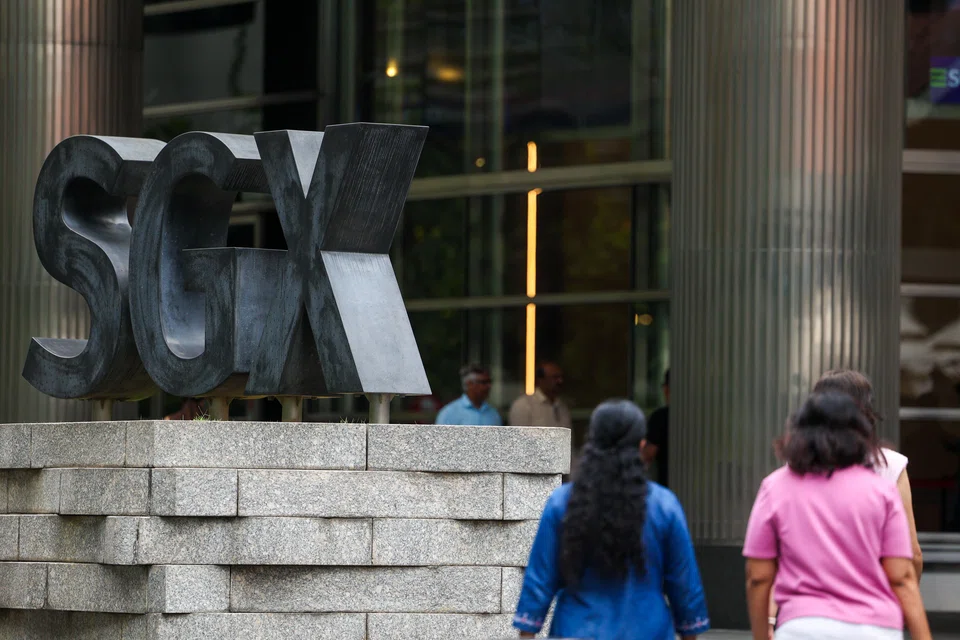
FOR years, Singapore’s stock market has wrestled with a stubborn paradox.
Many Singapore Exchange (SGX)-listed companies are fundamentally strong businesses. They possess healthy balance sheets, credible leadership, resilient operating models and sound governance standards.
Yet a large number continue to trade at valuations that fail to fully reflect their intrinsic worth.
This is no longer merely a valuation issue. It is increasingly a narrative issue.
In today’s global capital markets, companies are not judged solely on what they earn. They are also judged on what investors believe they can become.
That is why the Republic’s growing emphasis on value-up initiatives – which was the theme of the Singapore Equities Forum in 2026 – may prove to be one of the most important shifts in the evolution of its equity market.
The underlying message is both simple and profound: Value creation alone is insufficient if markets do not understand, trust or believe in the long-term story behind that value.
The age of passive valuation is over
For decades, many Asian corporations operated on the assumption that markets would eventually recognise good fundamentals. Deliver profits, maintain dividends and preserve stability. Let the numbers speak for themselves.
That world is disappearing. Global capital today is highly mobile, deeply comparative and increasingly narrative-driven. Investors allocate capital across sectors and geographies at unprecedented speed.
A Singapore-listed company is no longer competing only with domestic peers; it is competing for investor attention with technology firms in Silicon Valley, infrastructure giants in India and consumer champions in China as well.
In such an environment, financial performance alone rarely commands a premium.
Markets increasingly reward companies that can clearly articulate where they are headed, how they intend to grow, what differentiates them competitively and why their management can be trusted to execute.
This is not corporate spin – it is strategic clarity.
Apple’s greatest product was belief
Few companies demonstrated this better than Apple.
Under the late Steve Jobs, Apple transformed corporate storytelling into a strategic weapon. Jobs understood something many corporate leaders still underestimate today: markets do not simply value products. They value conviction about the future.
Every Apple keynote was carefully orchestrated to tell a bigger story – not merely about devices, but also about how technology would reshape communication, behaviour and daily life.
Apple did not sell an iPhone. It sold the future.
What elevated Apple above mere hype, however, was execution. Its products delivered. The ecosystem expanded, customer loyalty deepened and operational discipline strengthened.
Narrative and execution reinforced one another. That combination created one of the greatest shareholder value creation stories in modern corporate history.
The transition to Tim Cook offered a second lesson equally relevant to listed companies today. Cook lacked Jobs’ theatrical charisma, but he institutionalised scale, resilience and consistency.
Under his stewardship, Apple evolved from a breakthrough innovator into a recurring-revenue ecosystem defined by supply-chain excellence, services growth and sophisticated capital allocation.
The narrative evolved – from disruption to durability.
Markets rewarded both. Apple’s valuation was not built in a quarter or even a market cycle. It was earned over decades through relentless alignment between vision, communication and delivery.
That is the real essence of value-up.
Singapore’s success stories
Singapore’s corporate landscape offers important examples.
DBS successfully repositioned itself from a traditional regional bank into a technology-led financial institution with a clear digital ambition.
More importantly, management consistently backed that narrative with measurable execution: digital adoption, productivity gains, customer growth and operational efficiency. Investors rewarded the credibility of that transformation.
Keppel similarly undertook a multi-year reinvention away from cyclical offshore and marine exposure towards infrastructure, connectivity, clean energy and asset management.
This was not merely restructuring. It was strategic repositioning.
The company’s management repeatedly communicated a coherent long-term vision while reshaping the company’s portfolio, strengthening recurring income streams and improving capital discipline.
Over time, markets began valuing Keppel differently because investors understood what the company was becoming – not merely what it had been.
Elsewhere in the region, Sea demonstrated how the narrative drive itself can expand valuation horizons. Sea positioned itself not as simply a Singapore company, but as South-east Asia’s digital ecosystem champion spanning gaming, e-commerce and financial services.
Long before profitability fully matured, investors bought into the scale of the regional opportunity and management’s ability to execute against it.
Again, the lesson is not about hype. It is about believable ambition backed by disciplined execution.
The next generation of SGX companies
The future vitality of Singapore’s equity market may not depend solely on its largest blue chips. It may instead rely on whether the next generation of SGX-listed companies can bridge the gap between operational value and market recognition.
Many already possess strong fundamentals.
Some operate in sectors benefiting from structural tailwinds, such as healthcare, sustainability and energy transition. Others have built resilient regional franchises with scalable growth potential.
Yet too many remain under-researched, thinly traded and narrowly valued. This is where value-up initiatives can become transformative.
Done properly, they are not cosmetic exercises aimed at boosting short-term share prices. They are processes that force companies to sharpen strategic focus, strengthen investor engagement, improve governance credibility and communicate long-term ambition more effectively.
Importantly, this begins in the boardroom.
The strongest investment narratives are usually anchored in disciplined capital allocation, transparent governance, measurable execution milestones, recurring shareholder engagement and consistency in leadership communication.
Markets do not expect perfection, but they increasingly reward coherence.
Confidence is now a form of capital
Ultimately, the deeper purpose of value-up initiatives extends far beyond valuation multiples. The real objective is to cultivate stronger, more globally competitive companies capable of attracting long-term capital and earning sustained investor trust.
In modern markets, confidence itself has become a strategic asset.
Confidence is built when companies consistently align what they say, what they do and what they become. In many ways, this mirrors the forward-looking disclosure culture now being encouraged across markets. Listed companies, working with organisations such as SGListCos, can help develop this capability.
Singapore’s next generation of listed companies has the potential to reshape perceptions of the local equity market. But doing so requires a shift in mindset.
Companies can no longer assume markets will eventually “discover” value on their own. In an intensely competitive global marketplace for capital, they must actively explain why they matter, where they are headed and why investors should believe in their future.
The world’s best companies have already shown the formula.
Corporate storytelling alone does not create enduring value. But when vision, discipline and execution reinforce one another over many years, markets respond – often powerfully.
That is not marketing. That is leadership.
The writer is a lawyer and senior accredited director of the Singapore Institute of Directors, serving on several boards including as chairman of SGListCos
TRENDING NOW

DBS, OCBC, UOB rout lops billions off STI as inflation, rate concerns spook investors

Grab CEO’s wife Chloe Tong on life with Anthony Tan and finding her purpose
OCBC sheds S$8 billion in value as shares close nearly 6% down; analysts cautious on banks

Deal between tycoon friends sparks scrutiny of Philippine power sector

