

NYC mayoral election 2025: Historic shift in city politics
The first candidate in 56 years to surpass the million-vote threshold, Zohran Mamdani will also be the first Muslim mayor and the first person of South Asian descent to lead New York City
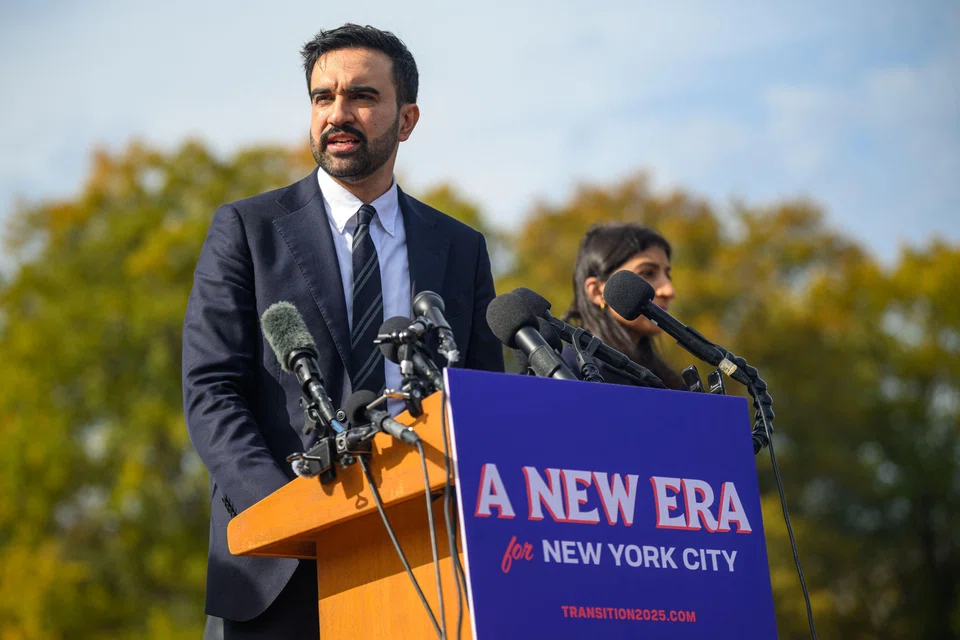
THE mayoral election on Tuesday (Nov 4) marks a watershed moment for New York City, delivering not only a clear electoral mandate but also the highest voter turnout in more than half a century.
Assembly member Zohran Mamdani’s decisive victory – securing more than 50 per cent of the vote against former governor Andrew Cuomo and Republican Curtis Sliwa – represents both a generational change in the city’s leadership and a significant realignment in its political landscape.
With nearly all ballots counted, Mamdani captured approximately 50.4 per cent of the vote, earning more than one million votes. Cuomo, running as an independent after losing the Democratic primary, received 41.6 per cent, while Sliwa garnered just 7.1 per cent.
The roughly two million votes cast represent turnout levels not witnessed since 1969, when John Lindsay won re-election – making Mamdani the first candidate in 56 years to surpass the million-vote threshold.
The turnout surge began during early voting, which saw 735,317 ballots cast – more than five times the number from the 2021 mayoral election. This dramatic increase suggests that voters viewed this contest as particularly consequential, driven by concerns over affordability, housing and the city’s future direction.
A generational divide
Perhaps the most striking feature of this election was the stark age-based polarisation of the electorate.
Exit polling and pre-election surveys consistently showed Mamdani dominating among younger voters, while Cuomo performed better with older demographics. Among voters aged 18 to 34, Mamdani captured approximately 64 per cent support compared with just 20 per cent for Cuomo. This advantage narrowed considerably among voters over 50, where the race became competitive.
This generational split reflects broader patterns in American politics, but was particularly pronounced in this contest. Mamdani’s campaign mobilised thousands of volunteers and successfully registered young voters who might have otherwise sat out a municipal election.
The campaign’s emphasis on issues such as rent affordability, public transportation reliability and climate action resonated strongly with younger New Yorkers facing housing costs that consume increasingly larger portions of their income.
Geographic and demographic divides
Mamdani carried Manhattan, Brooklyn, Queens and the Bronx – the city’s four most populous boroughs. Only Staten Island, which has voted Republican in recent mayoral contests, broke for Cuomo. This geographic distribution underscores the political realignment that has occurred since Cuomo’s tenure as governor, when he enjoyed broader coalition support across the city.
The candidates’ performance among demographic groups varied significantly. Mamdani secured strong support from Asian American voters (about 61 per cent in pre-election polling) and Black voters (roughly 48 per cent), while Cuomo performed better among white voters and Jewish voters, where he received approximately 60 per cent support according to pre-election surveys.
The Cuomo factor
Cuomo’s campaign was an unusual political phenomenon: a former three-term governor seeking to return to elected office through a municipal position. After resigning as governor in 2021 amid controversy, he attempted a political comeback by running for mayor. His initial decision to seek the Democratic nomination appeared strategically sound – early polls showed him as the front runner.
However, Mamdani’s upset victory in the June primary forced Cuomo on to the “Fight and Deliver” ballot line as an independent candidate.
Despite securing endorsements from some establishment figures late in the race, including the sitting mayor, Eric Adams (who had himself withdrawn from the contest), Cuomo could not overcome the energy and organisational strength of Mamdani’s campaign. Pre-election polling suggested that the race was tightening in its final days, with some surveys showing Cuomo closing in to within single digits. Ultimately, any late momentum proved insufficient.
National implications
The election unfolded against an unusual backdrop of federal intervention.
President Donald Trump, who endorsed Cuomo on the eve of the election, characterised Mamdani as a “communist” and threatened to withhold federal funding if he won.
Trump’s involvement – extraordinary for a municipal contest – underscored the national attention on New York City’s choice. His characterisation of the race as defining the Democratic Party’s direction suggests that Republican strategists view Mamdani’s brand of progressive politics as a useful foil for the 2026 midterm elections.
However, the election’s results were part of a broader Democratic wave on Tuesday.
In Virginia, Democrat Abigail Spanberger defeated Republican Winsome Earle-Sears to become the state’s first female governor, while in New Jersey, Democrat Mikie Sherrill prevailed over Trump-backed Republican Jack Ciattarelli. This pattern suggests that despite Trump’s efforts to nationalise certain races, voters remained focused on local and state issues.
Historic milestones
Mamdani’s victory establishes several historic firsts. At age 34, he becomes the youngest mayor elected in more than a century, since consolidation of the modern city in 1898. He will also be the first Muslim mayor and the first person of South Asian descent to lead New York City.
These demographic milestones matter in a city where more than one-third of residents are foreign-born and where Muslim Americans comprise a significant and growing constituency.
The mayor-elect’s self-identification as a democratic socialist also represents a notable development. While New York City has a long history of left-wing politics, including Socialist Party victories in the early 20th century, Mamdani becomes one of the most prominent democratic socialists to hold executive office in a major American city.
The campaign issues
Exit polling identified cost of living as voters’ paramount concern, with three-quarters of respondents citing housing affordability as a major problem.
Crime, while still a concern for many voters, ranked lower than in recent election cycles, with fewer than half considering it a major issue.
This shift in priorities benefited Mamdani, whose campaign emphasised economic justice, rent regulation and public investment in services over increased police spending – a contrast with both Cuomo and Sliwa, who promised to hire thousands of additional police officers.
The reliability of public transportation also featured prominently in the campaign, with Mamdani’s message about buses that “never come” resonating with the daily experiences of working-class New Yorkers dependent on the subway and bus systems. His promise of “relentless improvement” in city services reflected voter frustration with what many perceive as declining quality despite rising costs.
Looking ahead
Mamdani faces significant challenges as he prepares to take office on Jan 1, 2026.
Beyond the threats of federal funding cuts from the Trump administration, he must navigate a city council whose political composition may not align fully with his ambitious agenda. His campaign promises of expanded rent regulation, investments in public housing and improvements to mass transit will require both political skill and fiscal creativity.
The mayor-elect’s call for a “2 per cent tax on those earning above US$1 million annually” – which polls showed commanded roughly two-thirds support among voters – will face legal and political hurdles. State authorisation is required for such a tax, potentially bringing Mamdani into conflict with Albany, where Governor Kathy Hochul – though she eventually endorsed him – may not share his appetite for progressive taxation.
Overall, Tuesday’s election is more than a changing of the guard at City Hall. It reflects a broader evolution in New York City’s political culture, driven by demographic change, economic pressures and generational shifts in policy priorities.
Mamdani’s coalition of young voters, working-class families and progressive activists has demonstrated that it can not only win a Democratic primary, but also prevail in a competitive general election against well-known, well-funded opponents.
Whether this victory signals a lasting realignment or a one-time convergence of unique circumstances remains to be seen. What is clear is that New Yorkers, turning out in numbers not witnessed in decades, have chosen a decidedly different path forward.
How mayor-elect Mamdani translates his electoral mandate into governance will shape both the city’s trajectory and the national conversation about urban progressive politics for years to come.
TRENDING NOW

Malaysian king buys stake in Singapore-listed mining firm expanding into rare earths

Grab CEO’s wife Chloe Tong on life with Anthony Tan and finding her purpose

Once staunchly pro-China, Malaysian Chinese businesses are now distancing themselves from Beijing

Longer wait times expected as S’pore healthcare institutions report system disruptions

