

Once deemed a costly failure, industrial policy is making a return – led by China
A shift in governments’ attitudes towards state intervention is inaugurating a new era of economic planning
FOR decades, state-led industrial policy had been largely discredited as a costly failure – with the exception of the so-called “Asian Tigers”.
The World Bank’s 1993 report on the so-called “East Asian miracle”, for instance, asserted that the prerequisites needed to repeat the successes of places such as Singapore, South Korea, Hong Kong and Taiwan – macroeconomic stability and low inflation – are “so rigorous that policymakers seeking to follow similar paths in other developing economies have often met with failure”.
Today, the World Bank has acknowledged that its previous advice has not held up. So much so, in fact, that it launched a new publication in March titled Industrial Policy for Development: Approaches in the 21st Century.
The argument is that the global economic landscape is now more favourable for industrial policy. For instance, the quality of macroeconomic policy management is higher than before, in part because of better educational attainment, and inflation is generally more subdued.
With industrial policy back in vogue, the debate is shifting away from whether governments should intervene to how best to do so. The implication is that every nation should have industrial policy in its toolkit, even though it is rarely an economic game changer.
This message is increasingly being heeded across the globe: A 2026 World Bank review of 183 countries’ growth strategies found that all of them use policy to target at least one industry.
Subsidies are highest since 2009
The OECD’s latest Manufacturing Groups and Industrial Corporations database of industrial subsidies adds to the evidence of the growing popularity of such policies.
The report, released on Jun 1, found that industrial policy subsidies in 2024 reached their highest levels since 2009 – which, at that time, were prompted by the international financial crisis.
Specifically, as a percentage of corporations’ sales revenue, industrial subsidies amounted to 1.3 per cent in 2024, which was the second-highest level on record. In monetary terms, that’s US$108 billion.
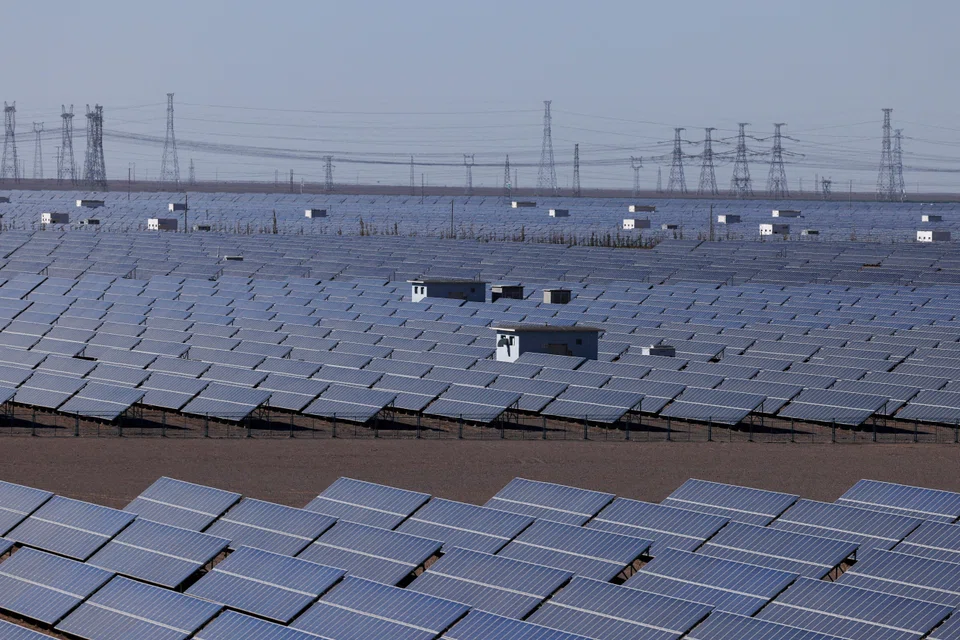
In terms of industries, the production of solar photovoltaic panels, semiconductors, aluminium, steel and shipbuilding were the top five recipients of subsidies, as a percentage of sales revenue of firms, across the 15 sectors.
The OECD data also highlighted the leadership role of Asia, specifically China, in shaping the changing perspectives on industrial policy. Between 2005 and 2024, Chinese firms received on average three to eight times more government support than firms based in OECD countries.
One reason is the large role that Chinese state enterprises play in the country. The OECD found that, on average, when the state owns more than 25 per cent of such enterprises, these firms receive larger subsidies than private companies, especially through grants.
This is partly because these businesses are typically in heavy industries that rely more on debt financing and below-market-rate borrowings.
Such industrial subsidies are not just boosting domestic production but are also shaping global markets. OECD research indicates that firms have gained a roughly 22 per cent increase in market share between 2005 and 2023 because of these policies; in China, that figure is almost 60 per cent.
This data underlines why there is such growing concern about what is sometimes called “China Shock 2.0”. This will be one of the key agenda items at this month’s Group of Seven (G7) leadership summit in France.
Also shaping the context for the big event are a range of recent studies, including May’s US Chamber of Commerce report, which argued that the G7 collectively face a risk of sustained erosion in manufacturing competitiveness of up to US$650 billion in the second half of the decade.
This is equivalent to around 12 per cent of their manufacturing exports, which could be directly exposed to Chinese market-share gains by 2030 if they continue at the current pace.
Another report furthering the debate is the Centre for European Reform report, China Shock 2.0: The Cost of Germany’s Complacency, released in May.
It highlighted that China’s overall export volumes are growing at more than twice the speed of global trade, and called for a strengthened European Union toolbox to defend key sectors, including chemicals, batteries, clean tech and semiconductors.
Caution for developing countries
While economies and governments worldwide may now be more receptive to implementing industrial policy, the World Bank’s report is not devoid of warning.
First, even under ideal conditions, such interventions result in an average gain of just about 1 per cent of gross domestic product.
Industrial policy, after all, cannot replace getting policy fundamentals right, including a healthy, educated workforce, reliable infrastructure for transportation and energy, and a robust macroeconomic framework.
The World Bank also has a word of caution for governments of developing countries. It warns that such countries are over-reliant on blunt industrial policy tools such as tariffs and subsidies, and tend to neglect more pragmatic and precise interventions such as developing human capital.
That said, it is clear that industrial policy is gaining favour once again, with the state having a newly legitimised role in economic development.
The writer is an associate at LSE IDEAS at the London School of Economics
TRENDING NOW

S$8 billion wiped off OCBC value as shares slide 5.8% in heavy trade

Grab CEO’s wife Chloe Tong on life with Anthony Tan and finding her purpose

Brookfield denies accusation it cut Soilbuild out of Mapletree deal
8 public officers referred to police over property buys near unannounced MRT stations: Chan Chun Sing

