

SGX’s record year masks Singapore’s equities challenge
The bourse operator itself, meanwhile, is thriving

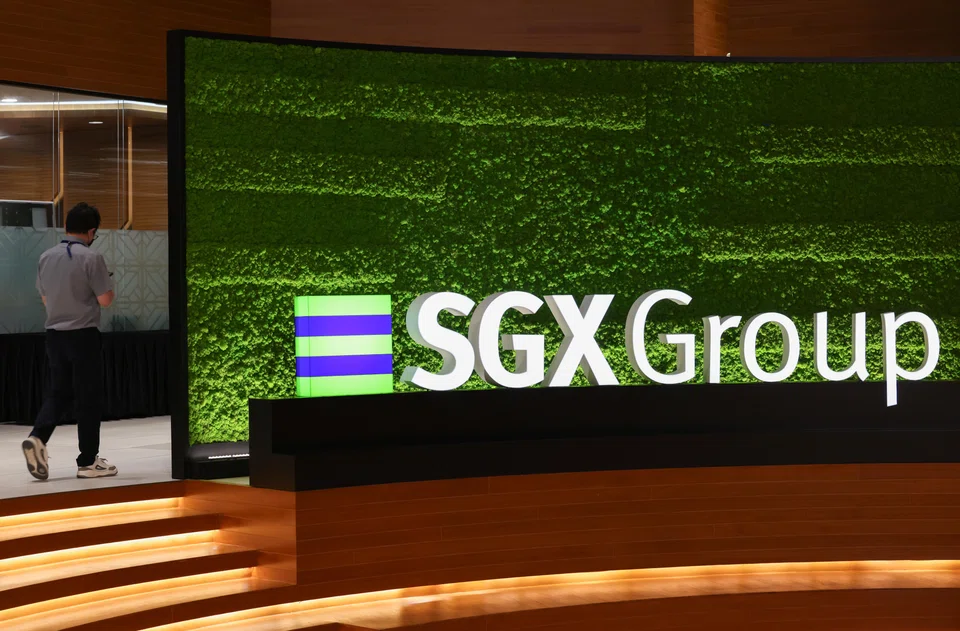
[SINGAPORE] Ask any investor who bought into recent initial public offerings on the Singapore Exchange (SGX) how they feel about the local market, and you are unlikely to get a cheerful answer.
Several debuts so far this year have ended in immediate trading losses, leaving retail buyers nursing burns before the opening bell’s echo had even faded.
At the same time, existing listed companies appear increasingly hesitant to ask the market for more cash.
According to SGX’s latest results for the full year ended June 2026, secondary equity fundraising fell to S$3.6 billion in the 2026 financial year, from S$4.3 billion a year earlier.
Secondary placements are a barometer of health; they show whether listed firms view the bourse as an engine for expansion.
But SGX’s responses to these two vulnerabilities are revealing.
First, the management argues that first-day IPO price drops are a single data point – albeit an “amplified” one – and assert that quality shows up through long-term value creation rather than opening pops.
On the drop in secondary fundraising, the bourse operator offers a familiar defence: capital raising moves in cycles, and cash-generative firms simply turn to bank loans or bonds instead.
However, both explanations fall short.
Dismissing first-day drops as minor statistical noise ignores how quickly bad debuts can destroy retail appetite. When new stock issues plunge, retail confidence vanishes.
Similarly, attributing a slump in secondary fundraising to routine cycles might be ignoring a harder truth: that listed boards are deciding that raising equity on the local exchange is simply not worth the dilution at current valuations.
The irony of record results
But here is the paradox: While issuers stumble and secondary capital raising slows down, SGX Group itself is printing record profits.
Revenue for FY2026 reached S$1.5 billion, while adjusted net profit jumped 25 per cent to S$759.5 million.
Shareholders received a 52 per cent increase in total dividends to S$0.57 a share, aided by a S$0.125 special payout from capital recycling.
Securities daily average value surged 35 per cent to S$1.8 billion, reaching an 18-year high. Retail participation hit a five-year peak, and institutional inflows into mid-cap stocks trebled.
But SGX CEO Loh Boon Chye insists this surge in trading activity is no temporary fluke.
Speaking to The Business Times, he frames it as a structural shift.
In his view, the entire capital markets ecosystem has finally aligned. The Monetary Authority of Singapore review group, the S$5 billion Equities Market Development Programme, subsidised research schemes and initiatives, such as plans to lower lot sizes for higher-priced shares, have all pushed in the same direction.
Taking stock of the market
But how does an exchange deliver record earnings while its primary listing market struggles with broken debuts and muted secondary fundraising?
The answer is that SGX’s financial success relies less on domestic stock-picking and far more on operating an offshore risk tollbooth for global institutions.
While local commentators debate the lack of a marquee technology listing, SGX continues to build its multi-asset engine.
Foreign exchange average daily volume climbed 33 per cent to US$190 billion, making SGX FX the fastest-growing exchange-backed over-the-counter currency platform globally.
Commodity derivatives volume expanded 21 per cent, driven by higher volumes in iron ore derivatives.
The exchange is also expanding into alternative physical and digital assets. For example, in partnership with the central bank and bullion market participants, SGX is building a complete local gold ecosystem. This includes clearing, secure vaulting and deliverable futures contracts.
In a world shaped by geopolitical tension, institutional capital in South-east Asia wants locational safety. A physical Singapore gold benchmark serves cross-border capital far better than paper futures in distant markets.
SGX has also rolled out crypto perpetual futures, positioning to capture modern derivative workflows while Western regulators remain bogged down in policy debates.
To be sure, Loh and his team at SGX deserve credit for getting regulators, brokers and state funds to pull in one direction.
Yet, no amount of ecosystem alignment can hide the fundamental disconnect at the heart of the bourse.
The reassuring narrative of a cash equities revival offers comfort to domestic policymakers. But SGX’s real bottom line thrives on clearing foreign exchange, physical gold and offshore derivatives for global institutions that care little about local IPO debuts.
TRENDING NOW

LTA proposes combining car COE categories, adding rebate-surcharge system
StarHub to acquire MyRepublic’s mobile business amid ongoing telco consolidation

DBS, OCBC, UOB rout lops billions off STI as inflation, rate concerns spook investors

Grab CEO’s wife Chloe Tong on life with Anthony Tan and finding her purpose

