Singapore’s migrant labour dilemma deepens as costs rise
As living costs rise and recruitment fees surge, questions mount over the sustainability of the city-state’s dependence on low-wage migrant workers

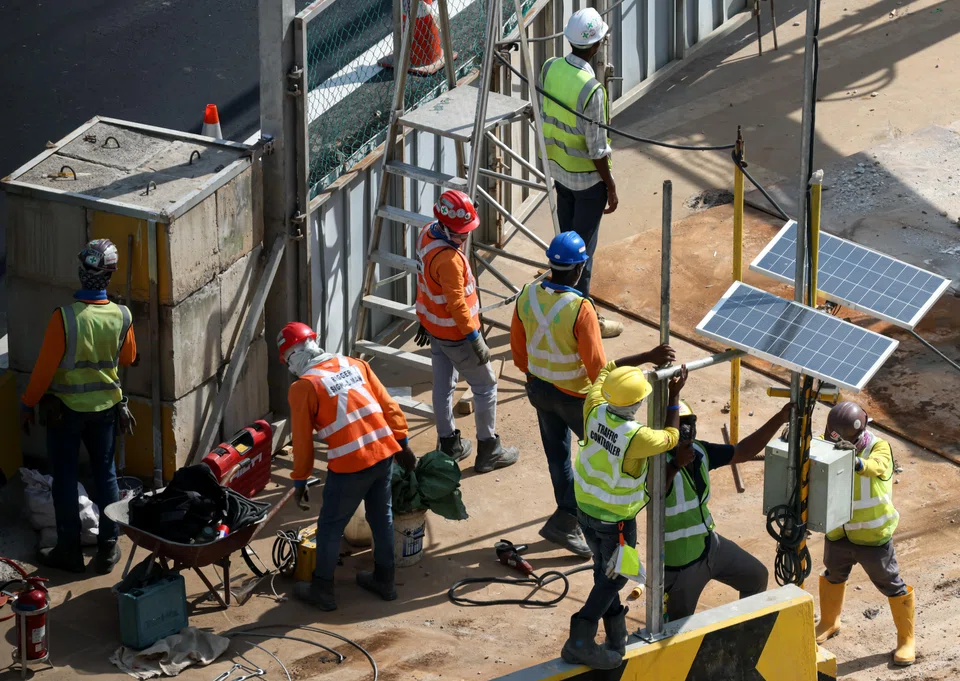
[SINGAPORE] For Nasir Uddin, paydays are often the only time he can afford a small treat.
The Bangladeshi construction worker, who has spent the last 12 years in Singapore, used to shell out S$6 or S$7 to buy a meal from McDonald’s or KFC.
Now, amid rising costs of living post-pandemic, the same meals cost at least S$10.
Uddin says his income has increased by just S$50 since 2023, when he started working at his current company – an amount he finds inadequate to cover the rise in prices.
The 35-year-old is among the thousands of migrant workers in Singapore who have had to grapple with rising inflation over the past few years, with low wages that have not necessarily kept pace with costs.
Yet, Singapore has long relied on this workforce to take on roles often shunned by locals, fuelling its economic growth and keeping essential services running – from building public housing flats and MRT lines, to maintaining ports and cleaning streets.

And this dependence appears to have increased. The Republic’s recent population growth – to a record-high 6.11 million as at June – was driven primarily by those with work permits, typically held by low-wage migrant workers in construction and foreign domestic workers.
Uddin’s financial vulnerabilities – stemming from global structural inequalities, Singapore’s foreign labour policies, recruitment agents and employer practices, and rising living costs – raise broader questions about how sustainable it is for the city-state to continue relying on relatively lowly paid migrant labour to drive its economy.
Wage stagnation
The median monthly wages of work permit holders rose to S$800 in 2024, from S$700 in 2020, says a Ministry of Manpower (MOM) spokesperson in response to queries from The Business Times.
“This is equivalent to a 14 per cent cumulative increase, broadly keeping up with inflation over the same period,” the spokesperson adds.
However, wages are market-based and vary significantly based on sector, occupation and years of experience.
In comparison, the median monthly income of Singapore residents stood at S$5,500 in 2024.
Official data from MOM generally corroborates the findings of a July 2023 report by migrant worker non-profit organisation Transient Workers Count Too (TWC2), which similarly found an increase in migrant workers’ median basic salary between 2019 and 2023 based on 493 responses.
But even though wages rose, TWC2 found that the three biggest buckets of migrant workers’ expenses – loan payments for recruitment agents’ fees, food and remittances – also rose significantly.
Agent fees, which used to range from S$6,000 to S$7,000 in 2019, are now at least S$10,000. Food expenses have also increased by between S$25 and S$50 across the same period. And, with inflation also hitting the pockets of migrant workers’ families, the pressure to send more money back home is growing.
The hit is even harder for those whose salaries have decreased.
Bangladeshi construction worker Shiblu Faruk, for instance, earns an average of between S$700 and S$750 a month – a slight dip from about S$800 five years ago.
He sends about S$500 home every month to support his family and repay debts that he incurred to find work here, leaving almost nothing for himself.
Six years since he first started working in Singapore, Faruk has just S$138 in his bank account.
“When going back home, it’s normal to buy gifts for family. But I don’t have such plans because I only have S$138. I have to make do with whatever is possible with this money,” he says.
“Everything has become very expensive in Singapore now.”
While some migrant workers’ wages did increase, the TWC2 report noted that this was partly due to the unusual circumstances brought about by the Covid-19 pandemic. At the time, employers were looking to retain workers to resume projects when restrictions eased, as many migrant workers had returned home.
Salary gains were not uniform across the board, however, benefiting only a select few who managed to get higher wages after upskilling or changing to another company.
Crucially, the starting salaries of migrant workers have remained the same for at least the last 10 years, stagnating at S$18 per day.
This means newer workers who arrived in Singapore after the pandemic were not beneficiaries of higher salaries. Given the higher agent fees today, it is more likely that they feel a bigger pinch.
Precarious conditions
To cope with these increasing demands, Ethan Guo, executive director of TWC2, says migrant workers may end up doing everything they can to earn more, including putting in overtime hours beyond the regulated maximum.
“That puts them in danger of work fatigue, which could result in lapses and workplace accidents when they do not have sufficient rest and are unable to properly concentrate,” he adds.

Jaya Anil Kumar, senior research and advocacy manager at the Humanitarian Organization for Migration Economics (HOME), says migrant workers may also be more accepting of exploitative demands from their employers, out of fear of losing their jobs. HOME is another non-profit organisation advocating for migrant workers.
Kumar adds that wage theft is already a “rampant” phenomenon. She explains that workers may be underpaid – or not at all – for their work, have their wages unlawfully deducted, or are asked to provide kickbacks to renew their work passes.
The work permit system compounds their vulnerability.
Migrant workers are not allowed to seek employment with other companies, as their work permits are tied to a specific employer. The lack of job mobility means that they have little bargaining power.
Associate Professor Walter Theseira, a labour economist at the Singapore University of Social Sciences, says this structural barrier means migrant workers have very little ability to seek new opportunities while in Singapore, and therefore face fairly limited ways they can increase their incomes.
Not a bug, but a feature
The structurally low wages of work permit holders in Singapore are a feature, and not a bug of the system, says Prof Theseira.
“The whole point is to allow the Singapore economy to utilise labour that is cheaper than local workers,” he adds. “It is not a policy objective to have migrant workers earn the same wages as Singaporeans.”
Prof Theseira notes that undue restraints on their job and income mobility in Singapore are not only harmful to the worker, but also “reduces economic efficiency to the extent that it discourages our economy from making better use of skilled and capable migrant workers”.
Unlike residents, migrant workers in certain low-income sectors are excluded from the Progressive Wage Model, which stipulates a minimum basic wage for different job levels within the sector.
In the cleaning sector, for example, employers are required to pay town council and restroom cleaners at the lowest skill level S$2,325 a month, with the salary ratcheting up as they acquire more expertise.
Migrant workers performing the same jobs, however, earn just a few hundred dollars.
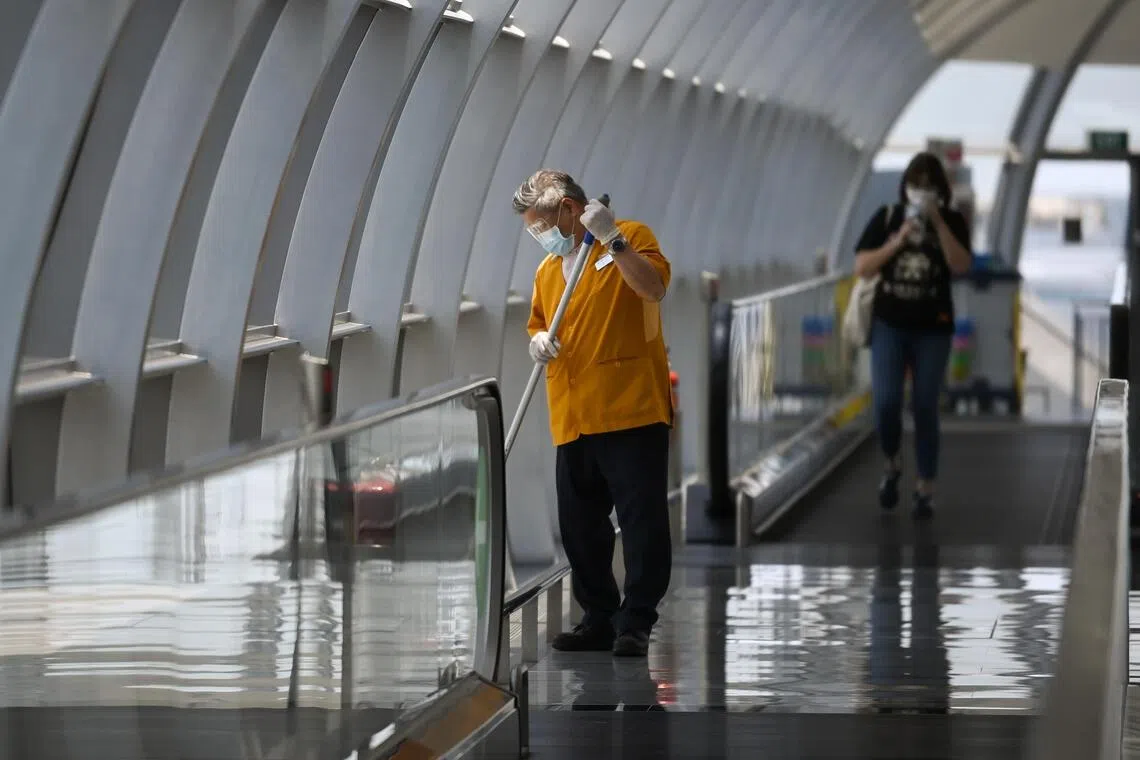
Advocacy groups believe migrant workers should not be excluded from the Progressive Wage Model. They add that employers are not incentivised to provide migrant workers the same skills-upgrading training as they do to Singaporeans and permanent residents, which stagnates their wages and traps them with their employers for longer.
“Is there any morally defensible reason for excluding migrant workers from the Progressive Wage Model?” asks TWC2’s Guo.
Calls to raise the wages of migrant workers, however, are often met with the counter-argument that doing so would further stoke inflation in Singapore and cost employers and consumers more, potentially impeding economic growth.
In fact, the Covid-induced wage hike for migrant workers has been cited as one factor that contributed to post-pandemic inflation, as businesses passed on the rising costs to consumers, says Dr Faizal Yahya, senior research fellow at the National University of Singapore’s Institute of Policy Studies (IPS).

However, Associate Professor Ye Junjia, who teaches geography at the Nanyang Technological University, says alleviating migrant workers’ financial strain need not be an “all or nothing” approach.
If it is not economically viable to raise the wages of migrant workers, other forms of redistribution could provide short-term relief, she says.
And the source of funding could come from the foreign worker levies the government collects from employers.
“We’re sitting on all these levies, so it doesn’t actually need to come out of the citizens’ pockets directly. Can there not be some kind of redistribution through that... There are many possibilities, but there needs to be political will to do so,” says Ye.
HOME’s Kumar suggests that proceeds from the levies can be used to provide vouchers and financial assistance to migrant workers, similar to how Singaporeans were provided with Community Development Council Vouchers and Goods and Services Tax Vouchers to cope with inflation.
“We believe that these levies should be directly channelled to alleviate financial pressures that migrant workers face and cope with the increasing cost of living, as well as improve their living, working and transport conditions,” Kumar adds.
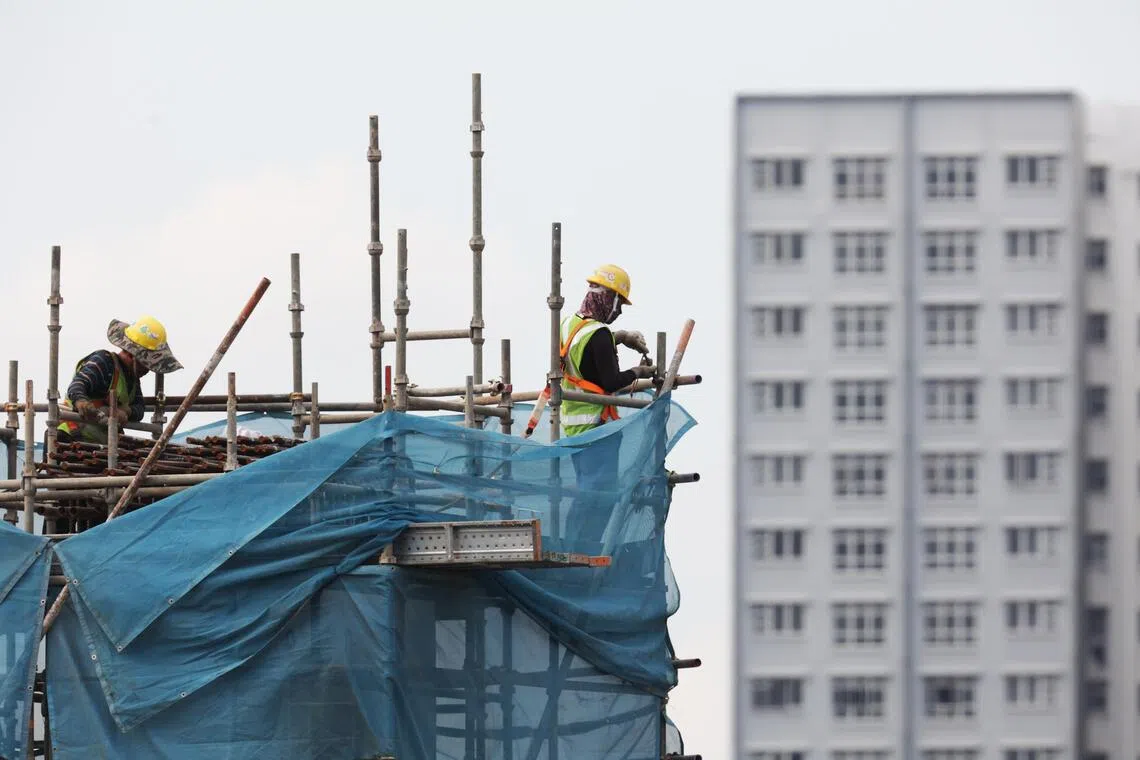
The Ministry of Manpower sets a quota on the number of lower-skilled foreign workers companies can hire; it also imposes a levy that companies have to pay monthly for each worker. For 2024, the government collected S$6.7 billion in foreign worker levies.
These levies have also been cited by non-profit groups as one factor suppressing the wages of migrant workers, as it takes a huge bite off what employers are willing and able to pay as wages.
The MOM spokesperson says foreign worker levies are not earmarked for a specific use. “To ensure optimal use of public resources, the revenue collected by a ministry is consolidated across (the) government. The pooled funds are then allocated to projects based on merit and needs,” he adds.
It also goes towards initiatives that improve the safety and well-being of migrant workers, including workplace safety programmes, mental health support, as well as the development and management of recreation centres and medical care initiatives.
The spokesperson said that MOM incentivises employers to upskill existing work permit holders or hire higher-skilled ones by lowering their levy rates, adding that levies for higher-skilled work permit holders have not increased since 2014.
Long-term sustainability
While relief measures might help in the short term, analysts say that an over-dependence on low-wage migrant workers is not a sustainable long-term strategy for Singapore, as it poses economic, social and ethical risks.
The spread of Covid-19 in their dormitories was one example. Singapore’s economy experienced wide-ranging disruptions when migrant workers were quarantined en masse.
In addition, TWC2’s Guo points out that not paying migrant workers high-enough wages have also led companies to bypass the hiring of Singaporeans since they cost more.
Dr Faizal notes that the government has recognised this and is “taking steps to rebalance the equation through targeted policies, while a shift is also under way in the broader economy and society”.
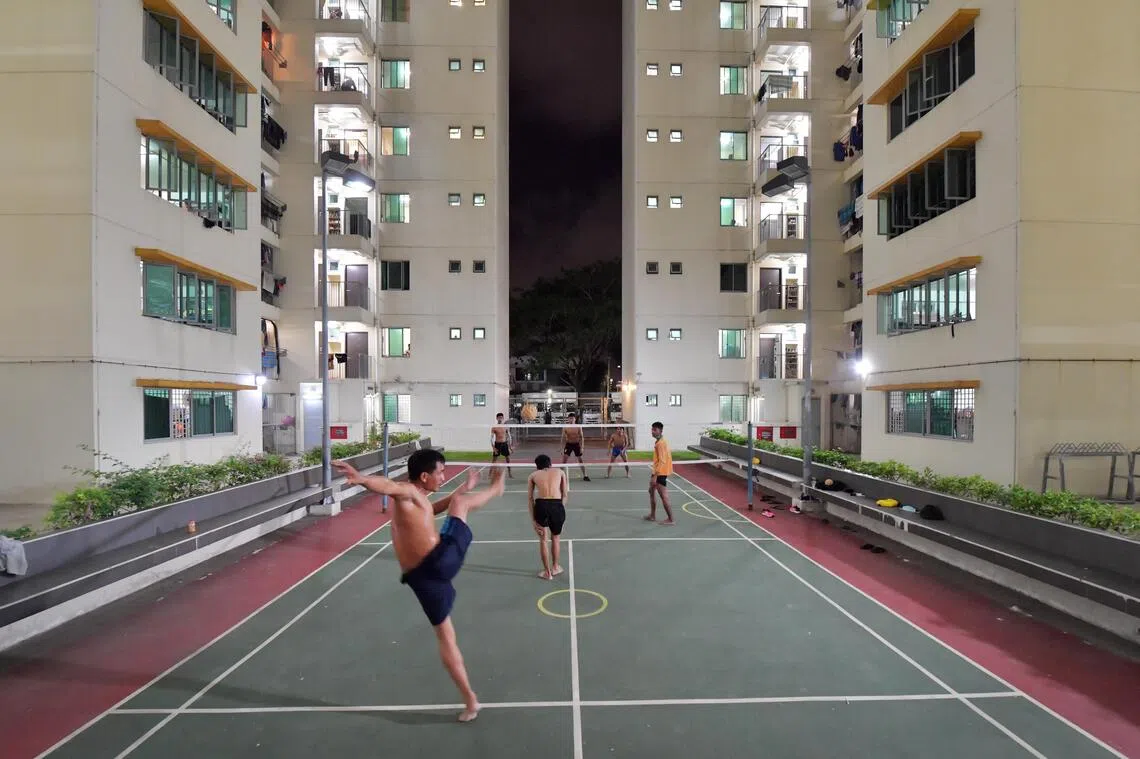
He adds that Singapore has come up with legislation to improve migrant workers’ living conditions by setting minimum requirements on foreign worker dormitories.
Stricter enforcement is also needed against abusive employment practices, such as excessive recruitment fees, wage theft, and unsafe working conditions. Transparency in reporting on workplace safety and migrant worker well-being is also crucial.
“At the same time, companies need to proactively redesign business models to become less labour-dependent. This includes embracing automation and off-site manufacturing processes, especially in sectors like construction, to reduce the need for manual labour,” he adds.
Prof Theseira says Singapore’s reliance on low-wage migrant workers is sustainable only insofar as there are sources of migrant workers willing to come at low wages.
“For some sources like China, and many of the fast-growing Asean economies, this seems more improbable each year,” he adds.
As most migrant workers send the bulk of their wages back home, the purchasing power of their remittances matter more than the costs of living in Singapore.
This means the supply of migrant workers is shaped not only by conditions here, but also by wage differentials between Singapore, their home countries and other developed economies that rely heavily on low-wage foreign labour.
And that is partly why despite rising costs of living, the city-state remains an attractive location for most migrant workers based here. In an MOM report published in 2025, 95.3 per cent of the migrant workers polled said they were satisfied with working and living in Singapore, up from 86.3 per cent in 2018. In addition, 92.3 per cent would recommend their friends and relatives to work here, an improvement from the 84 per cent in 2018.
Singapore’s safe working environment and the high salary are among the top cited reasons for the recommendation. The others are worker protection, good living conditions and job stability.
Ultimately, it is the supply and competition for migrant workers that will have a significant impact on their wages.
“Far from being a fringe phenomenon, and despite concerns about immigration globally, competition is likely increasing due to low fertility and aging populations in many countries,” says Prof Theseira.
Large emerging economies such as China, Malaysia and Thailand are already massive importers of foreign labour, though Singapore’s wages are likely still more attractive than in these countries.
At the same time, more developed, labour-constrained economies such as Japan and South Korea are increasingly recognising that they need to start turning to migrant workers to fill labour shortages.
“I think sooner than later, we will have to reckon with reliance on low-wage migrant workers,” Prof Theseira adds.
The race to secure these workers is ultimately what will help uplift their wages. “This competition, particularly from high-income countries that pay better, is more likely to improve the wages of foreign workers in Singapore than any amount of policy tweaks will.”
While Singapore’s dependence on low-wage migrant workers has long been acknowledged, it is clear that resolving this vulnerability offers no easy answers.
The challenge remains for the city-state to balance resilience against future shocks with the need to keep businesses competitive – a dilemma that will shape Singapore’s economic model in the years ahead.