

Singapore’s mobility playbook: Why the world’s top-ranked city must still accelerate
As more Asian cities commit to autonomous transport frameworks by 2027, will they follow the Republic’s model?
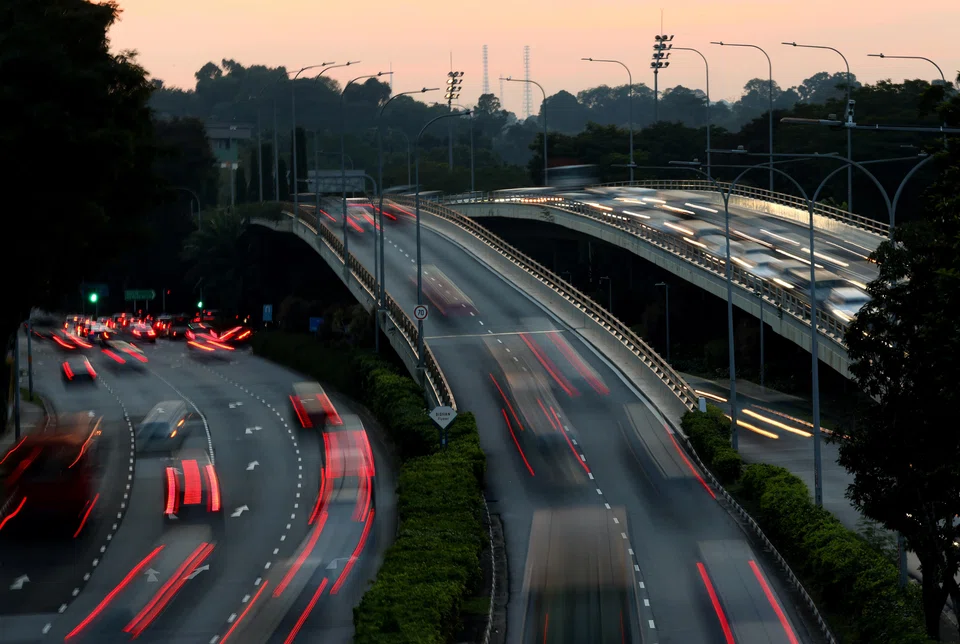
IN SEPTEMBER, Waymo announced that it would bring its fully autonomous ride-share car service to Singapore – its first Asian market – in 2028.
The world’s most-tested autonomous vehicle (AV) operator, having logged 300 million fully autonomous kilometres in the US, said it chose Singapore because the city has built “one of the safest, most efficient and most forward-thinking transportation ecosystems in the world”.
Boston Consulting Group’s 2026 City Mobility Compass confirms the assessment, ranking Singapore as the world’s top-performing “mass-transit megacity”. In the group’s Intelligent Cities Index (ICI), Singapore placed 11th globally, behind leading cities such as London and Dubai.
These rankings make for impressive credentials. But if Singapore is to lead the region in urban mobility, it must set the standards others adopt tomorrow.
Speed is the new variable in setting regional standards
Singapore has executed its strategy across all mobility dimensions simultaneously.
In 2026 alone, six Level 4 autonomous buses will begin operating on routes 191 and 400, 660 electric buses will start replacing diesel fleets and the cycling network will surpass 1,000 km. The Circle Line also officially completed its circuit on Jul 12.
This represents the synchronisation of infrastructure build-out, regulatory frameworks (Electronic Road Pricing, vehicle caps) and technology integration (artificial intelligence controlling more than 80 per cent of intersections).
The discipline of coordinated execution is what separates Singapore from its peers.
China, however, is moving at a different velocity.
By the end of 2025, China had deployed several thousand robotaxis in seven cities, covering more than 100 million people. That is 10 to 20 times Singapore’s target of 100 to 150 AVs by 2026.
Industry analysts project that China’s robotaxi market will reach US$35 billion by 2030. Consumer surveys in Chinese cities have found that 51 per cent of passengers prefer driverless services after a single trip, and 39 per cent would switch from public transport to robotaxis.
As other Asian cities prepare their AV frameworks, they face a choice: adopt Singapore’s public-first model or follow China’s private robotaxi path. The model they choose will be determined by which approach demonstrates scaled success first.
The invisible accelerant: AI
AI and advanced analytics have become the operating system of Singapore’s growing transport network.
More than 80 per cent of intersections use adaptive signal control, optimising real-time flow. ERP dynamically adjusts charges.
The Land Transport Authority (LTA) published over 100 open datasets on its DataMall platform, facilitating more than 600 third-party mobility applications – proof that AI infrastructure can catalyse private innovation.
In the ICI’s highest-performing cities, AI deployment in public services and city operations drives resident satisfaction, which in turn drives adoption, unlocking further investment and scaling.
Singapore’s DataMall ecosystem demonstrates this circle in action. The city’s real test now is to build on its impressive foundations.
Public-first AV strategy as strategic differentiator
Singapore’s decision to deploy AVs within the public transport framework may be its most consequential choice for setting the regional playbook in integrating and regulating autonomous mobility.
It also reflects LTA’s consolidated mandate to set policy, own infrastructure, manage data and deploy AI.
For Singapore’s mobility operators, this public-first framework defines the playing field. Autonomous services will integrate into public transport, not compete as premium alternatives.
The opportunity, then, lies in partnering with LTA to scale autonomous buses and shuttles alongside mass transit.
Taxi and ride-hailing service operators should align with the public-first framework now, or risk being shut out when autonomous mobility scales.
However, consumer preferences cannot be ignored: Research in China revealed that consumers were willing to replace more than 70 per cent of ride-hailing with robotaxis – which often deliver a superior experience by eliminating pain points such as an unpleasant environment and unsafe driving.
About four in 10 passengers would switch from public transport to robotaxis.
If private robotaxis gain widespread popularity before public autonomous transport establishes a foothold, Singapore’s modal shift towards public transit could reverse.
From benchmark to blueprint
The deployment of autonomous buses, the electrification of the diesel bus fleet and the completion of the Circle Line are not isolated wins. They are all evidence of a mobility operating system that works.
But proof of success and leadership in setting regional standards are different things.
For Singapore’s public and private sector leaders, the window to lead is narrow. By 2027, major Asian cities will have committed to autonomous mobility frameworks, following either the Republic’s model or alternative approaches shaped by faster-moving players.
Singapore’s choice could be to accelerate its progress, actively export the model through frameworks and partnerships, and shape the standard, or watch the reference architecture get written elsewhere.
The cities that succeed in creating a safer, more efficient and more accessible public mobility system will integrate execution across all modes, treat AI as infrastructure and resist letting private mobility innovations undermine public transport systems.
Singapore’s public-first model offers application beyond aspiration, but to lead Asia’s mobility transformation, it must keep moving.
The writer is partner and associate director at Boston Consulting Group
TRENDING NOW
S$8 billion wiped off OCBC value as shares slide 5.8% in heavy trade

Grab CEO’s wife Chloe Tong on life with Anthony Tan and finding her purpose
Brookfield denies accusation it cut Soilbuild out of Mapletree deal
8 public officers referred to police over property buys near unannounced MRT stations: Chan Chun Sing

