

Small is beautiful: A precision playbook for Singapore’s next lap
How resilience, information hygiene and dispute resolution can turn into the city-state’s next competitive edge
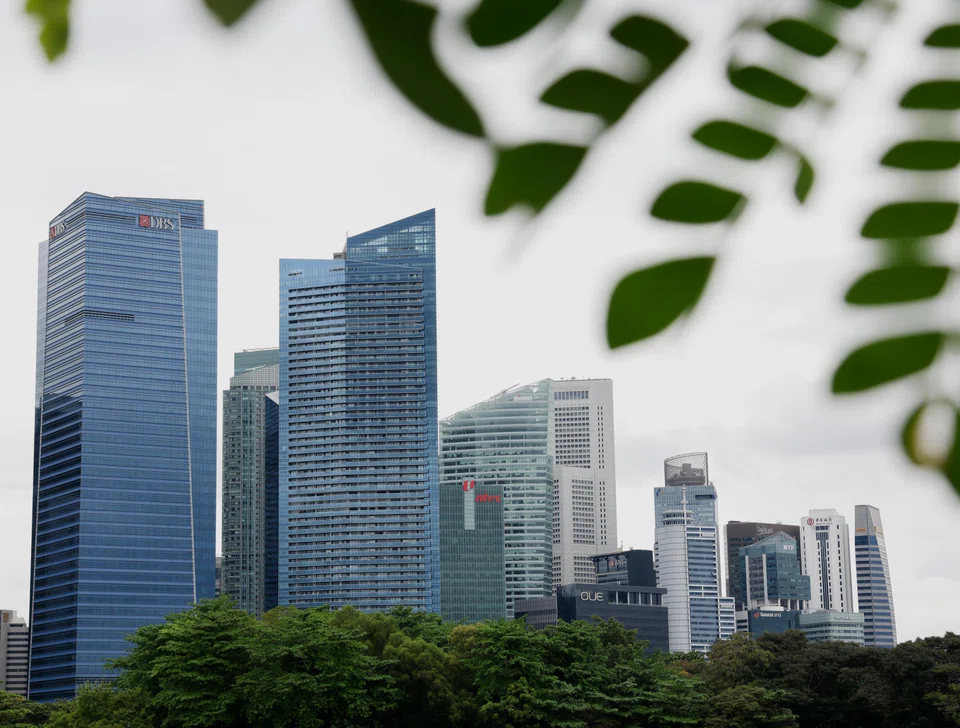
THE 2026 Economic Strategy Review (ESR) gets the big picture right. It recognises that we are entering a more volatile world, and that growth alone will no longer automatically deliver good jobs or lasting security. It calls for new engines of growth, stronger support for workers and continued openness to the world.
My aim here is not to challenge the ESR, but to offer a complementary lens: how our small city-state can leverage its size as a strategic advantage through more precise policies and actions.
Smallness becomes a strength with well-designed policies for workers, businesses and our social compact. A small, tightly run system can set clearer rules, move faster and target support more accurately than larger economies. Our ultimate brand is simple: anything made, managed or stored in Singapore can be trusted.
Make strategic autonomy visible and predictable
The ESR emphasises resilience and the need to navigate great-power rivalry. Indeed, a small state cannot rely on scale, but it can rely on clarity. One way to sharpen this is to move from implicit hedging to more visible, rule-based strategic autonomy.
This could mean three concrete steps. First, set clear, publicly articulated resilience benchmarks for dependence in critical areas such as energy, digital infrastructure and certain defence platforms, so that no single foreign supplier or country can “switch off” Singapore. Rather than singling out specific partners, these benchmarks help define the parameters for partnership.
Second, introduce a simple “strategic autonomy test” for major long-term deals – ports, data centres, major tech infrastructure and defence projects – requiring each to show how it preserves our room for manoeuvre under different geopolitical scenarios.
Third, continue to anchor Singapore in a wide web of trade, digital and investment agreements, and explain to the public that this diversity is a deliberate shield, not just opportunistic dealmaking.
Because we are small, these markers can be more precise and easier to monitor than in large systems. Such moves fit comfortably within the ESR’s framework, while giving businesses, investors and citizens clearer markers of where Singapore stands.
Treat information hygiene like public health
The ESR highlights technology and artificial intelligence as key drivers of growth and disruption. A practical extension is to focus not only on innovation, but also on information hygiene – especially for commercial and financial activity.
For a small, dense hub, the quality of information flowing through our systems is as important as physical infrastructure. Here again, smallness allows for tighter, more consistent standards.
We could set straightforward baseline standards for cybersecurity, data protection and sanctions/anti-money laundering compliance for all sizeable firms, not just financial institutions. Consider them as “food safety rules”, but for data and digital operations.
Singapore has laid the groundwork for data and AI safety, but we must now deepen these standards. This could mean developing a “clean data” label for companies that meet higher, audited standards, rewarding them through preferential procurement and market access.
Alongside this, we should foster a world-class AI-assurance sector, with independent firms testing and certifying AI systems used in finance, logistics, healthcare and trade.
For ordinary Singaporeans, this means fewer scams, safer savings and more trustworthy digital services – very concrete benefits from a more abstract goal. For firms, operating in a small jurisdiction comes with clear, predictable rules – ensuring “Singapore-certified” becomes a global synonym for trust and reliability.
Make Singapore the preferred place to settle disputes
The ESR underlines Singapore’s role as an international hub. One area where we already have an edge – and can go further – is dispute resolution.
In a world of more friction, someone has to be the place where disagreements are settled fairly and efficiently. A small, neutral jurisdiction can often do this better than larger powers with sprawling interests.
Singapore is already a leading venue for commercial arbitration and mediation. Building on that, we could explicitly aim to be the default seat for complex cross-border commercial and investment disputes, including those involving states and state-owned enterprises.
We can further develop our courts and institutions as neutral, efficient supervisors of these processes, with model clauses that businesses and governments can easily adopt, and build a broader “risk and resolution” ecosystem around them.
When global disputes are settled here, Singaporeans benefit from high-value jobs in law, finance and technology, as well as the broader confidence this brings to our economy. For the region and beyond, the signal is that a small state can be a trusted referee even when the players are much larger.
Protect the cautious, empower the bold
Finally, the ESR emphasises support for workers and firms navigating disruption. Here, precision matters. The social compact should be simple and believable: Singapore will walk with you through change – but we all have to keep moving.
In practice, that can mean guaranteeing every mid-career Singaporean a small number of genuine “reset chances”: structured opportunities to move into well-defined growth roles, with strong placement and on-the-job support.
These would serve as a structural feature of the system – a clear promise of a few real restarts in a working life – rather than just another training subsidy. They would complement, rather than duplicate, existing skills and training schemes by focusing on outcomes and transitions, not just course participation.
Small and medium-sized enterprises can be offered plug-and-play tools to meet new information hygiene and compliance standards, so they can raise their game without being overwhelmed.
At the same time, regulatory sandboxes and targeted risk-sharing schemes can support firms operating in frontier areas, reinforcing our niche: AI assurance, cyber resilience, climate and transition services, and dispute-resolution technology.
These are all in the spirit of the ESR, but with a sharper focus on execution details that matter on the ground.
Singapore’s founders chose an unusual path: an independent, global city-state in a turbulent region. The ESR updates that story for a new era. Our next step is to lean into what only a small, well-run city-state can do: be clearer, faster, and more precise in our choices; protect those who are slower to adapt; and give those who are willing to be bold the confidence to move.
The writer, CFA, is chairman of HML Consulting Group and a retired banker
TRENDING NOW

Once staunchly pro-China, Malaysian Chinese businesses are now distancing themselves from Beijing

New launch or resale unit? Here’s a guide for homebuyers
The lesser-known prospects in the Asian chipmaking supply chain

Cliff Tan has 7 million followers and a 4-month waitlist. Why won’t he expand his business?

