

The smartest money in AI is investing in universities
The next artificial intelligence revolution could be founded by student innovators, but they need funding
IN THE lightning-fast realm of artificial intelligence (AI), the most transformative ideas rarely originate in corporate boardrooms. Instead, they often ignite in university labs and late-night brainstorming sessions among bright students.
This is the reality for trailblazers such as Lenard Tan, founder of the Singapore-based AI-focused startup Ailytics. The company, which assists heavy-industry businesses enhance their operational safety and productivity by using AI with existing cameras to make better informed decisions, found its early momentum within a university setting. This environment provided Tan with invaluable guidance, access to critical industry best practices, and a robust support network essential.
Tan’s story exemplifies how universities are fertile breeding grounds for entrepreneurs to turn technical brilliance into real-world impact. So how can we help more great ideas move from theory to market? The answer lies in building stronger bridges between academia and industry.
A moment of acceleration: AI’s breakneck momentum
AI is advancing rapidly. From generative agents that reason and create to multimodal systems interpreting images, speech, and text, what was once science fiction is now part of our everyday lives. A 2024 Stanford report notes that about two-thirds of people now believe AI will significantly impact daily life within three to five years, up six percentage points from 2022.
However, innovations only have value when applied to real-world problems. This is where venture capital (VC) is crucial. VC-backed AI startups have demonstrated that this transition is possible, but the journey requires more than technical brilliance; it demands deep user understanding, continuous iteration, and cross-disciplinary collaboration. The intersection of local insight and global ambition defines the new wave of AI-founders. Today’s most resilient startups are led by entrepreneurs who deeply understand their local environments.
Why universities are powerful AI launchpads
Singapore, which ranks ninth globally in the latest Global Startup Ecosystem Report, has all the ingredients to become an AI nation, including strong government support, increased VC funding, and an aggressive focus on this technology. Universities play a significant role in this ascent.
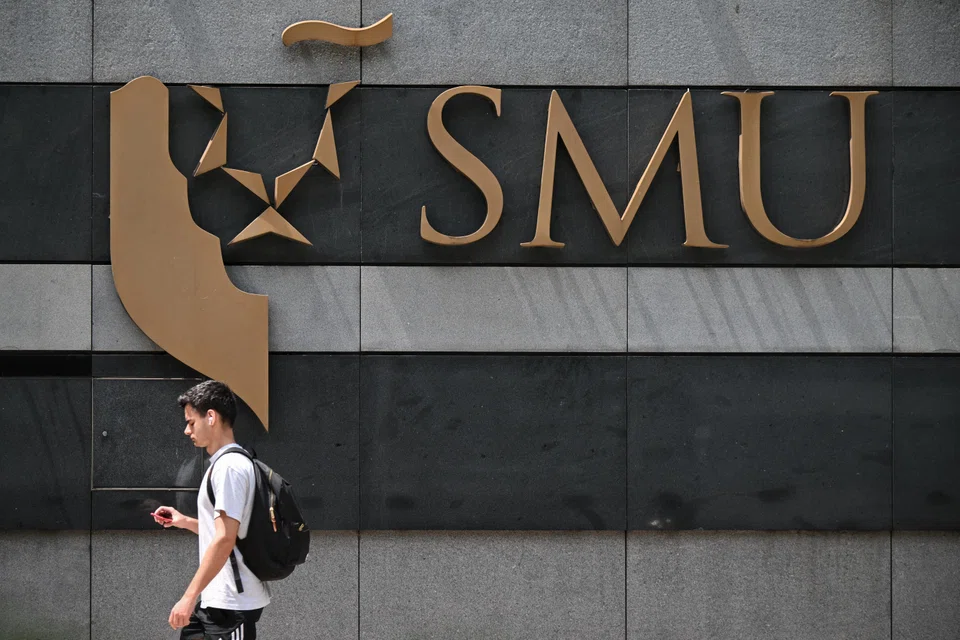
Universities foster a culture of experimentation and idea exchange, driven by in-house accelerators, competitions, and incubators. For example, startups from Singapore Management University (SMU)’s Institute of Innovation and Entrepreneurship have collectively raised over S$1.15 billion in the last five years. Competitions like the Lee Kuan Yew Global Business Plan Competition provide young founders with international exposure and access to venture capital networks.
A recent paper by SMU and Thailand’s Chulalongkorn University, Catalysing Growth: State of Asean University Innovation and Entrepreneurship Report 2024, confirms this trend, highlighting the increasing success of young founders emerging from academic settings.
Bridging the gap to empower student entrepreneurs
Student innovators emerging from universities are agile, iterative, and user-focused. This approach aligns perfectly with modern AI development, where constant feedback loops and rapid prototyping are crucial.
The VC community has a unique opportunity to support this next generation by providing crucial resources such as funding, mentorship, recognition through awards, and industry access. University-linked venture programmes serve as “translation layers” that help move research into commercial reality.
However, a large funding gap persists. Private-sector research and development outpaces academic investment by nearly five to one, creating an uneven ecosystem. While industry can scale solutions, its reliance on underfunded university labs strains research and weakens vital collaboration. Boosting public funding for academic research is essential to bridge this gap.
This is especially urgent in South-east Asia. With its young population (roughly 34 per cent of Asean’s 675 million people are aged below 35 years), thriving digital economy, and hunger for AI-driven transformation, the region is poised to lead in the application of advanced technologies. What’s needed is sustained investment in student entrepreneurship, cross-border collaboration, and context-sensitive innovation.
Yet, investment remains concentrated in global hubs like Silicon Valley and Beijing. Shifting momentum toward South-east Asia requires stronger support for its home-grown innovators.
The future of AI will not be written in isolation but will, instead, be shaped by researchers, entrepreneurs, investors, and institutions working in concert. To unlock its full potential, it is imperative that we nurture the ecosystems that allow ideas to become reality.
Universities are not just centres of knowledge. They are catalysts for real-world change. Paired with the right support and global partnerships, their outputs can shape industries, uplift communities, and redefine what’s possible.
By investing in these young innovators, we can ensure that AI truly serves humanity. The time to bridge the gap between academia and action is now.
The writer is visionary partner of the Lee Kuan Yew Global Business Plan Competition at Singapore Management University and ex-founding managing partner of Sequoia Capital China
TRENDING NOW

Once staunchly pro-China, Malaysian Chinese businesses are now distancing themselves from Beijing

New launch or resale unit? Here’s a guide for homebuyers
The lesser-known prospects in the Asian chipmaking supply chain

Cliff Tan has 7 million followers and a 4-month waitlist. Why won’t he expand his business?

