

Unlock Bukit Sembawang’s deep value by putting it up for sale
The group’s undervalued share price is unwarranted, given its rare landed housing land bank

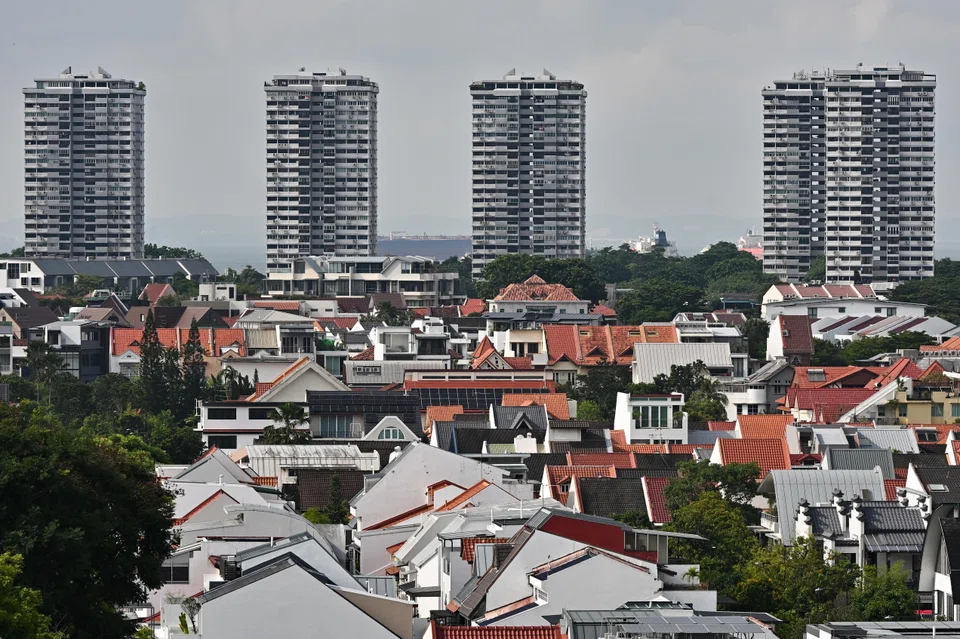
[SINGAPORE] Many affluent Singaporeans aspire to live in private landed homes, the purchase of which is generally restricted to Singapore citizens.
Between the fourth quarter of 2019 and Q4 2025, partly driven by the need for more space in the wake of the Covid pandemic, private landed home prices grew by more than 47 per cent, outpacing the 39 per cent rise in non-landed home prices, going by data from the Urban Redevelopment Authority (URA). The data for Q4 2025 is a flash estimate.
However, despite its substantial exposure to landed homes here, the share price of Bukit Sembawang Estates , which was incorporated in 1967 and is among Singapore’s pioneer property developers, is undervalued.
For the financial year ended Mar 31, 2025, the group’s net profit grew 61 per cent to S$114 million. Shareholders received a total dividend of S$0.20 a share for the last financial year, up from S$0.16 a share in the financial year before.
For the six months ended Sep 30, 2025, net profit fell 25 per cent year on year to S$47.2 million. Revenue from property development declined after completion of two condo developments.
With its Singapore focus, the group has avoided the fair-value and currency losses of peers that ventured overseas to markets such as the UK and Australia, or problems associated with China’s troubled housing market.
Bukit Sembawang’s share price has rallied over the past nine months. Still, the group’s share price of S$4.87 as at Jan 14 was at a discount of 21 per cent to its end-September 2025 net asset value (NAV) per share of S$6.13.
In short, while one pays market value to buy a new-built terrace house from the developer, one can buy the developer’s shares at a deep discount to what is likely a highly conservative book value. DBS Group Research estimated Bukit Sembawang’s revalued NAV per share to be S$10.68 based on a report dated Nov 28, 2025.
Prized landed housing land bank
Sure, many locally listed property groups trade below book value.
However, Bukit Sembawang had a net cash position as at end-September 2025 – unlike numerous property developers, which have significant net debt positions.
Crucially, the group owns large land tracts that can be developed as landed housing.
Owning a large landed housing land bank in Singapore is rare, as state land sales of private housing sites are predominantly for non-landed homes.
DBS Group Research’s report indicated that Bukit Sembawang owns more than 1.5 million square feet (sq ft) of land – largely located in the Ang Mo Kio, Seletar and Sembawang areas – that can be developed into landed homes with a total gross development value of around S$2.5 billion.
The group has made good progress with the sales of the landed houses at the 132-unit 99-year leasehold Pollen Collection in the Seletar Hills area, which is expected to receive its temporary occupation permit in 2026.
Shareholders can also look forward to contributions from sales at the newly launched 186-unit 99-year leasehold Pollen Collection II, among others. A search on URA Realis on Jan 14 showed caveats were lodged for 18 transactions of terrace houses with land plots of 1,615 sq ft to 2,669 sq ft at Pollen Collection II. Prices ranged from S$4.16 million to S$5.13 million.
However, shareholders may like the developer’s board of directors to work harder at unlocking shareholder value.
Maybe Bukit Sembawang can do an off-market purchase of its shares or actively repurchase shares which are then cancelled – like what Hongkong Land did.
Also, DBS Group Research suggested that Bukit Sembawang could pay a special dividend of up to S$1 per share.
Put control up for grabs
Nonetheless, what Bukit Sembawang’s board of directors should do to truly unlock value for shareholders is to ask its major shareholders to put their stakes up for sale, or, alternatively, offer to buy all the shares of the group at a fair price.
The group’s latest annual report indicated that Selat has a deemed interest of 29.1 per cent in Bukit Sembawang, and Lee Rubber’s combined direct and deemed interest in the group totals around 13.1 per cent. Selat and Lee Rubber are entities linked to members of the Lee family who are associated with OCBC.
Should a buyer acquire the interests of Selat and Lee Rubber, the said party can then offer to buy Bukit Sembawang’s remaining shares, with an eye to privatising it.
If control of Bukit Sembawang is up for grabs, expect parties who are drawn to the group’s attractive landed housing land bank to show keen interest.
Generally, buyers of suburban landed homes are local first-time buyers who do not incur additional buyer’s stamp duty. As supply of new landed homes is scarce, suburban landed housing demand is seen as resilient.
While listed property groups typically trade at depressed share prices, parties will pay up when control of a property-related group is available. For example, Cuscaden Peak trumped Keppel in the tussle for Singapore Press Holdings, excluding its media business, with shareholders exiting at above book value.
Perhaps, with the right competitive tension, a buyer may be found who would pay a premium to NAV to control Bukit Sembawang. This can be easily justified, given the group’s NAV excludes potential development profit and its strong financial position.
Should a buyer pay at least 1.1 times book value for Bukit Sembawang, the upside to shareholders is over S$1.87 a share, versus the share price as at Jan 14.
Bukit Sembawang’s deep value should be unlocked to benefit all shareholders.
Critically, active value unlocking by undervalued groups such as Bukit Sembawang will help drive investor interest in local stocks and give added momentum to the revival of Singapore-listed equities.
The writer owns shares in Bukit Sembawang


