Beyond survival: Elite UK Reit plots next phase of growth
After stabilising the trust, CEO Joshua Liaw looks to more asset repositioning, active portfolio management



[LONDON] Since taking over as CEO of Elite UK Reit’s manager in 2023, Joshua Liaw has helped steer the once-troubled trust out of crisis, stabilising its balance sheet while laying the groundwork for its next phase of growth.
“When I first joined three years ago, the Reit (real estate investment trust) was quite frankly distressed,” Liaw said during a media visit to its properties last week.
The Reit was grappling with gearing of 47.5 per cent – just shy of the 50 per cent regulatory limit – alongside refinancing concerns and vacancies across several assets.
“I actually volunteered to relocate myself to London for four months straight... to work this out,” he added.
An equity fundraising exercise in December 2023 brought gearing down to a “more sustainable level”, while a subsequent refinancing one addressed investors’ concerns over the trust’s financial stability.
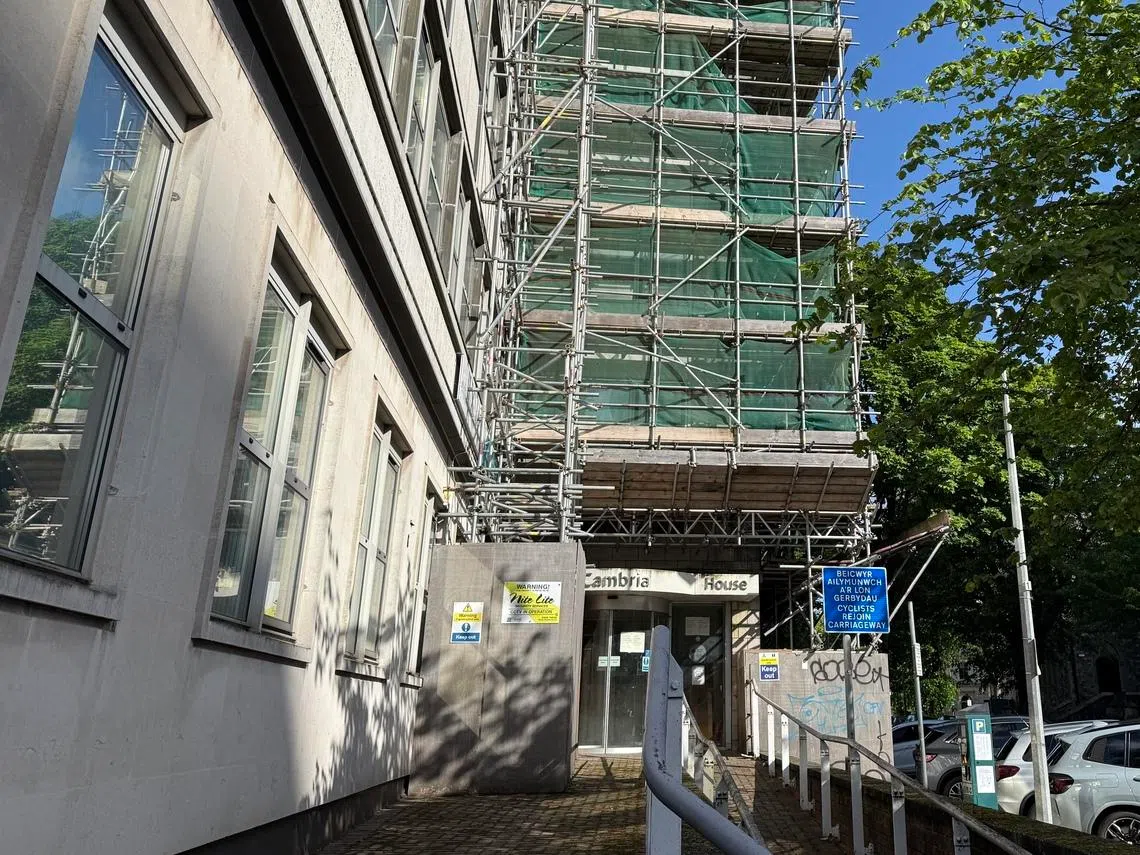
Since then, Elite UK Reit has broadened its investment strategy beyond its traditional government-leased portfolio of primarily job centres and offices into the living sector – namely the purpose-built student accommodation (PBSA) and build-to-rent segments. This includes repositioning vacant buildings in Dundee, Scotland, and Cardiff, Wales, into student housing assets.
Liaw said the move into the living sector was driven by investors’ preference for defensive and counter-cyclical income streams.
That said, he stressed that the manager was not looking to acquire PBSA assets from other owners, especially amid elevated financing costs.
Instead, the opportunities in Dundee and Cardiff emerged after certain government leases expired, allowing the manager to assess whether the underlying sites could be redeveloped for higher-value use.
“It’s based on what opportunities, what properties we can reposition at that point in time,” he said. “It’s not that we chose Dundee and Cardiff – it’s more that Dundee and Cardiff chose us.”
Fortunately, Liaw noted that the two were “excellent markets” with student-to-bed ratios that are “very much in favour of developers”.
Beyond expanding into the living sector, the manager has also been working to reduce lease concentration risks within its core government-backed portfolio.
In February, the Reit secured lease extensions for around 70 per cent of its properties leased to the UK government’s Department for Work and Pensions (DWP). The exercise increased the portfolio’s weighted average lease expiry to 7.2 years on a pro forma basis as at end-2025, from 2.4 years previously.
“That has always been a concern since (the trust’s) initial public offering six years ago, because close to 96 per cent of our leases (were set to expire) in 2028,” Liaw said, making the recent exercise a “very big milestone” for the Reit.
The improved income visibility lifted portfolio valuations to £460.2 million (S$790.2 million) as at Mar 31, 2026, and reduced net gearing to 37.4 per cent, from 40.7 per cent as at end-2025.
“The world is still rather uncertain today,” said Liaw. “The macroeconomic environment is volatile, so (that) headroom… is very much well-received.”
Beyond survival
With its balance sheet stabilised and the bulk of its leases extended, the manager is now turning its attention towards capital management and portfolio reconstitution.
One immediate priority is staggering the trust’s debt maturities and diversifying its funding sources. “We have been speaking to lenders – new lenders as well as existing lenders,” said Liaw.
The manager will also continue exploring redevelopment opportunities across its portfolio, particularly for some of the Reit’s freehold and “virtual freehold” assets.
“That’s super important for us – for growth but also for future-proofing,” said Liaw. “Some of these seeds will not (bear) fruits immediately… We’re taking a very long-term view in some of these repositioning projects.”
One example is Peckham Jobcentre in London, which comprises two freehold sites collectively valued at more than £15 million, up 8 per cent following the recent lease extension.
Although the properties continue to generate stable rental income from DWP, they could hold longer-term redevelopment potential as the surrounding neighbourhood evolves.
“We are sometimes thought of as a future land bank with cash flow,” Liaw said. “While the government will continue to occupy it and give you rental every month, that doesn’t mean you’re going to lose out on future optionality.”

The manager will also assess opportunities to recycle capital through selective divestments and portfolio reconstitution.
For example, it received planning approval in February to repurpose a vacant site in Blackpool, previously zoned for office use, into a data centre facility spanning up to 20 acres (8.1 hectares).
So far, Liaw said the costs and efforts required to ready the plot have been “very worth it”. “Now it’s just (settling) the finishing touches before we proceed to monetise it in a few coming months.”
Proceeds from the eventual divestment could be redeployed into new investment opportunities, pare down debt, or returned to unitholders through share buybacks or special dividends, he said.
For some of its other assets, Liaw said the manager has in recent years received “unsolicited inquiries” from interested buyers. “We have very politely refused in some cases, because we were waiting for the lease regear to happen. Now that (it has), we can relook at some of these inquiries going forward.”
“We (don’t want to) just be a Reit manager that holds assets,” he added. “We also want to do the right thing by (actively managing) and selling the assets… at peak valuations. I think you will see us doing a lot more in the next few months.”
Navigating uncertainty
Despite expanding into the living sector, Liaw said the Reit was not looking to aggressively diversify across multiple real estate segments. “Even in this sector, there is a lot more that we can do... We don’t have to be everything to everyone.”
Asked about potential opportunities in social housing, he noted that the segment sat within the living sector and was supported by government-backed cash flow – “exactly the two things we love, and within our investment strategy”.
But these assets remain unfamiliar to Singapore investors. “We are looking at that, but currently, I don’t think we have anything that’s specifically available.”

Looking ahead, Liaw cited geopolitical tensions, inflation and interest-rate volatility as key risks, but said the portfolio remains relatively defensive.
Most of the Reit’s leases are structured as triple-net leases, where tenants are responsible for all ongoing expenses.
Around 92 per cent of its debt is on fixed rates, with borrowing costs at 4.7 per cent as at end-Q1.
Liaw added that job centres – which account for 66 per cent of the trust’s gross rental income – are particularly resilient during economic downturns given the counter-cyclical nature of employment support services. These are government offices that help job seekers find work and access welfare support.
The Reit’s renewed leases also include rent reviews linked to the consumer price index, with compounded annual rental increases ranging from 1 to 5 per cent.
On the UK’s political uncertainty, Liaw pointed out that leases were signed with the UK government through the Secretary of State for Housing, Communities and Local Government.
In any case, he said: “The government of the day, whether it is the Conservatives, Labour or Reform, I think everybody will agree that getting people back to work is a key pathway to prosperity.”
“No party will say we want more misery, we want more unemployment,” Liaw added. “It’s going to be very much part of the social fabric of the UK for the long foreseeable future.”