Boom in big-ticket real estate deals keeps Singapore dealmakers on their toes
The price gap between buyers and sellers has narrowed – small enough to find a negotiated middle ground

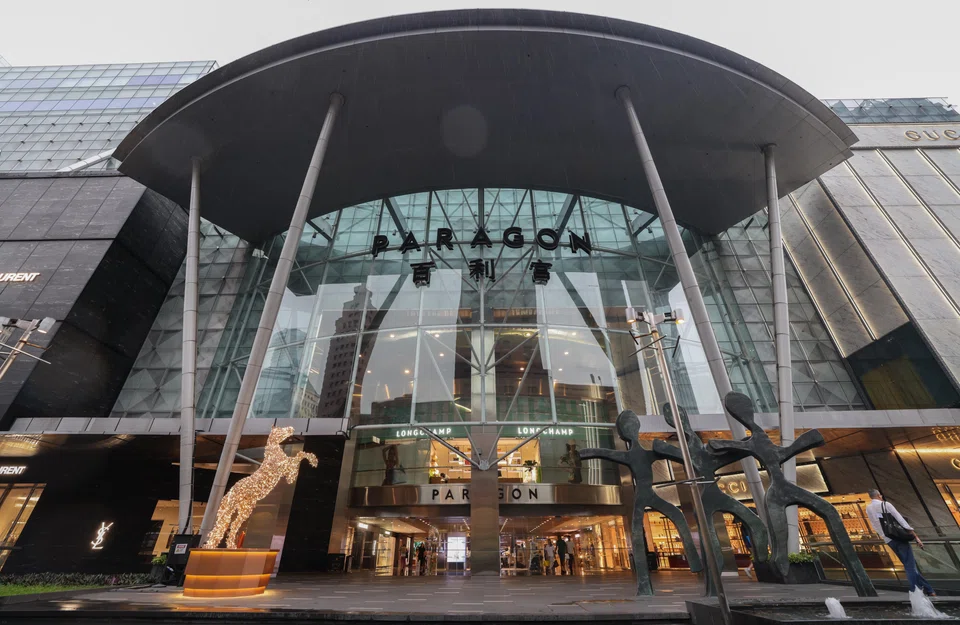
[SINGAPORE] Real estate dealmakers are preparing for a busy season with a boom in big-ticket transactions.
This comes as cheaper financing makes large acquisitions viable while also bringing more assets onto the table.
“We are clearly seeing greater transaction momentum compared with the past one to two years,” said Chua Yang Liang, JLL South-east Asia head of research and consultancy.
He added: “Investment managers are actively acquiring and recycling capital, and portfolio transactions are gradually re-emerging, particularly in the retail and industrial segments. Competitive tension has increased for high-quality assets, especially where there is a clear value-add or repositioning angle.”
Most recently, in a pair of blockbuster deals, CapitaLand Integrated Commercial Trust (CICT) sold Asia Square Tower 2 to IOI group for nearly S$2.5 billion in April, redeploying the proceeds into a S$3.9 billion acquisition of Paragon mall from Cuscaden Peak Investments.
The surge in activity is keeping capital markets teams on their toes. Pitching for business has become “very competitive”, said one agent.
“We have more than doubled our mandates compared with one to two years ago and are seeing roughly 1.5 to two times more assignments than before,” said Shaun Poh, executive director of capital markets at Cushman & Wakefield (C&W).
From December to date, the firm has closed six major deals, some jointly marketed with Savills Singapore, totalling about S$2.6 billion.
These included the S$809 million sale of The Clementi Mall to Chinese investor Elegant Group in December 2025; Altallo Asset Management’s S$175 million acquisition of 158 Cecil Street in February and S$372 million purchase of i12 Katong in April 2026; and Link Reit’s S$250 million sale of retail space at Thomson Plaza.
Other deals inked this year include the en bloc sale of The Centrepoint rear block for S$391.9 million, brokered by Savills.
US asset manager Hines acquired Bukit Panjang Plaza from CapitaLand Integrated Commercial Trust (CICT) for S$428 million in a deal brokered by JLL, which also handled the Asia Square Tower 2 sale, The Business Times understands.
Poh said C&W is in negotiations for another six to seven commercial deals worth more than S$300 million each.
Falling interest rates boost interest
After nearly two sluggish years during the high-interest rate cycle, falling financing costs and renewed investor confidence have brought buyers back to the market and revived deals that had previously stalled.
Jeremy Lake, managing director of investment sales and capital markets at Savills Singapore, said the sharp decline in the Singapore Overnight Rate Average (Sora) from about 3-4 per cent in early 2025 to just over 1 per cent by the end of the year had materially improved investment underwriting.
Tricia Song, head of research for Singapore and South-east Asia at CBRE, noted that office sector deals in the first four months of 2026 have already shot ahead of the total volume for the whole of 2025. Office investment sales in the year-to-April is at about 240 per cent of the 2025 tally, and 398 per cent of 2024’s total.
Retail investment sales volume over the same period reached 161 per cent of total volumes recorded in both 2025 and 2024, she said.
Singapore was the top-performing commercial real estate market in the Asia-Pacific in Q1 2026, with transaction volume surging more than four times year on year to US$7.9 billion, according to MSCI.
“Apac’s (Asia-Pacific) commercial real estate markets have entered 2026 on a strong footing, with Singapore the clearest illustration of how falling interest rates have contributed to improved market liquidity,” said Benjamin Chow, head of private assets research for Asia at MSCI.
He added that assets such as i12 Katong, which had been on the market for some time, are now trading again, while recent deals are transacting at meaningfully tighter cap rates than three to four years ago.
Savills’ Lake said: “If you’re borrowing money at just over 2 per cent, while property yields in Singapore range from about 3 to 6 per cent, depending on the asset class, the financial returns investors can achieve are much more compelling.”
He added: “Two to three years ago, because interest rates were high, the market was plagued by a price gap – sellers may have wanted S$100 while buyers were willing to pay S$80, leaving a gap of S$20 that was too wide to negotiate a deal.”
Now, the price gap has narrowed significantly – small enough to find a negotiated middle ground – as sellers moderate their expectations and buyers become more competitive on pricing, said Lake.
Real estate investment trusts (Reits), including CICT and Lendlease Global Commercial Reit (LReit), have become more active, he said.
LReit acquired the remaining 30 per cent stake in PLQ Mall for about S$116.4 million in February, following its initial purchase of a 70 per cent interest in the mall last November for S$619.5 million.
“Reduced cost of debt has strengthened Reit balance sheets and distribution metrics, enabling acquisitions to be DPU-accretive, which encourages more active portfolio rebalancing for Reits,” said Song.
Moves by Hongkong Land and IOI also lit up the commercial real estate scene.
In February, Hongkong Land launched a S$8.2 billion Singapore private fund focused on prime commercial assets in the city.
The fund was seeded with the group’s one-third stakes in Marina Bay Financial Centre Towers 1 and 2, Marina Bay Link Mall, One Raffles Quay and One Raffles Link, as well as Asia Square Tower 1, which is wholly owned by Qatar Investment Authority.
According to a Mingtiandi report, Hongkong Land is now looking to grow its fund management business with similar private funds in Apac gateway cities. Chief executive officer Michael Smith told a forum on May 12 that the fund has investor backing to grow from S$8 billion to as much as S$15 billion over time, and is eyeing Marina Bay opportunities.
Limited assets available
JLL’s Chua said: “There is no shortage of capital or buyer interest in the market. The primary constraint today is the limited availability of investment-grade assets with sustainable rental growth. Many institutional owners, including developers, family offices and sovereign vehicles are not under pressure to sell and can afford to wait.”
He added: “As a result, the next leg of transaction growth is more likely to be driven by the seller side, particularly private funds reaching redemption cycles, rather than forced capital deployment by buyers.”
Investment activity has largely continued uninterrupted despite heightened tensions in the Middle East.
“We have not experienced buyers changing their minds, backing out of deals or seeking lower pricing,” said Lake.
“If things deteriorate in the Middle East and stock markets go through a heavy correction, sentiment could deteriorate and transaction volumes could slow again. But we are not at that point thus far and investors seem to be assuming the bottle-half-full scenario.”
Singapore continues to benefit from its reputation as a safe-haven market for capital, he added.
Wong Xian Yang, C&W head of research for Singapore and South-east Asia, said Singapore’s solid supply demand dynamics across the office, retail and industrial sectors support investor interest.
“The supply pipeline is quite constrained and demand has been very resilient over the last few years,” said Wong, giving rise to strong and visible income streams.
CBRE’s Song said: “The Singapore office story is supported by strong tenant demand and accelerating rents in the next five years.”
New office supply for this and next year is expected to come in significantly below the historical average, said Wong. Supply is projected to edge up to around 300,000 square feet (sq ft) in 2027, before surging by about 2.4 million sq ft in 2028.
Activity to pick up in H2
C&W’s Poh believes deal activity could pick up in the second half of the year, with several assets now being shopped.
At Marina One, Khazanah Nasional and Temasek are said to be seeking between S$5 billion and S$6 billion for the office and retail components of the complex, and One Raffles Place is reportedly being marketed at around S$2.5 billion. Bugis Junction Towers is also up for sale with a guide price of S$685 million.
Suburban retail continues to attract domestic and regional capital, driven by its non-discretionary income profile and hidden value propositions, said JLL’s Chua. Among properties on the market is Woodleigh Mall, while White Sands is in the process of being sold.
Investor appetite for industrial assets has been robust in recent years and is expected to stay supported, said Loh Lee Fen, CBRE Singapore executive director of industrial and logistics capital markets.
“The improved financing environment has meaningfully enhanced yield-on-cost metrics, allowing investors to capture a larger share of returns through income rather than relying solely on capital appreciation,” she said.
Still, JLL’s Chua cautioned that risks remain as interest rates could rise again.
“Structurally, a key risk is the widening bid‑ask gap, as sellers with no urgency anchor to rising forward rents. A durable recovery will ultimately require more motivated sellers, most likely through private-fund redemption cycles.”