

Singapore retail rents rise 0.6% in Q2 as vacancy rate creeps up: URA
Higher operating costs and asset enhancement works could keep rents on an upward trend, say some analysts


[SINGAPORE] Rents of retail space in Singapore’s central region rose 0.6 per cent in the second quarter of 2026, swinging up from the 0.6 per cent decrease in the previous quarter, figures released by the Urban Redevelopment Authority (URA) on Friday (Jul 24) showed.
“Retail rents have continued to edge higher, even as vacancies have inched up across key submarkets,” said Wong Shanting, Newmark director and head of research. “The reality is that cost and overhead pressures have increased, and a wave of mall ownership changes could see retail rents trend higher after asset enhancement initiatives.”
Despite a more cautious business sentiment, Singapore continues to draw new retail and F&B brands, supported by its affluent consumer base, recovering tourism sector and its position as a regional business hub, said analysts.

Notable entrants in the first half of 2026 included Chinese tea beverage chain Molly Tea, fast-food chain Lotteria and Subdued, a fast-fashion retailer from Rome.
F&B remained the key demand driver, accounting for 53 per cent of prime mall openings in H1, while lifestyle contributed 16 per cent and fashion made up 14 per cent of new openings, said Wong Xian Yang, head of research for Singapore and South-east Asia at Cushman & Wakefield (C&W).
Islandwide, retail vacancy was 6.5 per cent in Q2, from 6.3 per cent in the preceding quarter. Vacancy in Orchard Road rose to 7.2 per cent in Q2, from 7.1 per cent in the previous quarter, and vacancy in the Rest of Central Region and Outside Central Region rose to 8.3 per cent and 5.2 per cent, respectively, according to Newmark data.
In Q2, the amount of occupied retail space decreased by 37,000 square metres (sq m), compared with the increase of 6,000 sq m in the previous quarter. Retail stock decreased by 28,000 sq m in Q2, compared with the increase of 10,000 sq m in the previous quarter.
Higher retail vacancy rates alongside rising rents reflect continued tenant churn, as weaker retailers leave the market amid mounting cost pressures. At the same time, demand from new entrants and expanding brands continues to support rents, especially for well-located retail assets, said C&W’s Wong Xian Yang.
“Prime retail assets are expected to remain supported by tight availability, underpinned by limited new supply. Islandwide retail completions are projected to average just 400,000 square feet annually through 2031, around half the historical average, with most new supply concentrated in suburban mixed-use developments,” he added.
SEE ALSO
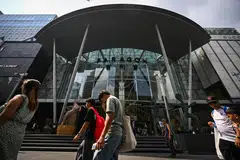
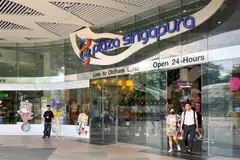
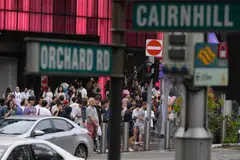
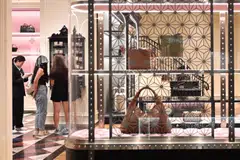
Retail leasing activity along prime Orchard Road is likely to become more selective, with performance increasingly driven by top-tier luxury malls, said Newmark’s Wong Shanting.
Leonard Tay, head of research at Knight Frank Singapore, said that calls to transform Orchard Road to boost footfall risk becoming a recurring narrative, as the shopping belt continues to benefit from stable tourist arrivals and rising visitor spending. “While select older malls may warrant targeted rejuvenation, broad overhauls are unlikely to be necessary, given the continued stability in tourist arrivals and the sustained growth in per capita tourist spending,” he noted. Singapore’s decentralised urban structure means consumers move efficiently between residential and commercial hubs, rather than congregating in a single retail district for extended periods, Tay added.
The completion of more private homes in the Orchard precinct could lift off-peak footfall and contribute greater organic vibrancy, but it “should not be taken as a silver bullet that transforms Orchard Road into a 24/7 precinct”.
He expects tourist arrivals to remain stable in H2 2026, with higher per capita spending supporting retail sales. Retail rents are projected to remain resilient, with full-year growth of between 2 and 4 per cent, despite ongoing sector challenges.
Prices of retail space rose 0.8 per cent in Q2, down from the 2.2 per cent increase in the previous quarter. As at end-Q2, there was a total supply of about 604,000 sq m gross floor area of retail space in the pipeline, on par with the 605,000 sq m GFA of retail space in the pipeline in the first quarter.
Decoding Asia newsletter: your guide to navigating Asia in a new global order. Sign up here to get Decoding Asia newsletter. Delivered to your inbox. Free.
Copyright SPH Media. All rights reserved.
TRENDING NOW

S$8 billion wiped off OCBC value as shares slide 5.8% in heavy trade

Grab CEO’s wife Chloe Tong on life with Anthony Tan and finding her purpose
Brookfield denies accusation it cut Soilbuild out of Mapletree deal
8 public officers referred to police over property buys near unannounced MRT stations: Chan Chun Sing

