Singapore’s nightlife is struggling. Industry chief Danny Loong wants to ‘bring back the energy’
A new white paper lays out proposals to build a broader after-dark economy that goes beyond bars and clubs

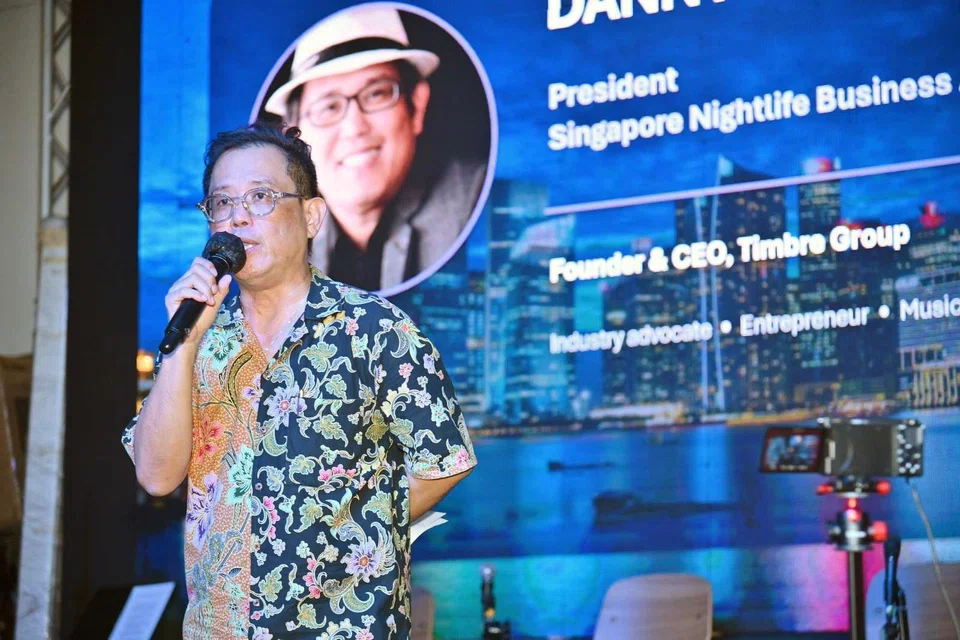
[SINGAPORE] For Singapore Nighttime Business Association (SNBA) president Danny Loong, building a vibrant after-dark economy is no longer simply about bars and clubs.
It also means giving people more reasons to leave home in the first place, and making it easier for them to get home afterwards.
But the nightlife sector is in difficult straits. “It’s struggling, if I’ll be honest, and I think we are trying to adjust to the new realities,” Loong told The Business Times on Thursday (Sep 3).
The blues musician and co-founder of lifestyle group Timbre recalled how people used to spend longer nights out, moving from one venue to another – an energy he believes has diminished over the years.
“We need to bring back that energy,” he added.
Against this backdrop, a new white paper from the association examines the challenges facing Singapore’s traditional nightlife sector and proposes ways to develop a broader night-time economy.
According to the paper, released on Tuesday, operating revenue among pubs, nightclubs, discotheques, dance clubs and karaoke lounges plunged nearly 58 per cent to S$284.7 million in 2022, from S$674.7 million in 2015.
Loong attributed the decline partly to changing consumer habits following the pandemic, though he stressed that the challenges were not unique to Singapore.
There was an initial surge in demand after Covid-19 restrictions were lifted, he said, but this subsequently eased as Singaporeans resumed travelling, and habits formed during the pandemic – including spending more time at home – persisted.
He did not specify when the surge occurred.
Singapore lifted its remaining Covid-19 restrictions in February 2023.
Loong also pointed to the country’s weather as a challenge for outdoor events and alfresco venues, though he stressed that these were his observations rather than conclusions based on research.
The paper highlighted rising manpower, rental and other operating costs as pressures on businesses as well.
Adding to it, a recent survey estimates that the Republic could record a S$290 million net increase in outbound annual spending across the Causeway after the Johor Bahru-Singapore Rapid Transit System Link opens on Jan 1 next year.
Six pillars
In response to the industry’s challenges, the white paper set out recommendations spanning six pillars.
These include developing distinctive night-time precincts; providing targeted cost support for businesses; and setting up a National Nighttime Economy Office, supported by an inter-agency council, to coordinate policies affecting the sector.
It also suggested reviewing alcohol excise policies; improving late-night transport; and introducing a government-supported night pass to encourage participation in after-dark activities.
The strategy goes beyond reviving the nightlife industry of old – a shift reflected in the association’s recent rebrand from the Singapore Nightlife Business Association to the Singapore Nighttime Business Association in August.
“Nightlife is usually linked more to bars, restaurants and nightspots,” said Loong. “But these days, it’s about building experience, placemaking, place management, and combining all these different parts together to make it more vibrant.”
He added that the night-time economy encompasses a much broader range of activities, from hospitality and entertainment to retail, tourism, transport, culture and wellness.
“It used to be that after dark means after seven or eight. That doesn’t apply anymore,” said Loong. “Night-time starts, for me anyway, right after work (at) about five or six o’clock.”
The aim, he noted, is to give people more reasons to head out during these hours by bringing different activities together.
But drawing a crowd alone is not enough, he noted. Surrounding bars, restaurants, cafes and other businesses also need to benefit.
For Loong, there is a social dimension as well to a stronger night-time economy.
“It’s basically a social lubricant, and it doesn’t mean just having drinks,” he explained. “It’s an opportunity for people to socialise through different activities. And I think we all need that; otherwise, we will always be at home. You need to meet people.”
Three priorities
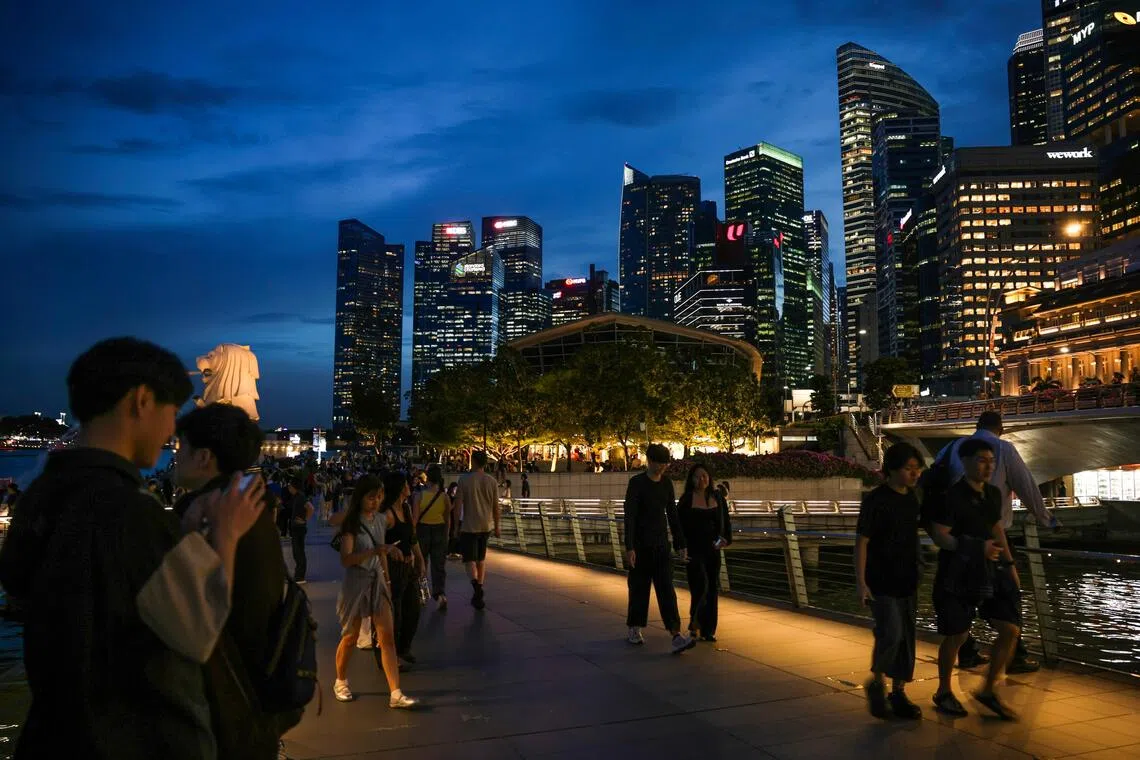
From among the recommendations in SNBA’s white paper, Loong highlighted three that he most hopes will gain traction: improving late-night transport, expanding precinct activations and introducing some form of night pass.
“If transport is so expensive, how will young people go home?”
The white paper described late-night transport as a “structural ceiling” on the night-time economy, and proposed measures including extending public transport operating hours on selected nights and reintroducing a NightRider bus network.
“The discussion about transport is on the right track,” said Loong, though he did not disclose which parties SNBA was engaging. “Just have to get down to the details.”
SNBA recently tested its precinct concept with Village Encounters at Holland Village, a free two-day pop-up held on Aug 29 and 30 in partnership with Enterprise Singapore.
The event combined live performances, retail, art and family-friendly activities with promotions for businesses in the area. Loong said that it “went well”, and described it as a useful “sandbox” for testing the approach before taking it to other precincts.
“If we can do two or three of those a year, that’s going to be progress for us,” he added. The white paper calls for at least four more such activations over the next two years.
On the night pass proposal, the paper suggested that such an initiative could initially provide government-supported credits for transport and ticketed night-time experiences.
He compared the idea with the SG Culture Pass, which gives eligible Singaporeans S$100 in credits for arts and heritage activities.
“It is great, but it only benefits people who are interested in cultural activities,” he said.
By contrast, he argued, night-time transport support could have broader reach, since anyone heading out would eventually need a way home.
The white paper has since been presented to the government and is currently being reviewed.
In the meantime, SNBA is setting up a Nighttime Economy Singapore Alliance, comprising trade associations and stakeholder bodies across hospitality, F&B, retail, arts and culture, tourism, entertainment, transport and placemaking.
“There’s strength in numbers. Rather than working in silos, we want to bring everyone together and say: These are the things we would like to see happen, and these are some of our suggestions.”
As for how many of the white paper’s proposals ultimately gain traction, Loong was pragmatic.
“I would be more satisfied if more things could be done,” he said. “But I will take what we can get, and then we take it step by step, because all these things require planning, a timeline and coordination.”