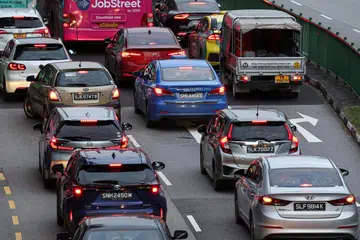
Industry calls for closer look at commercial vehicle category as its COE premiums breach new high
Businesses ask for ways to lower commercial vehicle COE premiums or make them fairer as costs surge

[SINGAPORE] On the back of record-breaking premiums, industry players are calling for changes to Certificate of Entitlement (COE) rules for Category C, which is to register commercial vehicles.
Direct action is needed to ensure that smaller businesses are not priced out of the market, said observers, even as a review of the COE system is underway.
Christopher Tan, associate faculty member at the Singapore University of Social Sciences (SUSS), said: “High Category C premiums have dire consequences for smaller businesses and tradesmen, who will find it increasingly difficult to eke out a living. But it is also reflective of a need for wider reform in our transportation system.”
Category C has been on a consistent uptrend in 2026. On Wednesday (Jul 8), it reached a new high of S$95,000, after setting records in May and June.
The average premium for the category in 2026 is S$83,055, compared to S$69,302 in 2025 and S$70,932 in 2024.
Solutions to scale

As reported in BT, new 2026 incentives for electric heavy vehicles (EHVs) coupled with the high price of diesel as well as large infrastructure projects have spurred strong demand, raising Category C premiums.
For the first five months of 2026, heavy and very heavy vehicles made up 67.5 per cent of commercial vehicle (CV) registrations, compared to 51.4 per cent in 2023.
All CVs – ranging from buses to light, heavy and very heavy goods vehicles (HGVs) – require a Category C COE.
But light CVs, which include vans and small lorries, are much less expensive than heavy and very heavy vehicles, which include concrete mixers, prime movers and garbage trucks. Thus, a COE makes up a smaller proportion of their final price.
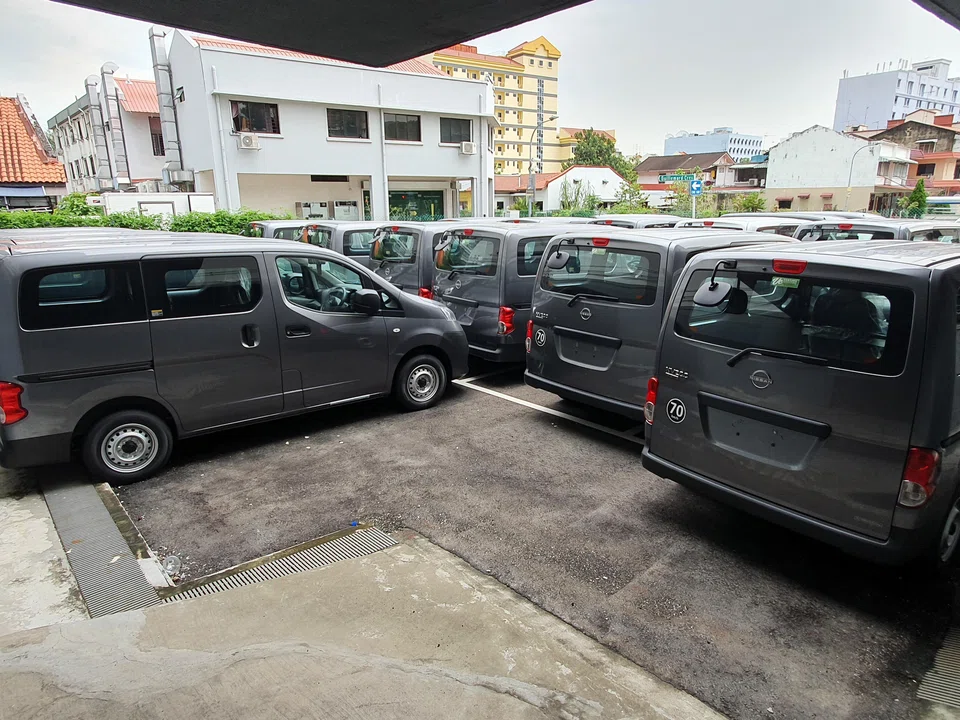
Ron Lim, head of sales and marketing at Nissan distributor Tan Chong Motor Sales, said: “Smaller businesses will not be able to afford these premiums now. We need to look at how to balance the system to allow smaller players access to vehicles.”
He noted that a Nissan NV200, a light CV, now costs around 34 per cent more at S$133,800 with COE, compared to around S$100,000 in December 2023.
Without a COE, a small van costs around S$50,000, while a prime mover can cost more than S$200,000.
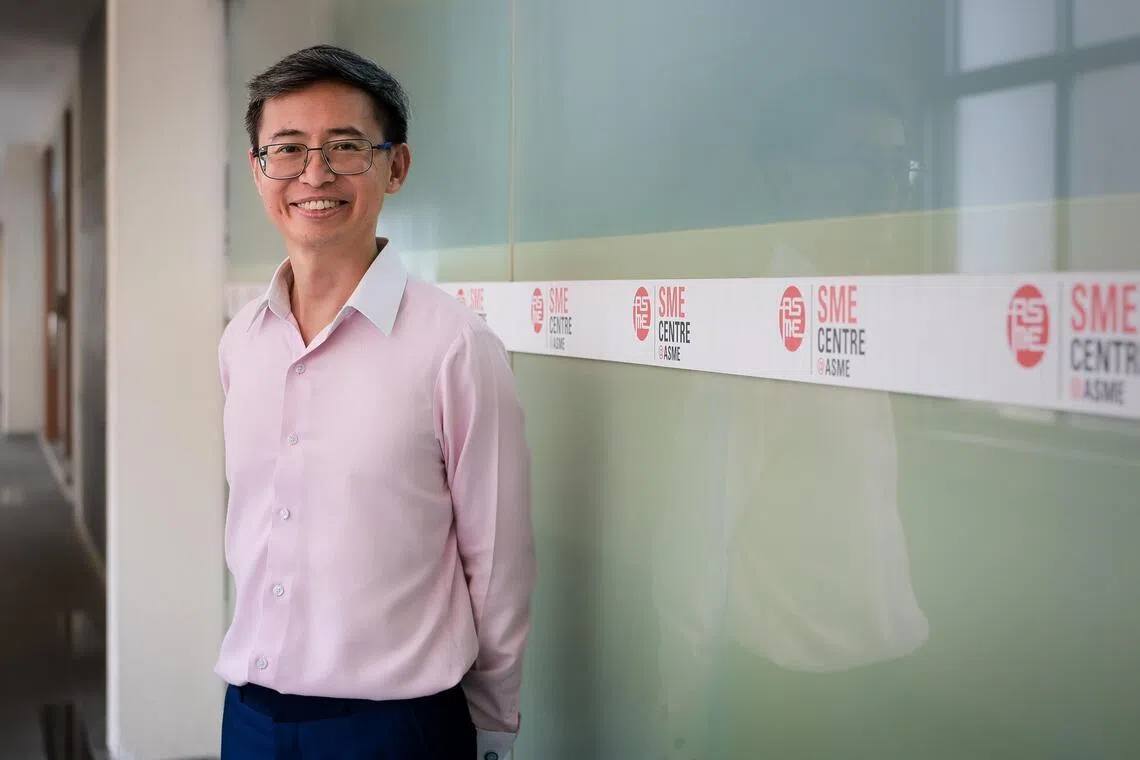
These rising costs are a “real problem for SMEs”, said Ang Yuit, president of the Association of Small and Medium Enterprises (Asme).
“Small business owners become price takers when they rent vehicles and no longer own them. They cannot control costs on that side. High premiums are not healthy as it creates a secondary market, and small players will be squeezed out,” he said.
Keith Oh, president of the Automobile Importer and Exporter Association (Singapore), suggested a per-dollar surcharge based on a vehicle’s open market value or OMV.
OMV is the value of a vehicle when it lands in Singapore, before major taxes are applied.
“This is the same problem we see in passenger cars. For Category B, a family multi-purpose vehicle is paying the same COE premium as a Lamborghini. Why should a small van pay the same premium as a heavy vehicle that costs much more?”
“High COEs also affect foreign investment, as companies coming here face higher costs – can Singapore still be a viable place to base your business? Every little bit makes it less viable.”
Ang Yuit, president of the Association of Small and Medium Enterprises
He said that while there are currently car loan limits based on OMV as well as tiered Additional Registration Fee taxes, these have not taken inflation and the rising spending power into account.
Other observers suggested removing EHVs from the bidding pool, enacting something similar to the Early Turnover Scheme (ETS).
Glenn Tan, president of the Motor Traders Association of Singapore, said: “ETS helped keep the heavier vehicles in check, but now it’s a free for all. You can’t simply introduce incentives and let them bid premiums up, it doesn’t help anyone.”
ETS was an alternative way for owners to replace CVs. The scheme gave COE rebates for replacing older, more polluting vehicles. It ended in 2025, meaning bidding for Category C COEs has intensified since.
Tan, who is also deputy chairman and managing director of Tan Chong International, added: “ETS was effective as it was demand-based. If there was a way for existing HGV owners to trade in their vehicles to EHVs one-for-one, they would not need to bid for COEs.”
C: Beyond one category?
Observers said that separating the COE category to account for different types of CVs will help make things fairer and may help regulate the rise of premiums.
One solution would be to separate the category for light and heavy CVs.
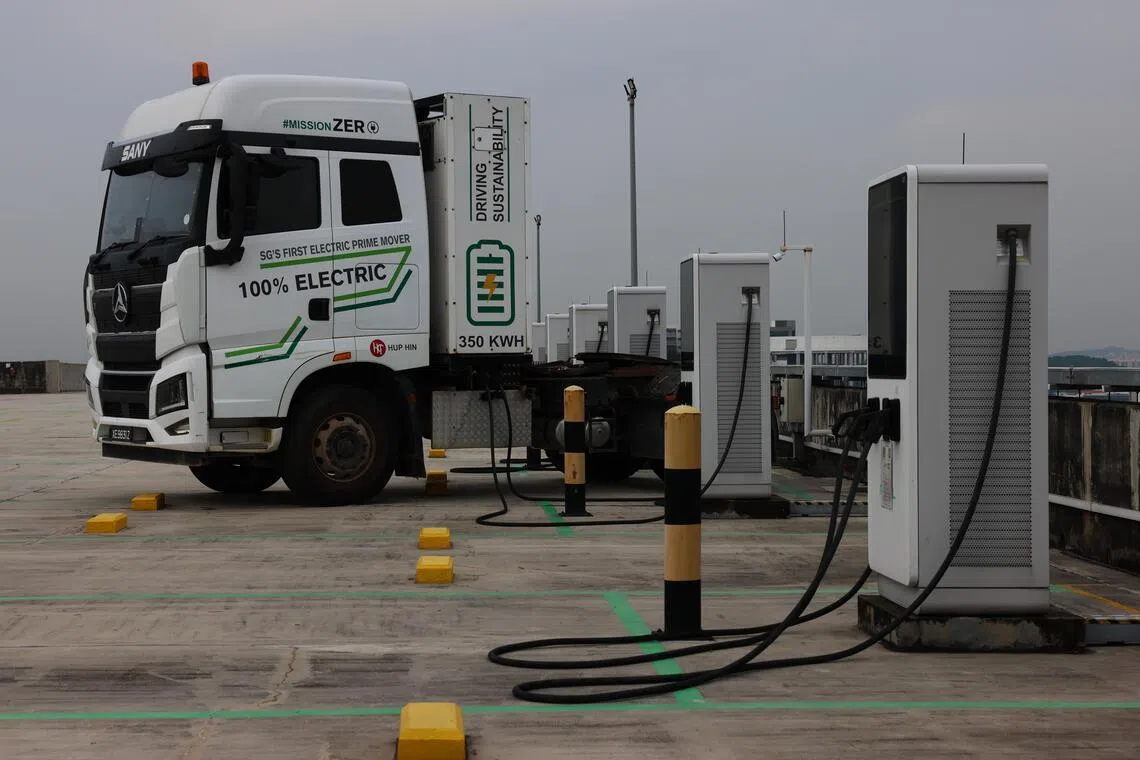
Ryan Woon, CEO of EcoSwift, the agent for Sany commercial vehicles, said: “Decoupling light and heavy vehicles will give light vehicle owners more breathing space, and reduce bidding competition as the vehicles are completely different and used for different purposes.”
Category C’s relatively small quota is also a factor in high premiums, which could also complicate splitting the category.
In the last round of bidding on Jul 8, Category C’s quota was 296, compared to 1,244 for mainstream cars (A) and 867 for larger cars (B).
CVs are the only vehicle category that is allowed annual growth at a rate of 0.25 per cent per annum. But this may be too low for current needs.
“Even without incentives, given Singapore’s growth and the sort of projects and logistics we have now, with even more expansion on the way, the quota is just too small,” said Ecoswift’s Woon.
Splitting a category with such small numbers would make it even more prone to fluctuations in premium, added SUSS’ Tan, but he cautioned that an increase in quota would need to be balanced carefully to manage congestion and pollution from CVs, a significant number of which are still diesel-powered.
A tricky balance ahead
A review of the COE system is currently underway, as announced by Acting Minister for Transport Jeffrey Siow during his ministry’s Committee of Supply debate in March. To conclude by the end of 2026, the review will look at how to improve the COE categorisation. Structural proposals, such as applying discounts or surcharges based on OMV, will also be studied.
High Category C premiums could also impact Singapore’s business competitiveness.
“COE premiums become a ‘stand out’ number for us, when we compare Singapore to other countries. Energy prices are rising for everyone, but things like COE make Singapore less competitive, as our costs are shooting up more compared to other places,” said Asme’s Ang.
“It also affects foreign investment as companies coming here face higher costs. Can Singapore still be a viable place to base your business? Every little bit makes it less viable,” he added.
Observers said that a mismatch of the Category C quota to Singapore’s CV needs could have consequences for the wider economy, with a key point being that there are little or no alternatives for businesses who need CVs.
“With the logistics sector being the artery of every economy, it is a critical sector to support Singapore’s economic growth ambitions. By limiting the number of commercial vehicles on the road, you are also limiting your economy’s growth potential,” said Woon.
“The whole system needs a rejig,” said SUSS’ Tan, who is also a former senior transport journalist with The Straits Times.
The system was implemented in 1990, when Singapore’s population stood at three million, and e-commerce was non-existent, he explained, and does not take into account that large commercial interests now influence bidding.
“For fleets, in passenger cars or commercial vehicles, it’s the same. Keeping premiums high means more people leasing from you because they can’t afford to own, and the paper value of your vehicles is kept elevated,” he said.
A reform of the system, said Tan, would need to go beyond COE alone, but include population, urban de-centralisation, road capacity, intelligent traffic solutions and more.
“The quota system cannot go on alone without huge cost consequences to the country. A broad multi-faceted fundamental review is needed, and urgently,” he said.