

Are shophouses getting their grooves back?
At face value, it appears so but wait until you see its pre-crisis levels.
According to Ong Kah Seng, founder and director of R’ST Research, sales activity of shophouses remains healthy at 224 transacted from January to August or just slightly lower than last year’s 8-month equivalent of around 255 units.
In terms of the total value of shophouses transacted in each year, the first 8 months of 2011 has seen about S$861 mil worth of shophouses that were transacted, surpassing the S$1.17 bil in the whole of 2010. Mr. Kah Seng estimates that 8 month equivalent in 2010 will be S$780 mil.
The expert noted that shophouse prices increased 8% to 12%, depending on the location and physical features in the said period.
It is however useful to note, he said, that while sale of shophouses were encouraging in 2010 and the first 8 months of 2011, the sales activity was considered ‘healthy and moderate’ and ‘not as buoyant’ as 2007 where 522 shophouses were transacted in the year – a record high. In 2010, full-year total transaction of shophouses was just 383.
Here’s more from Mr. Ong:
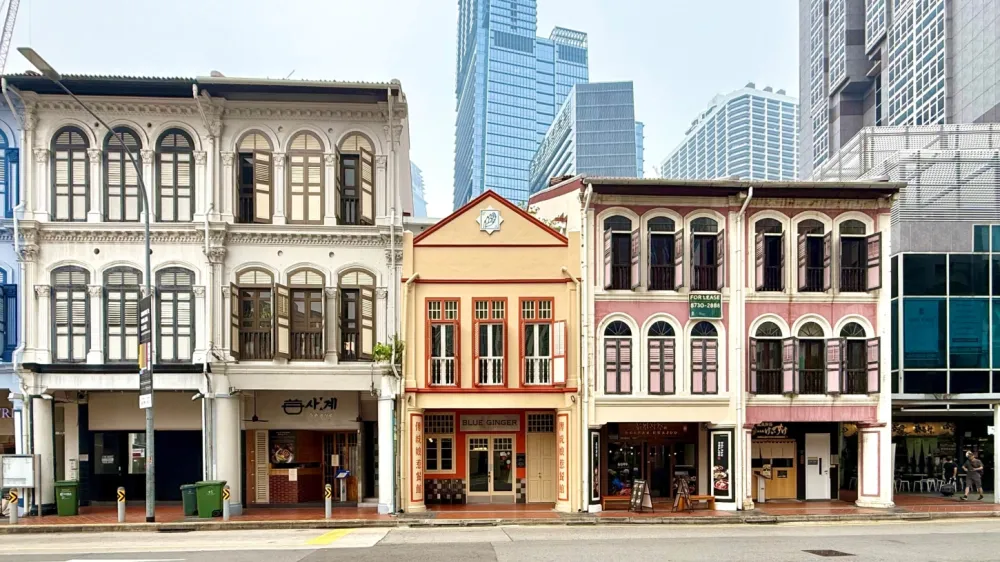
| For the seasoned property investor and connoisseurs, shophouses have been significant value propositions. The year 2011 has so far been an encouraging one for shophouse property market, where sales activity in the form of number of shophouses purchased, sustained and reflected only moderate slowdown from 2010, in sync with a more cautious economic condition. Amid the economic slowdown, all property sectors will be affected, and shophouses, being generally unique, vintage property, will not be spared. However, the moderation in interest for shophouses will be mitigated by its exclusive design and limited supply, particularly from property investors who have deep pockets and are interested to make use of the soft landing to up their collection of special properties. There are various value propositions of shophouses which will continually stand out, especially for shophouses which will be used for office. Such shophouses are welcomed by the creative or niche business services providers, which see shophouses as offering better inspiration than traditional office blocks and meanwhile, enjoy the flexibility of after office hours air-conditioning. Many single owner office buildings provide only air-conditioning during the standard working hours and this limits business productivity particularly for some occupants who need to work beyond the office hours to maximize business commitments and dealings. |
To contact the journalist, you may send your message to [email protected]


























 Read Here
 Advertise
 Sign Up









