

Capgemini launches flagship programme in China for local SMEs
This is said to help them take advantage of emerging technologies and test out innovations.
The health crisis has forced many companies on the fast-track road to digital transformation, presenting opportunities for companies to collaborate. Innovation centres are expected to play a key role and new hubs will continue to attract investment towards a digital economy and abundance of digital talent.
With this in mind, Capgemini has launched its flagship Applied Innovation Exchange (AIE) in Shenzhen on 3 July to help its clients take advantage of advances in emerging technologies and test out innovations.
AIE Shenzhen is Capgemini’s first innovation hub in Greater China and fourth in Asia. All local businesses in Singapore looking to expand to China are welcomed to apply in the programme.
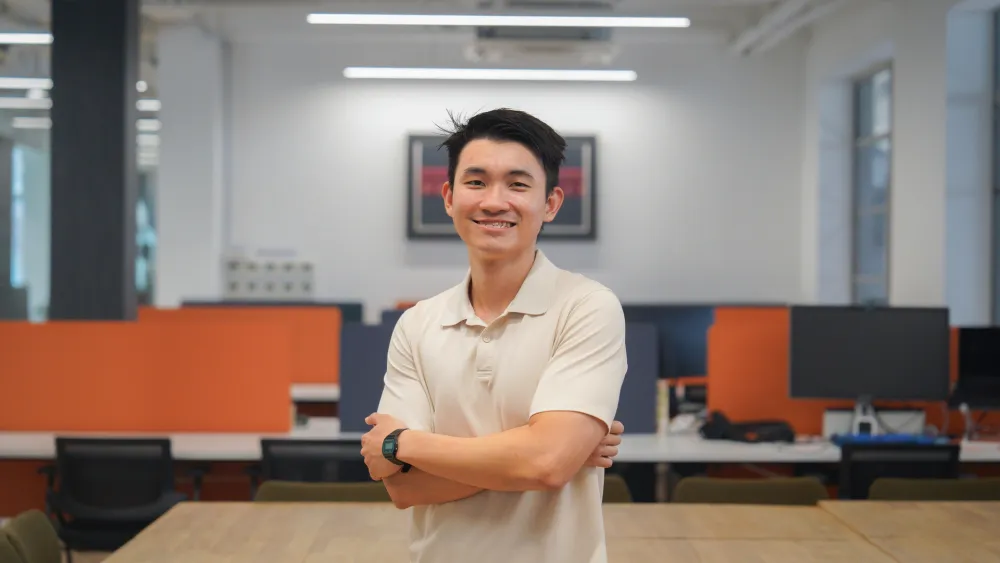
In an interview with Singapore Business Review, Capgemini Senior Vice President Strategic Initiatives Officer, Asia Pacific and Middle East, Alva Qian, notes that the launch of the AIE Centre in Shenzhen will enable more knowledge-sharing and tools to help businesses thrive.
“The city’s favourable geographical position, access to global markets and talent found in the area, it made sense for us to strengthen our presence there,” she added.
How can Capgemini help local businesses navigate and adapt to the Chinese market?
Singapore and China have always been in a close relationship since the Smart City Initiative (SCI) agreement in 2019. Local businesses in Singapore have benefited from the ecosystem and Capgemini has been helping clients to navigate this intergovernmental partnership and sustain their continuous innovation.
Capgemini’s AIE’s global ecosystem ranges from startups, accelerators, incubators, VCs and academics to the largest technology providers in the industry, serving as an innovation platform between clients and the global ecosystem.
Qian notes that Shenzhen AIE is said to help Singapore multinational corporations (MNC) leverage the Chinese ecosystem partners.
Capgemini's evaluation criteria for small and medium enterprise (SMEs) consist of people with management expertise, a sound financial environment, business viability, and technology aspects. These categories will be further evaluated in the collaboration and can lead to a scaleup qualification.
Qian further adds that Capgemini AIE network is operating virtually, making it easier for global expertise to be shared and applied than the traditional on-site/physical event. It also ensures continuity during these uncertain times.
“This way, we can accelerate knowledge sharing and cooperation across the different AIEs, including Singapore and China, and other AIEs around the world,” she added.
How will the launch support innovation in Singapore and in Greater China?
Shenzhen AIE is said to take a critical role in connecting and exchanging innovative solutions with our global offices, by leveraging the Chinese mass-consumer market and flexible supply chain network, according to Qian.
Further, Singapore and Shenzhen AIE are working closely together to accelerate Singapore's startups and enterprises by leveraging the AIE network in order to develop business and accelerate the innovation lifecycle.
“With additional memoranda of understanding (MOUs) signed between the two countries in 2020, more businesses—especially small and medium enterprise (SMEs)—will have the opportunity to grow,” added Qian.
However, Qian notes that it will be challenging for them to get businesses to embrace and apply innovation with speed and scale yet do it in a secure and sustainable way. Because of this, AIE plans to validate local businesses' solutions and products with local clients’ business problems and challenges. These solutions, once successful, could be promoted on a global scale with the AIE network.



























 Read Here
 Advertise
 Sign Up









