
Singapore
Singapore posts strong recovery in real estate investments

Singapore posts strong recovery in real estate investments
Singapore joined other Asian countries in witnessing property investment upsurge in the second half of 2009.
DBS inaugurates new headquarters building in Shanghai

Singapore's largest bank continues to grow its branch footprint in China with the inauguration of DBS Bank Tower located in Lujiazui.
How Banking should be more like water

The bottled water industry has figured out how to get to consumers and it’s through their hearts. Unlike banking which asks consumers to focus on the details of each product, bottled water successfully taps into the emotions of consumers by associating their product with the ideas of taste and style creating a consumer attitude towards bottled water based on their emotions and not logical comparisons of product features and benefits.
Tiger Airways celebrates feat with a promo
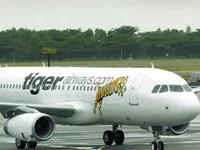
Airline offers 120,000 seats at zero cents after it reached its twelve millionth passenger.
Crust Gourmet Pizza Bars expands into SIngapore

Crust Gourmet Pizza Bars is looking into new markets not only in Australia but also oversees as it opens its 50th store.
Pan Pacific's Patrick Imbardelli talks branding

Patrick Imbardelli, CEO of Pan Pacific Hotels Group explains the group’s big year in 2009. How was the year 2009 for the Pan Pacific Hotels Group? 2009 was an important milestone year for the Group. Whilst several industry giants slowed down development with corporate cutbacks, we’ve had plenty going on. This year, we integrated both Pan Pacific and PARKROYAL brands under Pan Pacific Hotels Group, and with that, consolidated its corporate headquarters in Singapore from multiple prime business district locations into a centralised new location for more efficient use and deployment of resources.We build on our people capabilities by making important key hires into our team in the areas of strategy and planning, development, human resources, branding and communications. Part of the integration also included the launch of PANTHER Distribution System, a single distribution platform for both brands that provides customers with an improved reservation experience,while allowing the Group to streamline reservation operations across its two brands to achieve operational synergy and optimise revenue opportunities. We also reorganised our sales structure, integrating the sales teams for our Singapore hotels into a single Singapore Sales Team structure to manage client relationships and sales across the four hotels (PARKROYAL on Beach Road, PARKROYAL on Kitchener Road, Pan Pacific Orchard and Pan Pacific Singapore). With regards to our brands, we appointed global brand strategists Interbrand to conduct a brand review for our Pan Pacific and PARKROYAL brands to prime them for further growth. In line with our growth strategy to extend our brands’ footprints in Asia and North America, we also opened Pan Pacific Xiamen in August, and Pan Pacific Suzhou will be opening in January 2010. What were some of the key issues faced the hotel and tourism industry in 2009, in your perspective? What do you see happening? The slowdown in consumer demand has most certainly impacted multiple industries, including the hospitality industry. Winners and losers have emerged: the shortcomings and inefficiencies of properties that previously relied on good locations or healthy demand in the market have now come to light. At this time we saw more owners looking for alternative operators. The past year has also thrown up some important insight to ‘brands’. Consumers have certain expectations from brands that they are willing to pay more for. So as the trimmings have been “cost engineered” in these tough times, customers are saying, “I understand that I am paying less, so my expectations have adjusted. But I still want the core deliverables of the brand”. 2009 has in effect shifted consumer expectations and therefore it is important to learn what their constantly evolving drivers of needs are. This is vital for all brands but more particularly those in the hotel industry. I feel that learning this, and constantly making sure these consumer needs and expectations are not just met, but exceeded, will give rise to brand longevity which is what we ultimately need. How has PPHG dealt with this? We have taken steps this year to understand our customers better and use this insight to strengthen our brands. For example, our brand review with Interbrand will help us to ensure that our brands evolve with customer needs and expectations. Tactically, we launched several brand-wide campaigns that addressed guests’ current needs and expectations. We launched brand-wide tactical campaigns such as Pan Pacific Double Preferences which enhanced guest experience with perks like two complimentary amenities instead of one. We also used this time to chart our strategic expansion. In Asia, our growth plans include emphasis upon both brands while in North America, we are focused upon growing the Pan Pacific brand presence, as this is where we see the opportunity to perform given our customer base and strengths of the brand. For example, 2010 will see the opening of the Pan Pacific Suzhou, Pan Pacific Bangkok Serviced Suites and PARKROYAL Kuala Lumpur. How is this different from the other competitors in the market? Many industry players have reacted to the global downturn with cutbacks, but we have witnessed growth. At the same time, we have been able to do this because of our modest size, which allows us to act and react with flexibility, especially in a dynamic and challenging business environment. The quick integration of our sales teams, the launch of our brand-wide tactical campaigns; these are things a huge player may be able to do, certainly not as quickly or consistently, during a critical time when consumers were value. Our expansion plans are not focused upon rate of growth; we are not driven by simply adding properties for the sake of adding to the system. Our focus is upon growth that will make our system stronger in order to support properties managed by the Group. While we are gearing up for aggressive growth in our identified key markets, we are keeping to scale. For example, we can grow by 30-50 properties in the short to medium term, but we’re definitely not into adding, say, hundreds of hotels. With a limit to the number of owners, we can afford to spend time with each of them, which is not something that any of the big global brands can attempt. Our modest size and consequent shortened lines of communications has great significance to how we interact and work with our hotel owners. How do you think the industry has changed? What do you see players in the hotel industry doing about it? Many brands have chosen to turn their focus on their consumers, but many have also chosen to survive in this downturn through competing by lowering prices. As of now, what are PPHG’s priorities, in terms of markets and strategies? In Asia where our system is fairly well developed, we are looking for additional properties in key gateway cities and in certain countries, secondary and tertiary markets. In addition, we are focused on adding to our offerings in the resort segment as research shows us that this offers the Group huge potential given its consumer base and strengths of the brands. The Asian gateway cities in which we are extremely proactive include: Shanghai, Beijing, Tokyo, Osaka, Hong Kong, Sydney and Melbourne. We continue to see substantial investor interest in China despite the downturn. We hope to establish a presence in Beijing and Shanghai, and emerging cities like Chengdu, Shaoxing, Guangzhou and Dalian. In North America, we also are focused upon first securing management contracts in key gateway markets; first tier of importance are New York, Chicago, LA, and San Francisco. Following these are other major markets such as Boston, Toronto, Washington DC and resort markets such as those in Hawaii, Florida, and California that would benefit from what our system can deliver. In 2009, while many industries are suffering, PPHG is still growing and expanding. Why do you think this is so? We feel the groundwork we have done this year has put us in a position where we are in a good position for an upturn. The integration of our two brands and our strategic expansion plans lent to establishing Pan Pacific Hotels Group brand as an international hotel management company.
Interview with Jackson Yap

Jackson Yap, CEO of United Engineers, speaks about UE Square.
Interview with Ho Kwon Ping

Banyan Tree CEO, Ho Kwon Ping talks about how the Thailand political crisis has affected his business and the revenue of his company’s Thailand properties. Q. How would you describe Banyan Tree and what do you see as being the company’s core businesses? From the start, Banyan Tree embodied romance and intimacy. It is all about creating unforgettable, deeply personal and cherished memories. It is about the romance of travel and connecting people with a ‘sense of place’ through the design and architecture of our resorts, that promotes the uniqueness of indigenous cultures of the place. That’s the essence of the brand.
Interview with Saw Phaik Hwa

Saw Phaik Hwa, CEO of SMRT speaks about the MRT service disruption. Q. Analysts expect MRT ridership numbers to grow 7 percent in the 2009 financial year, so why are people switching from private cars and taxis to public transport? Last year, we launched the ‘Go Green with SMRT’ promotion where we gave away free travel on SMRT trains and buses as prizes to encourage more people to choose public transport as a green mode of travel. Our post-campaign studies showed that some of our customers switched from cars to public transport because they find it a cost-effective, eco-friendly option. Last year’s spike in ridership numbers were the result of the 2007 taxi fare increase, and drivers switching from private cars to public transport due to higher costs of driving cars.
Singapore's wealthiest man Ng Teng Fong dies

The patriarch of Far East Organization, estimated to be worth $8 billion, passed away on Tuesday, a spokesperson said.
Keppel's Alpha unit in talks to buy $130 million China apartment block

Keppel Land’s unit Alpha Investment Partners is in exclusive negotiations with Morgan Stanley Real Estate Asia to acquire the Jinlin Tiandi complex in downtown Shanghai.
Singapore Exchange improves monthly market statistics report

SGX intensifies service by consolidating and providing additional information on various financial markets.
Tiger Airways launches Singapore – Hong Kong flights

Inauguration of twice-daily flights on Feb. 1 was slated to welcome the Year of the Tiger.
MotorMuse launches online car portal

Now you can buy or sell a car online in Singapore. Singapore-based online automobile marketing company, MotorMuse Private Limited, today launched a new web portal, www.MotorMuse.com, allowing individuals and dealers are able to post their cars for sale on the site for free. Says MotorMuse Founder & Managing Director, Damien Pang said: “Buying or selling a vehicle means having to deal with 3rd parties, time spent sourcing prices and quotes from numerous sources and then the whole process of actually handling the ton of paperwork involved.” The site would provide expert and impartial service for the customer instead of the customer having to seek it himself. Its mobile broking service offered under the company’s Buy/Sell Assist program, takes care of the messy paperwork involved in trading used vehicles. It also coordinates & facilitates deals between individuals, settles agreements,pre-purchase inspections & reports, finance, e-transfer, insurance and offers warranties for used cars, all at low prices. Billing itself as “more than just a website”, MotorMuse.com allows Singapore consumers to surf the automotive turf with a simple, interactive platform to browse, buy and sell cars 24/7. The portal, which also caters to distributors and dealers, offers an extensive repository of online news articles, videos and motoring knowledge for visitors to the site. MotorMuse Partner, Mike Amour said: “We're all consumers ourselves, and the idea came from extensive feedback from the market, industry partners and consumers, all of whom have echoed the same sentiments – that of wanting more choice. The simple premise of MotorMuse is to give the market another option. MotorMuse empowers people with a service that makes the business of buying and selling cars as easy, informed, secure and hassle-free as possible”. MotorMuse is a digital media company that provides an integrated platform for exporters, dealers and private buyers & sellers to buy and sell cars locally and internationally.
Limiting dependence on foreign workforce eyed

Singapore should keep the number of foreign workers at current levels, as recommended by the government's economic strategies committee.
SingPost warns delivering profits getting harder

Profits may be up for SingPost by a whopping 20.6 percent, but its deputy group CEO admits the company’s outlook is nowhere as pretty.
Singapore pips Hong Kong as most globalised city

Ernst & Young Globalization Index 2009 also finds globalisation slowing.










 Read Here
 Advertise
 Sign Up
















Commentary
Singapore’s small exporters need credit that matches their payment cycle
The hidden realities of succession for next-gen heirs
In Asia, fintech leaders must compete on credibility
F1 on a gravel road: Why AI is still stuck in first gear
Why AI blocklists give Singapore firms a false sense of security
When scale arrives before proof: Singapore’s capital allocation question in Southeast Asia
Rethinking fleet ownership in a changing business landscape
Beyond the chips: The materials behind Singapore’s AI infrastructure
How homegrown brands are redefining premium in Asia
AI in hospitality: Where should Singapore’s F&B operators draw the line?