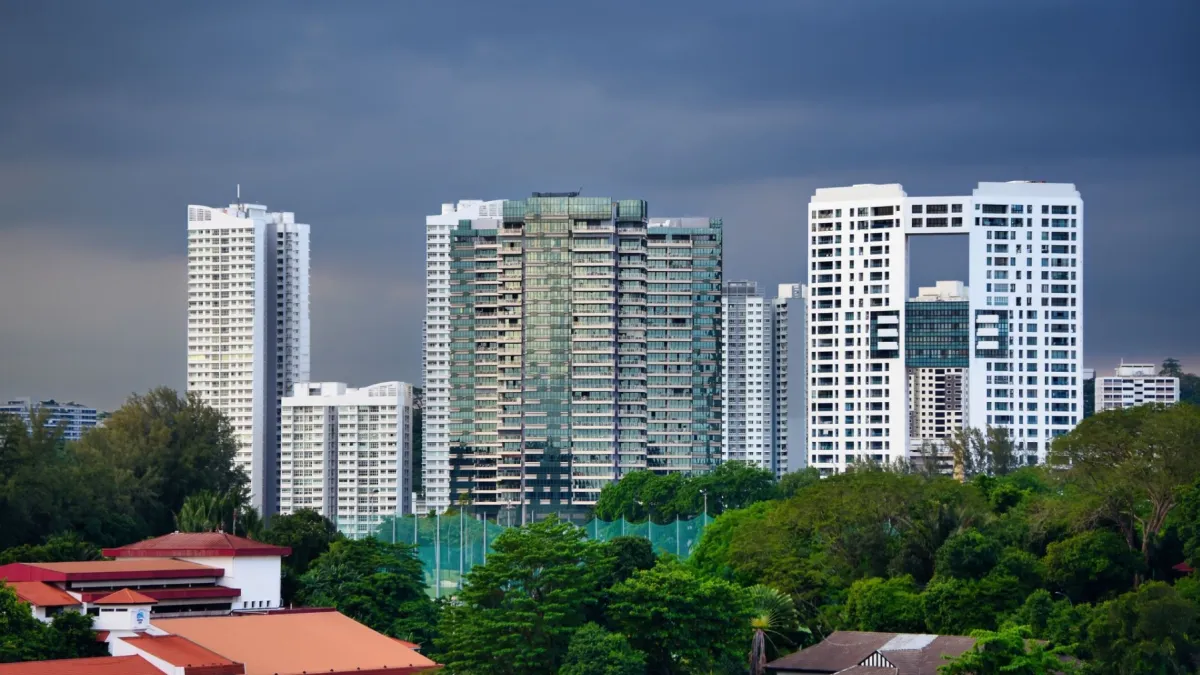
Monday Wrap: Property buyers get pickier, inflation risks build, banks face Gulf fallout
Prime property gains favour as buyers turn selective, whilst higher costs and Middle East risks cloud the outlook.
Last week in Singapore Business Review, property buyers became more selective as transaction activity surged, investors shifted towards prime commercial assets, and electronics continued to dominate Singapore's trade. Inflation pressures also picked up, whilst a prolonged Middle East conflict could weaken banks' asset quality.
Singapore property transaction volumes more than doubled in the first half to $34.7b, surpassing the $34.3b recorded for all of 2025, according to CBRE. Lower borrowing costs and improved liquidity have brought more assets to market, but buyers are scrutinising prices and property quality more closely.
Three- and four-bedroom homes remain popular, particularly amongst HDB upgraders. Buyers are also weighing connectivity, renovation costs, remaining lease, space for future family needs and resale prospects.
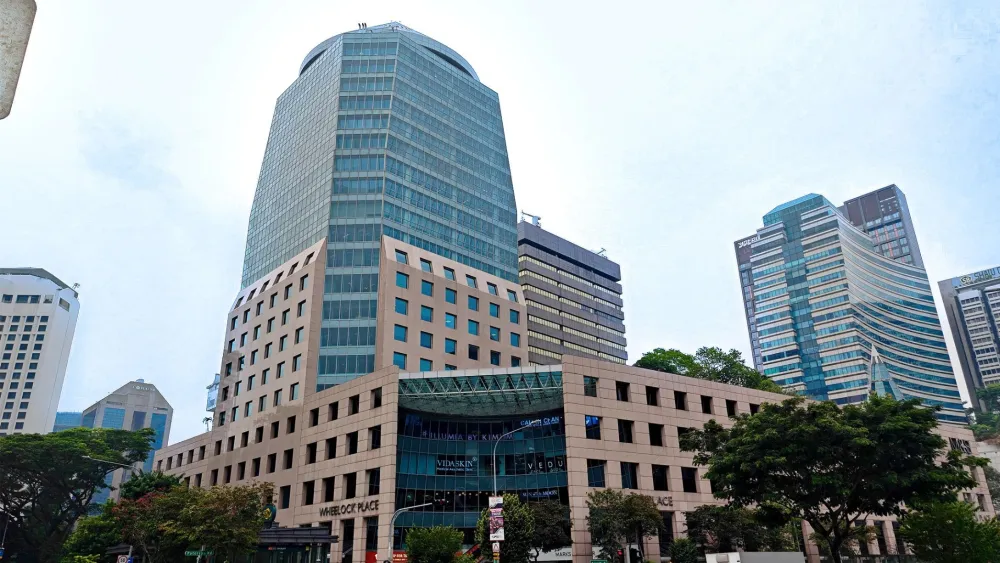
Commercial property is seeing a similar shift towards quality. Office and retail accounted for 33% and 18% of first-half investment sales, respectively, as investors favoured assets offering strong income visibility.
Cushman & Wakefield said limited new supply and resilient tenant demand were supporting prime CBD offices and Tier 1 retail malls. Investment sales reached $35.2b in H1, exceeding the $33b recorded for all of 2025.
Savills expects full-year investment sales of $55b to $60b, whilst Colliers expects volumes to exceed $40b. Interest rates remain the main uncertainty, with investors likely to favour high-quality, income-producing properties with strong tenant demand and limited supply risk.
Singapore's trade remains heavily concentrated in electronics. Electrical machinery and equipment accounted for $262.18b, or 38% of total exports in 2025, according to UOB, followed by machinery and mechanical appliances at US$127b.
Mineral fuel exports remained high at $67.83b. UOB said electrical machinery, machinery and mineral fuels together accounted for 71% of imports. The bank said the gap between machinery imports and exports suggested value-added activities such as assembly or product finalisation take place locally.
Inflation pressures are also building. Singapore's headline inflation rose to 2.2% year on year in July from 1.9% in June, whilst core inflation accelerated to 2.0% from 1.6%, driven by higher electricity and gas, services and food inflation.
Nomura expects core inflation to approach 3% in the coming months, whilst UOB expects it to peak at 2.2% in August and September. Higher energy prices and adverse weather are also raising risks for imported food costs.
RHB expects inflationary pressures to build in H2 and said the MAS is expected to tighten policy further, potentially raising the S$NEER appreciation gradient to 1.50%, with risks of a further steepening to 1.75% by year-end.
A prolonged Middle East conflict could also weigh on Singapore banks. UOB Kay Hian warned that sustained disruption to energy markets and shipping routes could put highly leveraged borrowers in transportation, logistics and aviation under financial stress.
Credit metrics remain sound for now. DBS reported an NPL ratio of 1%, whilst OCBC's stood at 0.9%. Exposure to transportation, storage and communications stands at 7.4% for both DBS and OCBC and 5.5% for UOB.
Government bond yields have also risen, with the 10-year Singapore government bond yield up 25 basis points year to date to 2.37%. Domestic conditions remain comparatively firm, with non-oil domestic exports rising 24% year on year in July, driven by a 112% surge in electronics.
DBS and OCBC shares have gained 35% and 56%, respectively, whilst UOB has risen 15%. UOB Kay Hian said elevated energy prices, resilient economic growth and inflation were also keeping government bond yields elevated.
























 Read Here
 Advertise
 Sign Up