

Bus and train fares may rise 7% after train review
Rail operators stands to gain whilst ComfortDelGro’s prospects remain neutral.
Fares of public buses and trains may see up to 7% increase as the Public Transport Council (PTC) commenced its annual fare review exercise (FRE) for 2019.
This follows on from a 4.3% increase in 2018, although there was a cumulative 8.3% deduction from 2015-2017 arising from lower energy costs, noted DBS Equity Research.
Also read: Here's what kept Singapore from having the world's best public transport system
According to the PTC, the largest contributing factor for the fare formula output quantum is the double-digit increases in energy prices which rebounded 26.2% in 2017 and 32.3% in 2018. Other macroeconomic price indices in the fare formula have also reportedly increased over the past year. These include the wage index, a proxy for the wage growth of public transport workers, which went up by 3.5%; whilst the core consumer price index (CPI) rose by 1.7%, the highest in four years.
Meanwhile, the network capacity factor (NCF) of 1.6%, which measures capacity provision relative to passenger demand for the entire public transport system, reflects the effort to provide commuters with less crowded rides over the last year, said the PTC.

Andy Sim, senior vice president of investment research for DBS, said that based on the 2018 review, a decision is likely to be announced in late October or early November, with implementation likely to be in late December.
He added that the fare hike will be positive for rail operators. “In our estimates, we had previously penciled in a conservative 2% fare increase for FRE 2019. Based on our rough estimates, assuming a full 7% increase in fares, this could add on about 2-3% to our forecasts in FY20F, assuming all else being constant,” said Sim.
In contrast, no direct positive impact on bus operations is projected given their current contracting operating model.
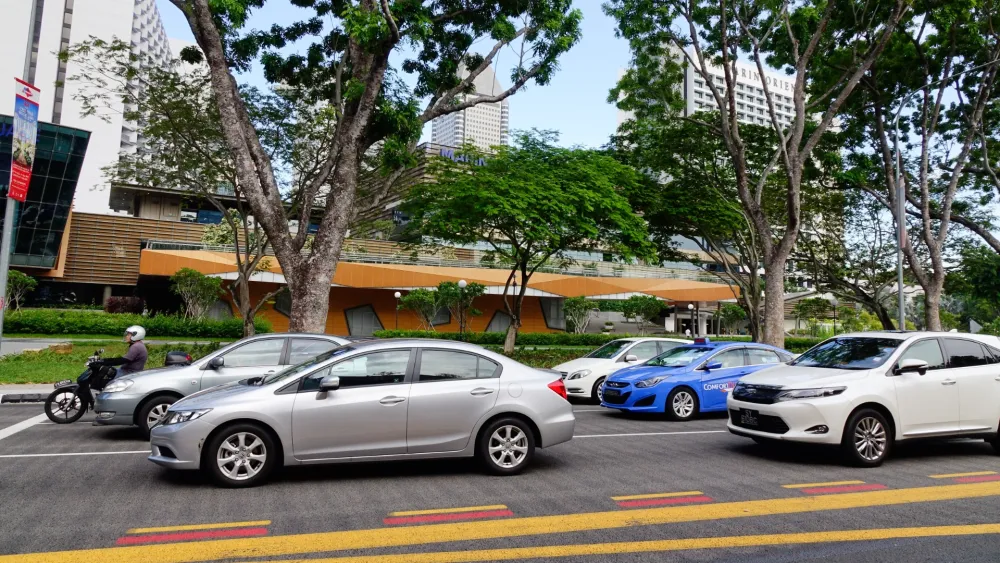
DBS zoomed in on ComfortDelGro (CDG) specifically with a neutral forecast amidst the company’s contracting taxi fleet. “Whilst the fare increase should lead to an improvement in its rail operations, this could be partially negated by the challenges it currently faces in its taxi operations,” Sim noted.
Also read: Growing taxi competition trims ComfortDelGro's long-term growth prospects: analysts
Accordingly, CDG’s taxi fleet continues to contract and now stands at around 11,500 as of June, below DBS’ earlier assumptions of a 12,100 average fleet. On the other hand, the total number of private rental vehicles in Singapore continues to expand and stood at above 72,000 as at July, which could further pressure taxi operations.
“In addition, the continued GBP weakness would also lead to lower contribution from its UK operations when translated into SGD,” added Sim.



























 Read Here
 Advertise
 Sign Up









