


Can softer delisting rules save Manila’s bourse from hollowing out?
The Philippine Stock Exchange may ease delisting rules for non-compliant firms as corporate exits mount
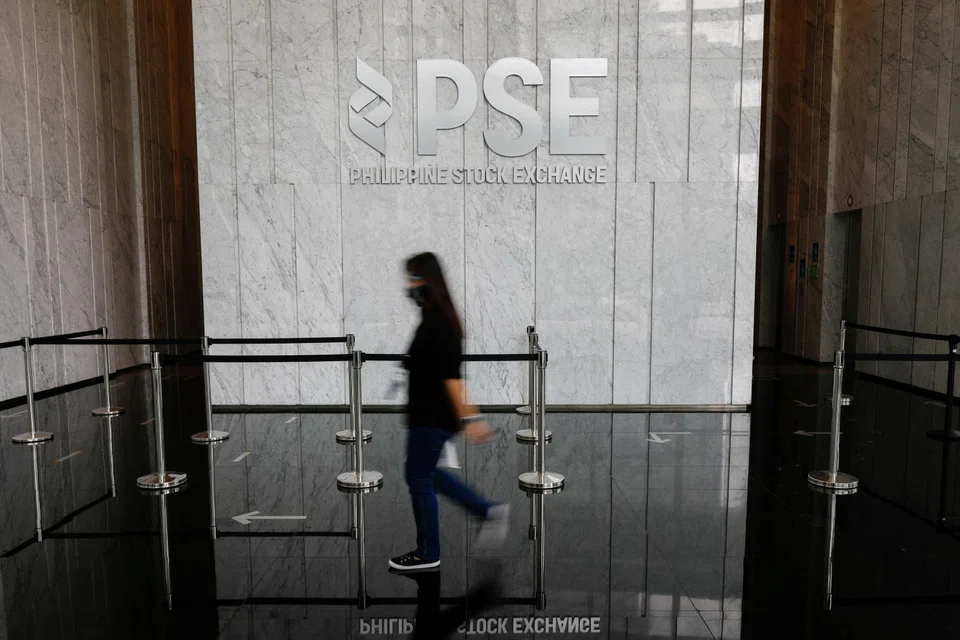
[MANILA] As corporate capital flees to healthier markets overseas, the Philippine Stock Exchange (PSE) is reviewing whether companies should be expelled from the bourse as it seeks to prevent further erosion in the number of companies listed.
The rethink comes as the exchange is also facing a slew of voluntary exits by companies that believe their shares are undervalued.
But analysts warned that the struggle to shore up the number of listings on the exchange is masking a bigger problem as Manila cedes ground to more dominant hubs in South-east Asia: the systemic lack of liquidity.
PSE said a week ago that it is taking measured steps to address erring and inactive companies following the bourse’s spate of exits in the past three years. “To be delisting more is really counterintuitive,” PSE president and CEO Ramon Monzon told local media.
Expulsions from the bourse lead to a five-year relisting ban, and erring executives are disqualified from helming future market debuts.
However, Monzon recognised that without a viable exit mechanism, minority investors end up bearing the brunt of corporate failures and are stranded in illiquid stocks while executives merely sit out the ban.
“We’re still studying (this)... we probably will stop with involuntary delisting so that investors have a small chance that the company might be taken over by another company for a backdoor listing,” he said.
PSE has also proposed another revision of its initial public offering rules to protect the market from post-debut dilution.
The draft regulation recommends that issuers valued at 200 billion pesos (US$3.2 billion) or more can still negotiate a minimum public ownership (MPO) of 12 per cent, provided their MPO never drops below this baseline.
This follows the Philippine Securities and Exchange Commission’s decision in February to lower the required public share from 20 per cent to 15 per cent for listings above 50 billion pesos.
PSE is also rolling out a new trading engine, exchange-traded funds, margin trading and derivatives to deepen market participation and draw investors away from online gambling and cryptocurrency trading.
A laggard despite strong economic growth
PSE’s tonal shift from rigid corporate discipline to regulatory leniency is set against the backdrop of a thinly traded capital market by regional standards.
The exchange counts some 280 listed companies and has a total market capitalisation of US$312.8 billion, as at May 2026.
But its monthly trading value of US$2.2 billion is dwarfed by major Asean peers that see 10 to 16 times its activity. This positions the Philippines as a laggard in the region.
Singapore, Thailand, Indonesia and Malaysia offer easier and often cheaper pathways to public markets, noted a report from the Organisation for Economic Co-operation and Development (OECD).
“The listing process is long and suffers from organisational challenges, with requirements being less flexible than in peers,” OECD analysts said, adding that “despite favourable macroeconomic conditions and strong economic growth over the last decade, the Philippine stock market has remained relatively small”.
In April, the Vietnam Exchange superseded PSE’s total market capitalisation by US$48.4 billion.
This difference “reflects the diverging trajectories of two economies that have long competed for investor attention”, said Eric Jurado, hedge fund manager at ECJ Capital Investment Fund.
Representing one of the region’s most aggressive market expansions, Vietnam added US$58.6 billion in value from March to April, while the Philippines posted a modest US$8.2 billion increase in the same period.
“As household wealth rises, more Vietnamese investors are entering the stock market, creating a virtuous cycle of capital formation and corporate growth,” Jurado said.
The PSE index has gained nearly 6 per cent year to date to 6,404.11 on Friday (Jul 17), as a mid-year rally driven by easing concerns around US interest rate hikes, cooling oil prices and second-quarter corporate earnings optimism erased a flat first-half slump.
Why corporate capital is fleeing
In an illiquid market, maintaining a public listing has transformed from a capital-raising advantage into an expensive institutional burden, analysts have observed.
Even as regulators reassess whether to keep non-compliant companies on life support, healthy and compliant market heavyweights are actively choosing to go private because public markets are failing to reward their performance.
Jonathan Ravelas, senior adviser at audit and consultancy firm Reyes Tacandong & Co, warned that the situation is a red flag for the broader market. Regulators and the exchange must act to make listings more attractive, he said.
Issuers are also bypassing the public exchange altogether, relying instead on private markets and alternative funding sources that may offer superior valuations, said Juan Paolo Colet, managing director at Chinabank Capital.
An excess of illiquid issues
Monzon said he believes that delisting is a “natural evolution of the capital market”. All exits weigh heavily on the exchange, but the PSE chief is acquainted with their rhythm. “New companies will list; some will want to delist,” he said.
But exactly how fast new ones will float is an entirely different question. From 2023, only eight firms have debuted on the exchange against eight voluntary and three involuntary delistings, with two more exiting this year.
This hollowing out poses an existential threat to the market’s relevance. But forcing deal flow or manufacturing market structures only ignores the main problem, said Jon Carlo Lim, co-founder and CEO of DragonFi Securities.
“The lack of listings is a symptom of the lack of liquidity, and not the disease,” he told The Business Times.
Considering Manila’s restricted pool of funds, the exchange ironically suffers from an excess of illiquid issues. “Given the state of liquidity in the PSE, we have the appropriate number of listings and issues,” Lim said.
“A push to increase the number of listings, for the sake of deal flow activity, would actually exacerbate the liquidity issue as you would have the same pool of funds chasing after more issues,” he added.
“Like a coiled spring”
The prognosis for Philippine equities remains constrained by a highly restrictive macroeconomic environment. Global asset managers are actively reducing exposure as the domestic economy wrestles with monetary pressures.
“Philippine equities trade at a discount to the emerging-market benchmark, but the near-term outlook remains unfavourable,” noted Wang Yan, chief emerging markets and China strategist at Alpine Macro, a unit of Oxford Economics.
The aggressive approach of the Bangko Sentral ng Pilipinas (BSP) to commodity shocks has morphed into an emerging-market trap. By raising interest rates just as growth cools, policymakers risk triggering a loop of deeper economic stagnation and a battered currency, Wang said.
“The Philippines has been among our least favoured markets since the Iran conflict, and the shift towards tighter policy further reinforces the bearish case,” he added.
Central bank data confirm this institutional aversion. Local equities suffered a hot money net outflow of US$104 million in May alone.
BSP has also slashed its 2026 total net foreign portfolio investment forecast from an optimistic US$3.7 billion down to a volatile US$1.8 billion, acknowledging that portfolio flows remain highly sensitive to shifting global risk sentiment.
Despite the gloom, contrarian value investors argued that the severe sell-off has created an asymmetric entry point.
“Forward price-to-earnings (P/E) has compressed for the Philippines to an incredibly cheap 10 times earnings,” observed Luis Limlingan, head of sales at Regina Capital, contrasting it against India’s 20-times and Japan’s 25-times multiples. He argued that the Philippines is essentially “like a coiled spring”. If macro factors stabilise in the second half of the year, “valuation alone makes us a glaring catch-up trade”, he said.


