

A rocket may thrill, but do not forget the power of compounding
Alongside disciplined investing, it can drive long-term gains, as history consistently shows
SPACEX, its initial public offering being the biggest to hit the market this year, piqued investors’ interest and was immediately catapulted to the elite club of companies with more than US$2 trillion in market capitalisation, of which only six exist globally.
Many Singapore investors have lamented that they missed out on this mega IPO, which was not available to retail investors based in the city-state.
However, history consistently shows that long-term gains are driven not by chasing the next big winner, but instead by disciplined investing and allowing compounding to do the heavy lifting.
Warren Buffett has often emphasised that long-term compounding, rather than market timing or tactical trading, is the primary driver of wealth accumulation.
Albert Einstein is often credited with describing compound interest as “the eighth wonder of the world”.
A useful reminder comes from Meta Platforms, previously known as Facebook, another mega and highly anticipated company that was listed in May 2012.
Its IPO price was US$38. By August 2012, the price had fallen to as low as US$18. This was a highly anticipated mega IPO that many investors missed out on due to oversubscription, and yet, it fell within three months.
For investors with a short-term investment time frame, this would have been a disappointing outcome.
But for long-term investors, the story unfolded very differently.
At its current level 14 years later, Meta trades at about US$577, representing an extraordinary 32-fold increase from the low of US$18, working out to a compound annual growth rate (CAGR) of about 29 per cent.
Compounding: a wealth multiplier
This naturally raises an important question: Is compounding relevant for a safe-haven market such as Singapore?
Using the Straits Times Index (STI) as a proxy, the CAGR over the last 25 years yielded a return rate of 4 per cent. As the Singapore market is traditionally a high-dividend market, dividend payout is an important investment consideration.
Including a historical annual dividend yield of 4.1 per cent, the total return in the Singapore market works out to be 8.8 per cent.
That is, S$1 invested 25 years ago will become S$8.24 now, demonstrating the impact of compounding, even in a lower-earnings-growth market.
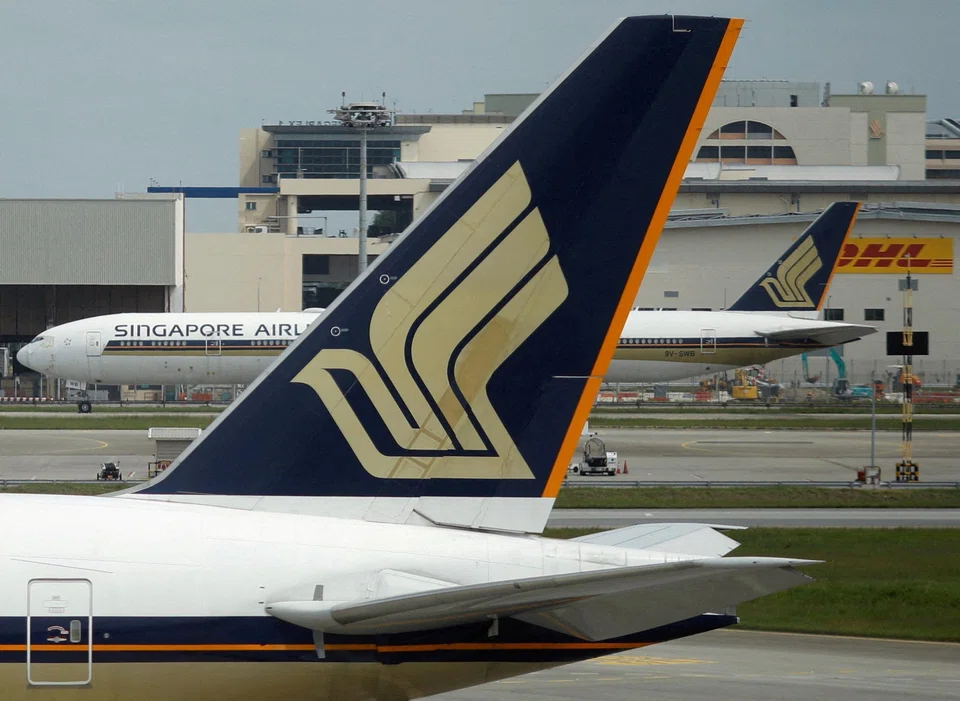
Take these eight companies that have been around since 1987: City Developments Ltd (CDL) ; DBS ; Jardine Cycle & Carriage ( Jardine C&C) ; Keppel ; OCBC ; Singapore Airlines ; UOB and UOL Group .
In terms of compounding, the average return rate is 6.3 per cent, with the highest at 7.8 per cent for Jardine C&C – excluding dividend – followed by 7.7 per cent for DBS and Keppel.
This is higher than the STI’s return of 4.7 per cent.
The importance of discipline also becomes evident when comparing outcomes. A S$5,000 investment, compounded at 4 per cent annually, grows to S$10,956 in 20 years.
By contrast, investing S$5,000 annually in the same period results in S$154,850. The difference lies not in insights or market timing, but in sustained, disciplined investing over time.
Quality stocks through market cycles
While these eight companies are not Meta or SpaceX, with expected strong double-digit or triple-digit earnings growth, they offer something arguably also powerful: consistency and endurance.
Their track records span four decades of economic cycles, geopolitical shocks and structural transformations. The growth path in the last 40 years has been anything but linear.
These companies have weathered events such as the Pan-Electric crisis (1985); Black Monday (1987); the Asian financial crisis (1997 to 1998); the dotcom bubble collapse (2000); the global financial crisis (2008); 9/11 and the Sars epidemic (2001 to 2003); and the Covid-19 pandemic (2020).
This is in addition to ongoing heightened geopolitical tensions and the occasional commodity shock.
Each episode presented unique and often unprecedented challenges. Yet, these companies not only survived – they also adapted, pivoted and emerged stronger after each crisis. Many have expanded beyond Singapore and diversified their revenue streams.
This resilience is particularly relevant in today’s artificial intelligence era, with most investors having a highly concentrated portfolio of AI-linked stocks.
Resilience against unexpected shocks
In a world increasingly driven by AI narratives, the enduring advantage does not lie in chasing the loudest opportunity or skyrocketing chances in space.
It instead lies in building a portfolio resilient enough to withstand short-term shocks and compound steadily, regardless of the noise.
Market uncertainty is inevitable.
Yet, beneath this volatility, certain principles remain constant. Diversification reduces fragility. Compounding builds enduring wealth. Euphoria is transient. Wealth is created not in moments of excitement, but instead through consistency across cycles.
Singapore’s safe-haven status further strengthens this case.
Its stable currency and robust financial system continue to attract foreign capital, supporting growth in the local wealth industry. In the past 25 years, the Singapore market has delivered annual total returns of close to 9 per cent, reinforcing its appeal to long-term funds.
As inflows increase, the market can benefit from further rerating, making it important for retail investors to maintain exposure.
In the next 12 to 24 months, we remain positive on CDL with our 12-month fair-value estimate of S$10.40.
We also like Keppel, and our 12-month fair value is S$13.48. UOL is a recommended core holding in a Singapore portfolio, with a 12-month fair value of S$12.87.
The writer is head of equity research at OCBC
TRENDING NOW
S$8 billion wiped off OCBC value as shares slide 5.8% in heavy trade

Grab CEO’s wife Chloe Tong on life with Anthony Tan and finding her purpose

Brookfield denies accusation it cut Soilbuild out of Mapletree deal
8 public officers referred to police over property buys near unannounced MRT stations: Chan Chun Sing

