Singapore SMEs split into two-speed economy as geopolitical costs rise
One in four expects business conditions to worsen in the next six months.
Singapore’s SME sector has been showing signs of diverging as geopolitical shocks linked to the US-Israel-Iran conflict drive higher energy and logistics costs, revealing a split between sector performance, according to OCBC data.
OCBC’s SME Index shows continued overall expansion, with manufacturing at 51.6, ICT at 51.4, retail at a record 53.4 and transport and logistics at 51.2. in Q1 2026. However, the underlying pattern points to uneven resilience across sectors rather than uniform growth.
Retail continues to benefit from inbound tourism and stable domestic demand, whilst ICT is supported by digital activity and manufacturing by AI-related electronics and precision engineering. These segments remain in expansion territory despite inflationary pressure.
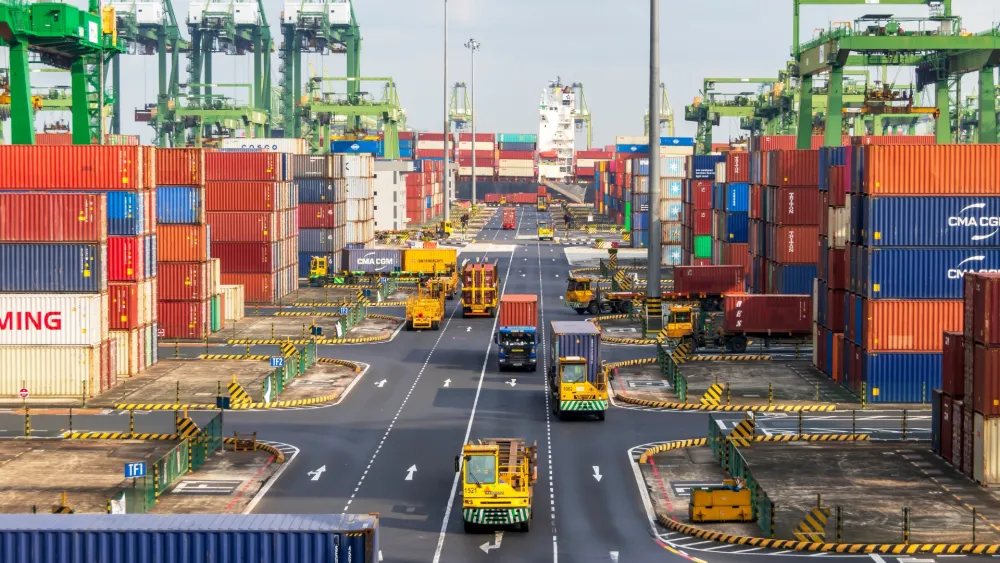
In contrast, transport and logistics, building and construction, and parts of the F&B supply chain are more directly exposed to rising fuel and freight costs. OCBC noted that higher energy prices are lengthening delivery times, increasing working capital requirements and raising input costs, particularly for diesel-dependent operations across logistics and construction.
OCBC’s Business Outlook poll shows 22% of SMEs expect conditions to worsen over the next six months, up 7 percentage points from the previous quarter, with geopolitical uncertainty cited as the top near-term concern.
RHB Research adds a broader macro downside layer, retaining Singapore’s 2026 GDP forecast at 3% but flagging a potential slowdown to 2.5% if Middle East tensions persist, and as low as 1% to 1.5% under a more severe escalation scenario.
It also noted that 1Q 2026 GDP slowed to 4.6% year on year, with manufacturing easing as early energy cost pressures filtered through.
RHB highlighted that services moderated whilst construction rose 9% year-on-year, supported by public and private projects, providing a domestic offset. It maintained NODX growth at 3% and industrial production at 4%, but flagged downside risks in energy-intensive sectors such as petrochemicals and transport-linked manufacturing, even as electronics exports remain supported by AI demand.
Meanwhile, OCBC further noted that whilst SMEs have limited direct exposure to the Middle East, sustained energy inflation could transmit into broader price pressures, tightening financial conditions and increasing funding costs.

























 Read Here
 Advertise
 Sign Up