Economists warn April export surge may fade post-tariff pause
Electronics exports led the charge, soaring 23.5% YoY, driven by explosive gains in integrated circuits and personal computers.
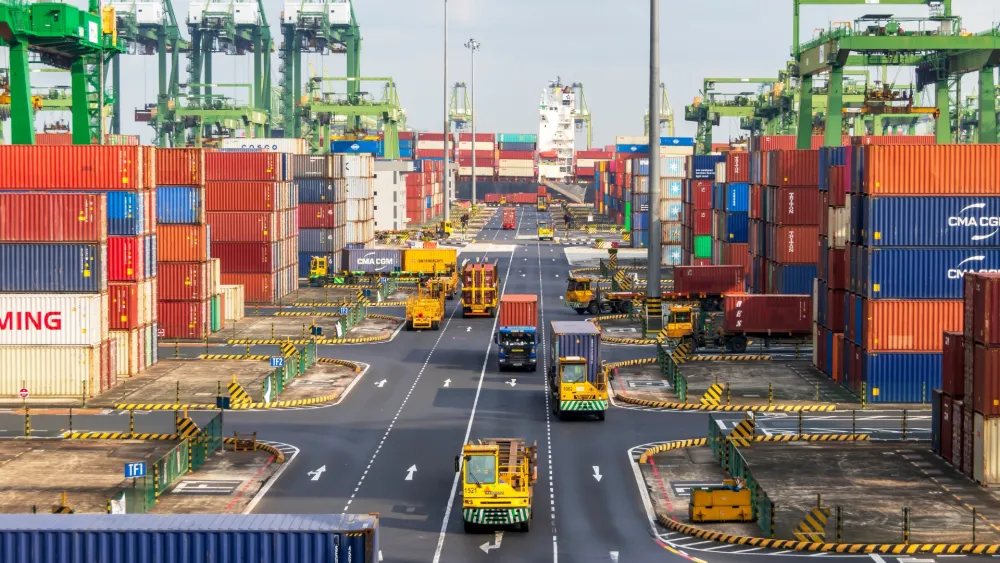
Non-oil domestic exports (NODX) surged a dramatic 12.4% YoY in April, defying market expectations and fueling short-term optimism. But economists are cautioning that the boost may be more flash than substance, driven largely by exporters rushing to beat looming tariff deadlines.
April’s jump was “far surpassing Bloomberg consensus (4.3%) and our estimate of 5.8%,” according to a report from UOB’s Global Economics & Markets Research.
Electronics exports led the charge, soaring 23.5% YoY, driven by explosive gains in integrated circuits and personal computers. UOB analysts noted that the data “emphatically reflects continued frontloading activity by exporters ahead of the looming expiry date (9 Jul 2025) on the 90-day pause on reciprocal tariffs.”
RHB echoed this view, emphasising that the April spike “could be due to the low base effect seen during the same period last year, expansion in both electronics and non-electronics exports, and boosted by front-loading behaviour.”
They highlighted the especially strong performance in the electronics sector, with shipments of PCs up 124.3%, disk media products rising 33.0%, and integrated circuits gaining 23.3%.
Yet both institutions struck a note of caution about reading too much into the numbers.
“We keep full-year NODX growth at 0.0% while maintaining GDP projection at 2.0% despite the recent developments in US tariff policies,” wrote RHB economists.
They pointed to the fragility of Singapore’s export recovery, noting that “any further escalation in tariff risks will weigh heavily on Singapore’s manufacturing and export performance, putting additional pressure on overall economic growth.”
UOB, whilst more bullish, acknowledged the risks ahead, revising their full-year 2025 NODX forecast upward to 2–4% (from -4.0% previously) but with a major caveat:
“There are likely to be some payback effects from front-loading that could result in an even more protracted downturn in trade activity possibly in 2026,” it said.
Both reports flagged the potential impact of US trade policy. RHB calculated that a baseline 10% tariff could cause “a 0.9% decline in Singapore’s exports,” with spillover effects dragging the figure down to 4.3%.
Meanwhile, UOB warned of “fears that Section 232 tariffs on pharma and semiconductors may eventually be imposed,” with investigations already underway.
Singapore’s export strength is geographically uneven. Whilst shipments surged to Indonesia (+111.2%), Taiwan (+47.4%) and South Korea (+38.1%), they dropped sharply to China (-17.0%) and Malaysia (-1.0%).
This, RHB said, is symptomatic of a broader risk: “Any slowdown in Chinese demand… would significantly impact Singapore’s export revenue.”
In short, April’s NODX performance offers a brief reprieve and a glimpse of strength—but both UOB and RHB agree: the gains are built on shaky ground.























 Read Here
 Advertise
 Sign Up