
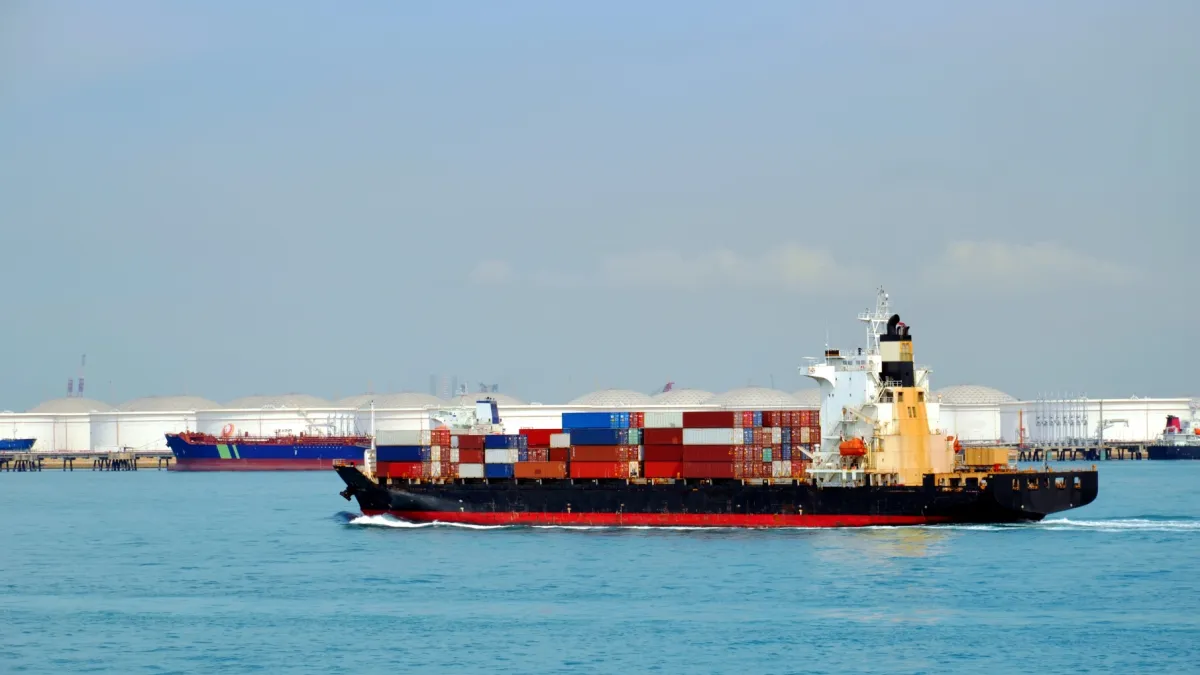
Gulf oil shocks now eclipse tariff fears, says MAS chief economist
The feared global trade collapse “did not bark” in 2025.
Middle East-linked oil shocks are now a bigger concern for governments and central banks after fears of a global trade collapse failed to materialise despite sweeping US tariffs, Monetary Authority of Singapore’s chief economist Edward Robinson said.
Robinson told the 13th Asian Monetary Policy Forum on 22 May that policymakers were increasingly focused on the inflationary and financial implications of the shock.
He said many Asian economies, as major energy importers, face disproportionately heavy adjustment burdens from oil price spikes, with heightened vigilance over fiscal and financial stability risks needed.
“As Philip Lane has recently emphasised, the central question for central banks is whether indirect and second-round effects are taking hold, a risk that is amplified in small open economies, where energy costs pass through to wages and other prices more quickly,” he added.
Governments had begun securing energy supplies in advance to reduce vulnerabilities, though export curbs by energy producers could worsen global supply conditions and amplify protectionist pressures.
“But one positive lesson from this conflagration should be obvious, which is that we can no longer be distracted from the long-term need to build up resilience in renewable sources of energy,” the chief economist said.
Robinson, who was also deputy managing director for economic policy, contrasted the oil shock with the more resilient-than-expected global trade environment despite sweeping US tariffs.
He described the anticipated collapse in global trade as “the dog that did not bark in 2025,” noting that regional exports had strengthened and aggregate demand remained resilient.
US tariffs had redirected sourcing towards alternative Asian trading partners, deepening regional production networks rather than triggering a broad-based decline in trade flows, he said.
Data from 2025 showed trade amongst “US-minus” economies had increased, whilst ASEAN’s trade with every major region rose and manufactured exports grew nearly 14%.
Meanwhile, about 90% of last year’s US tariff increases were borne domestically by firms and consumers, with Robinson warning prices could rise further as tariffs increase and stockpiled imports run out.
“We should not assume that trade shocks have really been muzzled. The broader orthodox economic view of the damaging effects of tariffs remains relevant,” he added.












![[Singapore Business Review] Report on the Asian Business Channel](https://www.cmgassets.com/s3fs-public/styles/video_thumbnail/public/2026-10/full-show-thumbnail_1.png.webp?VersionId=bJbrT_JKOuMWBnf7YkmsWjOSWIXddSvY&itok=zWuxHRNG)













 Read Here
 Advertise
 Sign Up









