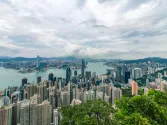
Architects design for flexibility as single-use projects fade
Clients want buildings that are integrated and human-centric.
Property owners are abandoning single-purpose projects in favor of buildings that function well and enhance how people experience them.
“There is increasing demand for mixed-use developments, integrated transit-oriented projects, and community-centric spaces that respond to evolving urban lifestyles,” David Chim, executive director at Aedas, told Singapore Business Review in an emailed reply to questions.
Clients are seeking buildings that are “integrated” and “human-centric,” said Ng Meng Hui, managing director at RSP Architects Planners & Engineers.
Projects are expected to be porous, biophilic, and closely linked to their surroundings. “There is a strong trend towards dissolving walls between a building and its surroundings, blurring boundaries for greater community engagement,” he said in an emailed response.
RSP’s SIT Punggol Campus Court shows the shift. The campus connects directly with the Park Connector Network along the Punggol Promenade Nature Walk, letting joggers and cyclists pass through its grounds and use facilities such as the food court.
At ONG&ONG Pte. Ltd., architect Ryan Teo said sensory inclusivity is being incorporated into design. For Pathlight School (Tampines), his team created alcoves with tactile wall installations to offer students calming spaces. “These small touches make a big difference in making spaces feel warm, safe, and welcoming,” he said.
Accessibility has become central to human-centric design. RSP’s Bird Paradise was designed with wide, gentle walkways and cooling rest stops to ensure ease of use for wheelchair users, families with prams, and visitors of all abilities.
Singapore’s revised Code on Accessibility in the Built Environment, effective from 1 November, now mandates features such as grab bars, rest areas, and standardised tactile indicators.
SAA Architects Pte. Ltd. Director Ivy Koh said the revised code would be a “core design driver,” influencing planning from the earliest stages. The firm’s mixed-use GENEO at 1A Science Park Drive uses barrier-free access, tactile wayfinding, and inclusive amenities.
Flexibility and adaptability are also shaping demand. Ng said stakeholders want properties with flex spaces — areas that can shift functions with sliding walls or technology. Teo added that rigid layouts are giving way to designs that support work, rest, and socialising in the same footprint.
Koh noted that health campuses are increasingly designed to expand bed capacity when required, whilst in the residential sector, landed properties are being redeveloped into multigenerational homes.
Elizabeth Hardie, an architect at ONG&ONG, said developers are planning for future upgrades. “This has led to increased demand for additional mechanical and electrical shafts and design provisions that allow for future upgrades, such as the easy installation of new piping or wiring without disrupting existing building functions,” she said in an emailed reply to questions.
Sustainability is another driver. Chim said more asset enhancement and adaptive reuse projects, many including conservation, are being commissioned as clients seek to reduce carbon impact whilst meeting user expectations.




![[Singapore Business Review] Report on the Asian Business Channel](https://www.cmgassets.com/s3fs-public/styles/video_thumbnail/public/2026-10/full-show-thumbnail_1.png.webp?VersionId=bJbrT_JKOuMWBnf7YkmsWjOSWIXddSvY&itok=zWuxHRNG)







 Read Here
 Advertise
 Sign Up