
Why the "Why?" behind your big data is crucial for business success in Singapore
By Eli SchwartzLoyalty programs are a great source of Big Data for retailers, and in a poll conducted in 2013, 91% of Singaporeans said they were more likely to shop at retailers that offered loyalty programs.
Typically, the rules of a loyalty program require that a customer use some sort of identifying code or card to log their purchases against their name. All of this logged data presents an obvious opportunity for a savvy business to increase its sales.
For example, reminding customers to return when they have been away for too long or adding complimentary items to their customers' shopping carts to prompt them to make a purchase.
While loyalty programs have always been a great source for personalised marketing, thanks to the advent of inexpensive data analysis tools spawned by the generation of Big Data, retailers finally have the resources available to capitalise on the millions of datapoints aggregated by these programs.
However, I am afraid that as the use of Big Data becomes a lofty ideal to Singapore SMEs, they may start to neglect the most important business metric: customer feedback.
Retailers could get so caught up in trying to mine their data for additional sales, they might miss out on the signals that a customer is about to start shopping at a different establishment—or even worse—badmouth them on social media.
Reading hilarious reviews on Amazon and Yelp can be quite entertaining; however you never want these negative comments written about your establishment or product.
One of the easiest ways of avoiding a public shaming is to simply provide a forum for customers to share their feedback AND get a response.
However, if your business is unable to manage chatting with every customer who wants to talk, you can use online surveys to scale your customer relationship management. Just make sure that there is a way for your employees who intake customer feedback to get that crucial information to the people in your company who make strategic business decisions.
In addition to obtaining qualitative customer feedback, retailers should also use a quantitative approach that is easier to analyse and act upon. One of the common ways of measuring customer loyalty and satisfaction is the Net Promoter® Score (NPS) which simply asks a customer the likelihood of recommending the business to a friend.
Used to measure performance over time, NPS helps businesses track their customer satisfaction scores and make changes to improve their process when scores decline.
In Singapore, an NPS could be an even more important metric as the tight networks of people across the relatively small population could allow positive and negative sentiments to filter through a customer base very quickly.
Customer feedback and NPS should compliment the Big Data that companies collect. Real feedback can be mapped back to shopping history, and actual customer statements can be weighted against the value of a customer.
For example, a negative comment from a shopper who spends thousands of dollars per month will deserve a lot more management attention than the same statement from a first-time buyer. Similarly, negative experiences on big-ticket items should be immediately dealt with, while smaller purchase amount customers can be assigned a lower-response priority.
So don't forget: Even in the age of Big Data, the little data that you will get from customer interactions and feedback is more important than ever.
While doing a deep analysis on big customer data might be something you conduct on a quarterly or even annual basis, working with customer feedback should be done on a very regular or even daily schedule. Used effectively, the dialogue between you and your customers might lead to more sales and insights than you could ever get from a Big Data system.
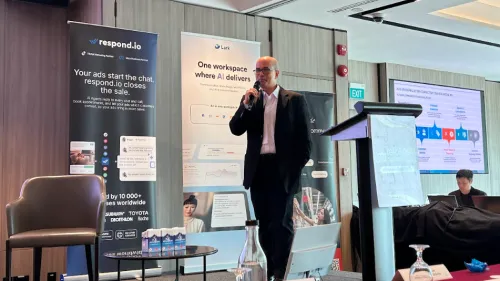
Eli will be speaking at Tech in Asia Singapore 2015 on how to use data to drive business.
Tech in Asia Singapore 2015
Suntec Convention and Exhibition Centre
6-7 May 2015
Click here to register.


























 Read Here
 Advertise
 Sign Up