
Singapore
Temasek launches $4.5b subsidiary to invest in businesses with growth potential

Temasek launches $4.5b subsidiary to invest in businesses with growth potential
Called 65 Equity Partners, it will focus first on Singapore businesses.
SG manufacturing output down 3.4% YoY in September

Precision engineering, transport engineering and chemicals contributed the most.
Envisioning the Future of Buildings–Sustainable, Resilient, Hyper-Efficient and People-centric
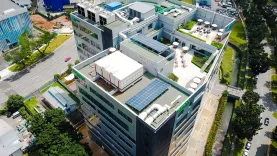
Our buildings leave a huge carbon footprint on the planet – they consume about 30% of the world's energy, and account for almost 40% of annual global greenhouse gas emissions. Reducing the emissions of the building lifecycle will be one of the most important areas in our fight against climate change. 28 cities, including London, New York, Tokyo and Sydney, have joined the Net-Zero Carbon Buildings Commitment, pledging to ensure that all buildings will operate at net-zero carbon by 2050. To achieve these sustainability goals, we need to transform the way we design, build and operate our buildings.
Latest research from Schneider Electric suggests most large organizations don’t know how to take meaningful climate action

89% of respondents indicate that they either intend to or have already changed their business model in response to climate change.
Only 21% consider their organization to be significantly advanced in the adaptation of their business model to be more environmentally or socially responsive.
Only 29% of respondents have plans in place to mitigate climate risks.
Rueil-Malmaison (France), October 5 2021 – Schneider Electric, the global leader in the digital transformation of energy management, who was recognized earlier this year by the Corporate Knights Global 100 Index as the world's most sustainable corporation, published new research today on how organizations are transforming their business models in response to climate change.
How Digitalization Connects with the Global Goal for Net Zero Carbon –And Why It Matters

Article by Schneider Electric
How to minimize five risks to life sciences facilities

Life Sciences companies face major challenges meeting increasing demand and ensuring regulatory compliance standards, while achieving their cost control goals. Production facilities are closely supervised by national regulators who oblige companies to conform to applicable GMP, (Good Manufacturing Processes). Since GMP procedures involve taking proactive steps to ensure quality and compliance in everything they do, drug manufacturers must accelerate the adoption of innovative technologies to address today’s business challenges and bring transformational changes to the way the lifecycle of medicinal products are managed.
Mapletree Logistics Trust DPU rises 5.7% to to 2.173 cents

Net property income also increased by 21.5% for the same period.
Deliveroo holds two-day mental wellness workshop for riders

Close to 50 riders attended the workshop.
ARA LOGOS records 9% lower DPU in Q3 FY21

Meanwhile, its NPI increased by 13.9%.
Frasers Centrepoint Trust’s DPU jumps by 39.3% in H2

The DPU grew to 6.089 Singapore cents from 4.372 in H2 2020.
KPMG’s Irving Low believes now is the time to reimagine the future of work

Organisations must sharply focus on corporate culture, leadership, and people development strategies.
Keppel REIT distributable income grows 20.8% to $159.9m
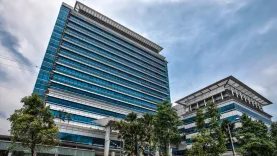
Keppel Bay Tower in Singapore was amongst the main contributors to the increase.
Singapore 2nd most competitive amongst wealth management centres

The country is highly competitive in the mass affluent, high-net-worth segments.
What are the four traits of digitally mature organisations?

Deloitte and SMU surveyed 48 executives to identify the four traits.
Market update: STI up 0.15%

HongKongLand showed the most growth.
OCBC extends S$148m green loan to Tong Eng Group unit

It is the bank’s first green loan to use the BCA’s BEEA tool.
Keppel DC REIT distributable income up 6.3% YoY in Q3

The group also maintained a strong portfolio occupancy rate of 98.1%.










 Read Here
 Advertise
 Sign Up







Commentary
What matters for Singapore’s AI future is consistency, not brilliance
The AI pilot worked. Now comes the real test
Are Singapore startups’ employee incentive plans still competitive?
Singapore’s small exporters need credit that matches their payment cycle
The hidden realities of succession for next-gen heirs
In Asia, fintech leaders must compete on credibility
F1 on a gravel road: Why AI is still stuck in first gear
Why AI blocklists give Singapore firms a false sense of security
When scale arrives before proof: Singapore’s capital allocation question in Southeast Asia