Second-generation Singapore artists attract interest
Younger collectors with tighter budgets are drawn to their art.
Singapore’s second-generation artists—students of pioneers such as Georgette Chen, Chen Wen Hsi, and Cheong Soo Pieng—are seeing increased interest from local collectors, according to an art gallery founder.
“There is a stronger focus on works by our second-generation artists,” Low Sok Leng, founder of ARTualize, told Singapore Business Review. [Collectors] are not just looking at their recent pieces, but also their earlier works.”
These artists offer a more affordable entry point into the art market, making their work attractive to younger collectors in their 30s and 40s with tighter budgets, she pointed out.
Among those seeing rising local interest are her late father Low Hai Hong, Tan Choh Tee, Ang Ah Tee, Koeh Sia Yong, and especially Lim Tze Peng, whose calligraphy and paintings have gained renewed attention since his death in February.
“There’s a group of collectors who have previously collected his works and are now also selling them,” Low said via Zoom. “This shows that there is genuine interest and demand.”
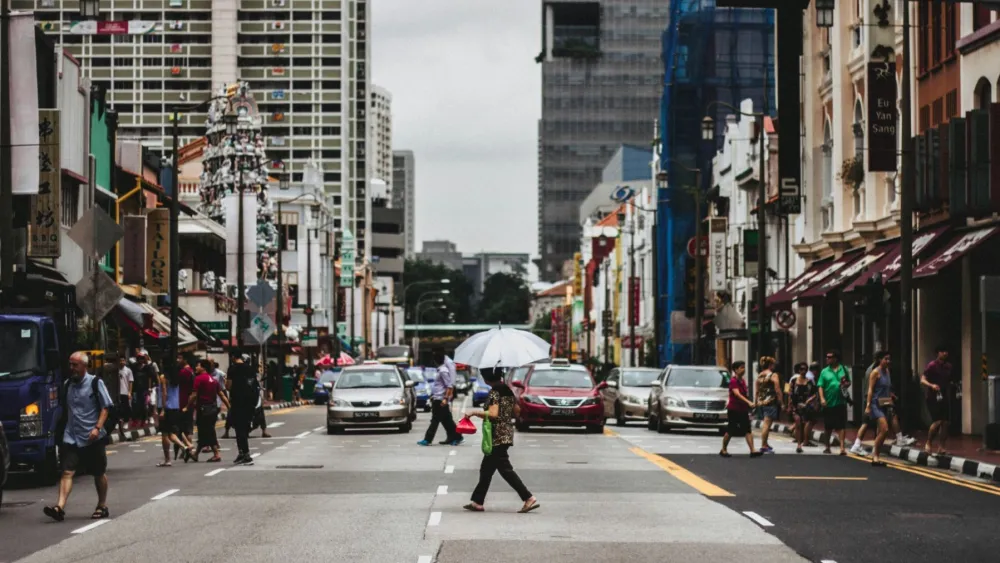
Subject-wise, Singapore landscapes remain a favourite. “Regardless of the medium, whether oil painting, watercolor, acrylic, or Chinese ink, paintings of Singapore scenes remain very popular,” she added, citing areas like the Singapore River and Chinatown as perennial themes.
To encourage more informed collecting, ARTualize has launched educational exhibitions to provide deeper context around artists and their styles. For example, visitors get to understand what makes Lim Tze Peng’s calligraphy exceptional.
“Instead of just telling people ‘This is a good piece,’ we need to give them context—what matters in the Singapore art scene, who the different artists are, and how art can be collected,” Low said.
Low, who set up the art gallery so she could manage the legacy her father left for her—about a thousand Nanyang oil paintings—said education is especially important now, as economic uncertainty driven by regional conflicts is making buyers more cautious.
Her shared art ownership platform, We Are Art Collectors, offers fractional art investment. “With fractional art, your risk is lower, your budget is lower, and yet you can still participate in art ownership,” she said.
For investors seeking more stable returns, Bruno Art Group CEO Motti Abramovitz recommends sticking with blue-chip names.
Works by masters like Salvador Dalí, Marc Chagall, and Andy Warhol hold value regardless of market shifts.
Bruno Gallery seeks to bring more major artists to Singapore, with a Salvador Dalí exhibition planned around September or October, he said in a Zoom interview.
“We really want to reach many more audiences in Singapore,” he said. “We plan to collaborate with some hotels and perhaps host exhibitions there.”
























 Read Here
 Advertise
 Sign Up