Singapore told to seek head start in race for fusion power
A partnership with NTU gives students access to French research facilities.
Singapore must develop fusion research expertise before the technology becomes commercially viable or risk falling behind, according to an academic.
“What makes me optimistic is the rapid progress in both public programmes and private companies worldwide,” Xavier Garbet, Temasek chair in clean energy at Nanyang Technological University (NTU), said in an emailed reply to questions. “What makes me cautious is that significant scientific and engineering challenges remain.”
NTU is working with France’s Alternative Energies and Atomic Energy Commission to train researchers and develop artificial intelligence (AI) and simulation tools under the Singapore Alliance with France for Fusion Energy.
The partnership also gives students access to French research facilities, including the Tungsten Environment in Steady-state Tokamak, Garbet said.
At FusionX 2026 in October, the Ministry of Energy, Trade, and Industry said it was studying fusion as a low-carbon energy source to diversify Singapore’s energy mix and support its 2050 net-zero goal.
Fusion components must withstand extreme heat and bombardment by high-energy particles, whilst laboratory technologies must be manufactured at scale and tested under operating conditions, said Andrew Ngo, centre director of the Agency for Science, Technology and Research’s (A*STAR) Future Energy Acceleration and Translation Centre.
“A key challenge is demonstrating that complete fusion systems can operate reliably over sustained periods,” he said in an emailed reply to questions.
Specialised tests, including irradiation experiments, require overseas facilities and partnerships. Advanced diagnostics and precision manufacturing are also needed to monitor plasma and produce components that meet fusion systems’ requirements, Ngo said.
Singapore could apply expertise from its semiconductor and aerospace industries, including modelling, advanced materials, manufacturing, nondestructive testing, and testing materials under extreme conditions, he added.
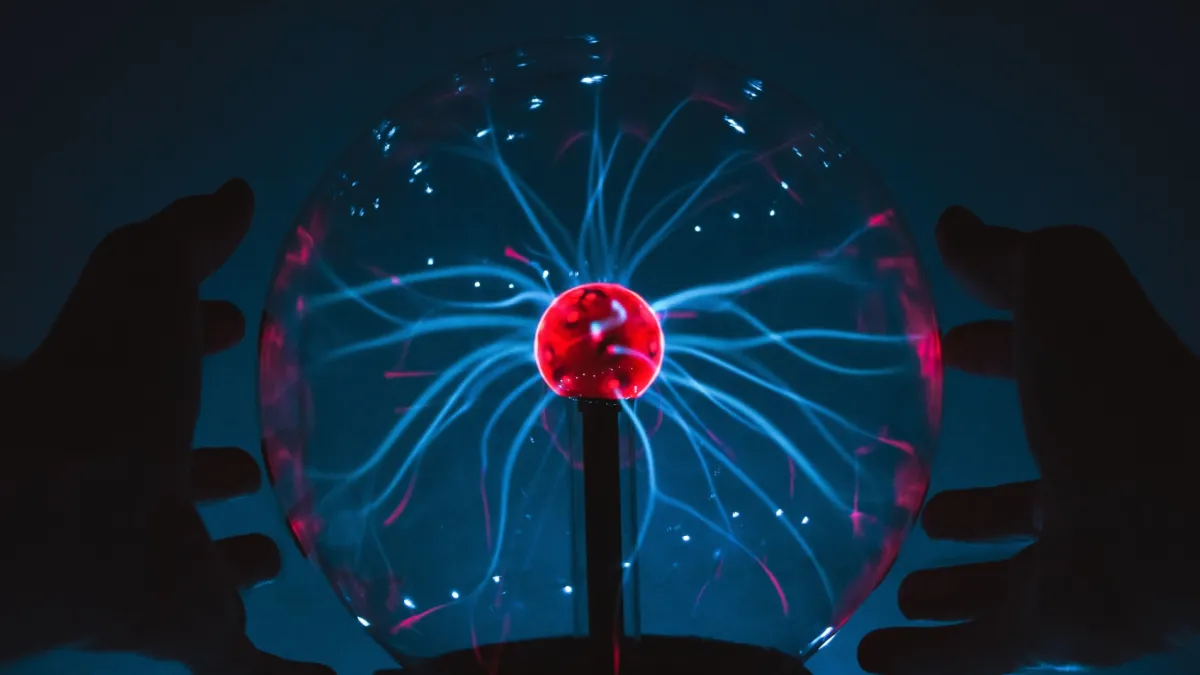
A*STAR is working with US-based Realta Fusion to develop a tool that helps researchers track how fast plasma moves inside fusion reactors.
Garbet said Singapore could apply its expertise in high-performance computing, instrumentation, material science, precision engineering, and digital technologies to fusion research.
“Fusion development spans decades,” he said. “If Singapore waits for commercialisation, it will be too late to develop the necessary expertise.”
Companies should focus on technologies relevant to fusion systems, including sensors, robotics, simulation, cryogenics, power electronics, and advanced manufacturing, he added.
Fusion must also compete on cost with other low-carbon energy sources. Regulators must be satisfied with safety, licensing, and supply chains, Garbet said.
Sustained net-energy demonstrations, reliable prototype power generation, stronger superconducting magnets, and improved disruption control would provide evidence of fusion’s commercial potential. AI tools that model and predict plasma behaviour could also advance the technology, he said.
“If fusion becomes commercially successful, it could provide a stable low-carbon energy source that reduces dependence on imported fossil fuels and enhances long-term energy security,” Garbet said.























 Read Here
 Advertise
 Sign Up