Redesign processes, not tasks, for AI gains: Wavestone
Putting AI on old processes yields only partial value.
Wavestone Singapore said businesses are capping the potential of agentic artificial intelligence (AI) by applying it to processes designed for humans.
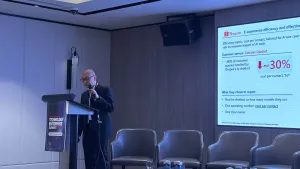
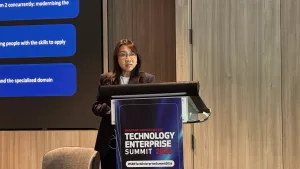
Romain Gagliardi, managing director of Wavestone Singapore, said at the Singapore Business Review Technology Enterprise Summit 2026 that businesses need an end-to-end, process-oriented approach, which he dubbed agentic process reengineering (APR).
According to his presentation, optimising what exists, with or without AI, cannot deliver structural change or break down silos.
He said the return on individual AI use cases is usually lower than expected, because costs such as reviewing outputs, fixing errors, and set-up and upkeep are rarely counted.
Through APR, businesses can redesign processes end to end so AI agents can take over the work, relying on humans only at key decision points.
Still, Gagliardi said APR is not a fix-all solution. He sorted processes using three criteria: criticality, or how important the process is; transformation potential, or how easy it is to automate; and operating cost and activity volume.
The reinvent category is for high-critical, high-potential processes. He said a full redesign is a must here for businesses to remain competitive.
The assist category follows, with high criticality and low potential for transformation. He said these typically involve AI features that slot into existing processes and tools.
The optimise category consists of processes that are low in importance but high in potential. He said that if these processes aren’t restructured, employees will automate them with whatever tool they can find, which may incur higher costs.
Lastly, the automate category covers processes with low criticality and low potential. He said employees should get autonomy through a self-service platform or copilot, while the business keeps an eye on the technology.
Gagliardi said only the reinvent category needs full APR. For the other three categories, the saving comes from not doing it.
He then outlined a three-step plan: identifying where to act, deciding where to start, and executing.
In his example, a pharmaceutical group running about 60 mergers and acquisitions (M&A) deals through one integration team was overwhelmed by status reporting and mismatched trackers. Delays past the exit date of transition services agreements (TSAs) kept fees running, whilst leadership feared AI errors in TSA schedules and steering packs.
Wavestone’s solution hands routine deal work to AI agents, which track deadlines, review contracts, and draft reports, whilst humans handle fact-checking and key decisions.
However, Gagliardi said redesigning processes is not enough on its own and needs two supporting elements, one for human resources and one for finance.
Wavestone’s approach maps the skills a firm has today, models the organisation it will need, and sets out a roadmap to retrain staff or move them into new roles. In the pharma case, he said staff largely accepted the changes because people still make the key decisions.
For finance, the FinOps (financial operations) Control Tower is a dashboard that pulls together costs such as tokens and licences and measures them against budget and forecast. Without it, firms may only notice unmanaged AI use when the bill rises.


























 Read Here
 Advertise
 Sign Up