

Singapore Banks Reinventing Themselves in Light of Tech Invasion
By Atin BhutaniSingapore has long been a mainstay of the financial world, offering political stability, geographic gateways, excellent legal framework and of course, a smorgasbord of tax incentives for foreign investment. The traditional banking system has branded the skyscrapers and inhabited the office space within them; in fact, up until 2014, the finance industry took up almost half of new office space in Singapore.
In recent years however, due in equal parts to technological inevitability and a worldwide pandemic, office space occupied by the finance industry dipped by 26 per cent between 2015 and 2020. In that same period, Singapore office space acquired by tech firms almost tripled.
Tiktok parent company ByteDance has claimed three levels at One Raffles Quay, Amazon has taken three levels abandoned by a large International Bank, and Alibaba Group has invested S$1.7 billion (US$1.3 billion) for a 50 per cent share of an entire office tower. All are at least in part, chasing the 650 million smartphone users in Southeast Asia in an effort to add them to their ever-growing user base.
The new tech kids on the block have been a major disruptor to not just the real estate once occupied by the finance sector, but the very business model of finance itself. The rise of fintech in Singapore is undeniable, and rather than seeing that as a threat, both the Singapore Government and private sector are seeing this tech shift as the next long-term phase in the financial sector.
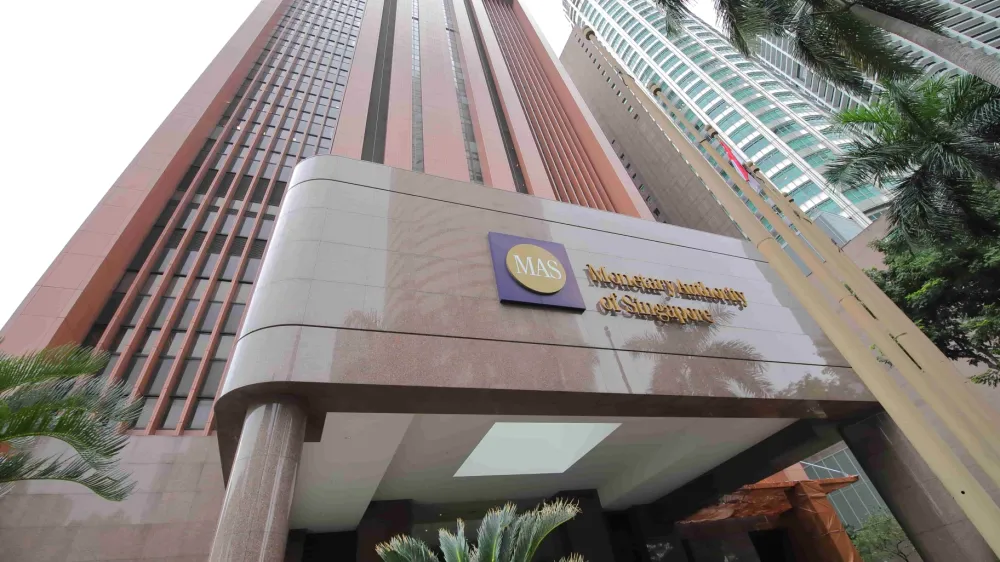
In recent years, the Singapore Monetary Authority (MAS) has given S$225 million (US$167 million) in incentives for fintech businesses to operate and expand in Singapore. Even better, a 100,000 square foot financial innovation hub has been created in Singapore's Central Area to encourage experimentation in the sector. Regulatory sandboxes allow fintech startups to work within specific ranges of operation to innovate in the sector.
More than 40 international fintech laboratories have been established in Singapore to date, with approximately 500 new fintech startups also in operation. Singapore’s traditional finance sector has put billions of dollars into digitization in an effort to ride the fintech wave; and while office space occupied by the finance sector will continue to decrease, 6,500 jobs are expected to be added to the local industry in 2021 alone.
Cryptocurrency and blockchain technology have also had some welcomed clarity in terms of tax treatment, putting Singapore well ahead of most countries — in fact, it makes Singapore one of the first countries in the world to regulate cryptocurrency.
Singapore also continues to be at the forefront of being able to harness the other top trends in the banking sector such Banking as a Service, Microservices, predictive analytics with machine learning at its heart etc. through investments in talent and innovation, regulatory framework and assistance through broader incentives. The world is changing before our eyes — whether it’s fintech or changing international tax rules, and so it is encouraging to see Singapore not rest on its traditional laurels of simply being a lucrative tax environment.
If Singapore can continue to leverage its innovation capabilities, as well as its natural advantages as a gateway to Mainland China and the rest of Southeast Asia, we are in good shape for the future.













![[Singapore Business Review] Report on the Asian Business Channel](https://www.cmgassets.com/s3fs-public/styles/video_thumbnail/public/2026-10/full-show-thumbnail_1.png.webp?VersionId=bJbrT_JKOuMWBnf7YkmsWjOSWIXddSvY&itok=zWuxHRNG)













 Read Here
 Advertise
 Sign Up









