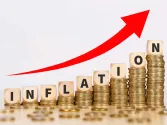
Chinese banking crisis: Problem loans to local governments greater than anticipated
The Chinese audit agency could be understating banks' exposures to local governments by as much as RMB 3.5 trillion, says Moody’s VP Yvonne Zhang.
In a release, Moody's Investors Service says that the potential scale of the problem loans at Chinese banks may be closer to its stress case than its base case, according to an assessment that the rating agency conducted following the release of new data by China's National Audit Office (NAO).
When considering the apparent absence of a clear master plan to deal with this issue, Moody's also views the credit outlook for the Chinese banking system as potentially turning to negative.
"We assume that the majority of loans to local governments are of good quality, but based on our assessment of the loan classifications and risk characteristics, as provided by the NAO and other Chinese agencies, we
conclude that the banks' exposure to local government borrowers is greater than we anticipated," says Yvonne Zhang, a Moody's Vice President and one of the authors of the report.
Of the RMB 10.7 trillion (about $1.6 trillion) of local government debt examined by the Chinese audit agency, RMB 8.5 trillion ($1.3 trillion) was funded by banks. However, Moody's has identified another potential RMB 3.5 trillion ($540 billion) of such loans that the Chinese auditors did not discuss in their report.
"When cross-examining the findings by the June 27 NAO report -- in conjunction with reports from Chinese banking regulators -- we find that the Chinese audit agency could be understating banks' exposures to local governments by as much as RMB 3.5 trillion," says Zhang.
"Since these loans to local governments are not covered by the NAO report, this means they are not considered by the audit agency as real claims on local governments. This indicates that these loans are most likely poorly documented and may pose the greatest risk of delinquency," the analyst adds.
Moody's report estimates that the Chinese banking system's economic non-performing loans could reach between 8% and 12% of total loans, compared to 5% to 8% in the rating agency's base case, and 10% to 18% in its stress case.
In the report, the rating agency examines various scenarios as to how banks could tackle problem loans, including some where the government provides assistance, but Moody's generally expects the Chinese authorities to implement gradual discipline.
This would involve the authorities leaving the banks manage a portion of the problem loans on their own.
























 Read Here
 Advertise
 Sign Up