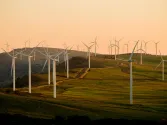
MAS: Green finance needs to scale up
MAS Managing Director Ravi Menon talked about the missing components in making green finance work effectively.
Green finance needs to scale up in order to meet net-zero emission goals by 2050, said Monetary Authority of Singapore (MAS) Managing Director Ravi Menon in a speech, 8 September.
“Green finance is a key enabler for the transition to a sustainable future... the bad news is that green finance has not been able to reach the scale required,” Menon said. Citing the International Energy Agency, he added that global investments in energy projects need to more than double its current level by 2020 to reach the 2050 net-zero emission deadline.
He gave three “Ds” that needs to be solved in order for green finance to work effectively: data, definition, and disclosure.
On data, Menon said there is a need for investors and lenders to get access to reliable and comparable data, such as the borrower’s or issuer’s future emission trajectories, and comprehensive Scope 3 emissions.
“But a vast majority of firms do not provide such information, even those which have set emission reduction targets. The process of acquiring sustainability data remains manual, cumbersome, and costly. There is a lack of transparency in the verification and reporting process,” Menon said.
Acknowledging the role of technology in addressing these data challenges, the MAS recently launched Project Greenprint to support the green finance ecosystem by helping them establish data platforms for mobilising capital in select sectors, facilitating acquisitions and certification of climate-relevant data, monitoring commitments, and quantifying the impact of a project’s abatement efforts.
On definitions, Menon said that there will unlikely be a single global taxonomy for green finance. Nevertheless, these definitions should be compatible or inter-operable, otherwise, cross-border green finance flows would be severely constrained.
“In Singapore, the Green Finance Industry Taskforce convened by MAS is fleshing out its proposed taxonomy for green and transition activities,” the managing director said, adding that the MAS is working with its ASEAN counterparts for greater compatibility.
On disclosures, the MAS and the Singapore Stock Exchange are working together on creating a roadmap for mandatory climate-related financial disclosures by financial institutions and listed companies. However, Menon said that there is still a need for greater consistency and reliability of disclosures at the financial product level.
“We need to make sure that as green investments become more mainstream, there are stronger disclosure requirements in place,” Menon said.
Early next year, the MAS is set to release its regulatory expectations on disclosure standards that retail funds in Singapore with ESG investment objectives must meet.
Beyond these three Ds, Menon said that knowledge and capacity building efforts must still continue to ensure the success of green financing.
The MAS has been working on establishing the third centre for training and research on Asia-focused green finance, adding to the current Singapore Green Finance Centre and the Sustainable Finance Institute of Asia. The National University of Singapore is set to establish by the end of the year the Sustainable and Green Finance Institute.
“The next few years will be critical in ensuring that the financial system is equipped to facilitate the global transition necessary to achieve the climate objectives that 195 countries signed up to in Paris in 2015. Let us do our part – as regulators, standard setters, investors, asset managers, and financial service providers – in greening the global financial system,” Menon said at the conclusion of his speech.

























 Read Here
 Advertise
 Sign Up