Is Singapore ripe enough for self-leadership?
By Andrew BryantSelf-leadership is the practice of intentionally influencing our thinking, feeling, and behaviors to achieve our objectives (Bryant, Kazan 2012). Simply put, self-leadership emerges from self-awareness, which leads to greater self-responsibility and behavioral flexibility, which in turn increases our ability to reach our goals.
Self leadership emerges when individuals exercise their autonomy (decision making skills), however this behavior can be inhibited by cultural forces.
Hofstede (1984) examined cultural difference in a number of dimensions, the most obvious of which is power differential - who makes decisions, how decisions are made and fear to disagree with superiors. The power differential index (PDI) in Singapore is high (70+) compared with low PDI countries such as USA, Australia and Germany (30+).
However Singapore’s index is similar to China and India who all share the characteristics that power is centralized and managers rely on their bosses and on rules. In high PDI cultures employees expect to be told what to do, control is expected and the attitude towards managers is formal, communication is indirect and the information flow is selective.
In addition to high power differential Singapore is mostly a collective society which is manifested by people´s self-image being defined in terms of “We” rather than “I”.
With these two factors it might appear that Singapore is not ready for a shift towards self-leadership and yet I would like to outline some reasons why Singapore companies should consider creating self-leadership cultures and an indication that it is already doing so.
With globalization and the flattening of hierarchies a new style of leadership and followship are required. The mantra, “it’s not our culture” will lead to a competitive disadvantage through the following behaviors; all decisions deferred to boss, passive aggressive communication, a lack of ownership, no creativity, no accountability and inability to take feedback.
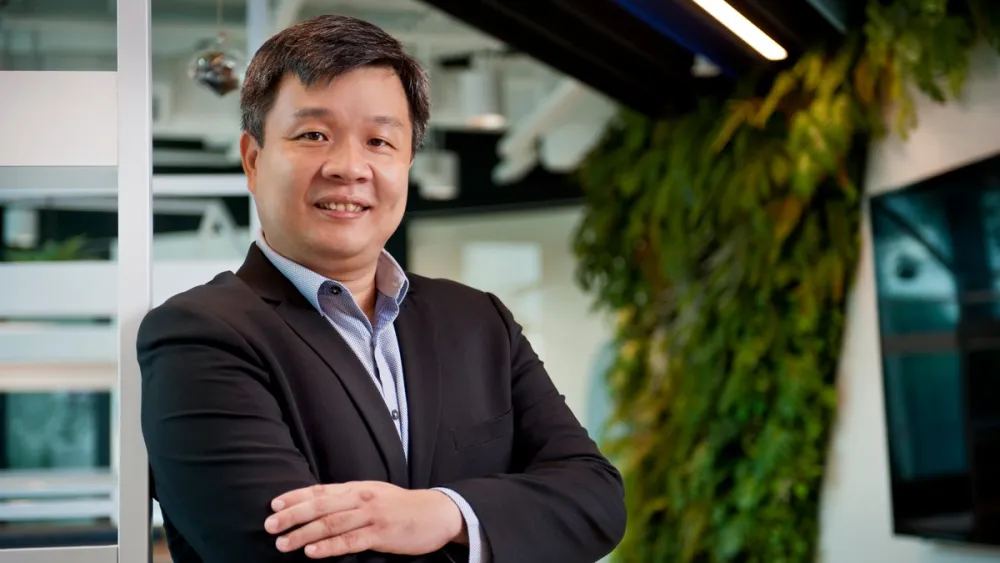
DSO National laboratories, whose mission to develop technologies and solutions that can provide technological surprises to sharpen the cutting edge of Singapore's national security is one organization that has realised the importance of developing some self leadership.
The CEO, Mr Quek Gim Pew, has made value on the idea that, “nobody has a monopoly on a good idea”, regardless of seniority. This value is reinforced through DSO’s performance appraisal system.
Prime Minister, Lee Hsien Loong recently said (Sept 2012), "Today, Singapore is a success story, but the world is not standing still. The next two decades will be very different".
Self-leadership mental strategies include examining your belief system to check if it is continuing to support you achieving your objectives. The belief that the boss knows everything and that the sub-ordinate has no business thinking for themselves is one belief that in the author’s opinion needs to be re-examined.
Self-leadership is not selfish; research (Bryant, Kazan 2012) clearly shows that self-leaders are responsible for their own actions and accountable to the objective of the team and organization.
If, as managers and leaders we feel responsible for our staff we are treating them as young children and suppressing their full potential – our role should be to encourage our follower to be responsible for their thoughts, feelings, speech and actions and be accountable to clear a clear mission and objectives.
The self leader is:
Intentional – They act with purpose and have a vision for the future
Accountable – they are committed to achieve the goals they set or agree to
Adaptable to different circumstances
Resilient – able to take feedback and bounce back from set backs
Validating – able to celebrate their own and others success
And a final argument against, “It’s not our culture” is a quote from Lao Tse who said,
‘A leader is best when people barely know he exists. Not so good when people obey him and acclaim him, and worse when they despise him. Fail to honor people and they will fail to honor you.
Of a great leader, when his work is done, people will say, “We did it ourselves.”

























 Read Here
 Advertise
 Sign Up