Too many AI programmes dilute value, executives warn
Focus on fewer, deeper initiatives is what separates AI trailblazers from the rest.
The companies extracting the most value from artificial intelligence are not the ones running the most programmes, senior executives warned at the Singapore Business Review Technology Enterprise Summit.
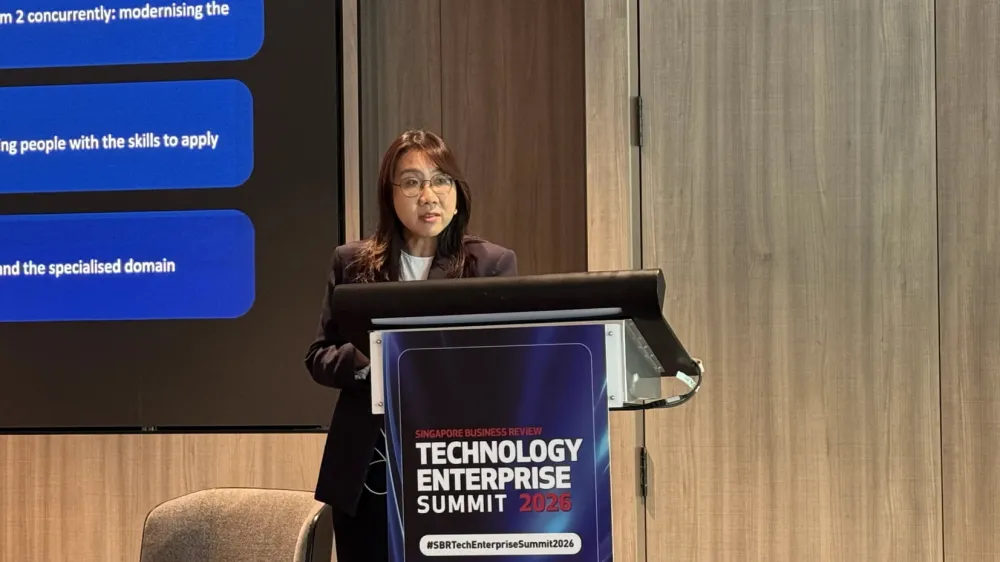
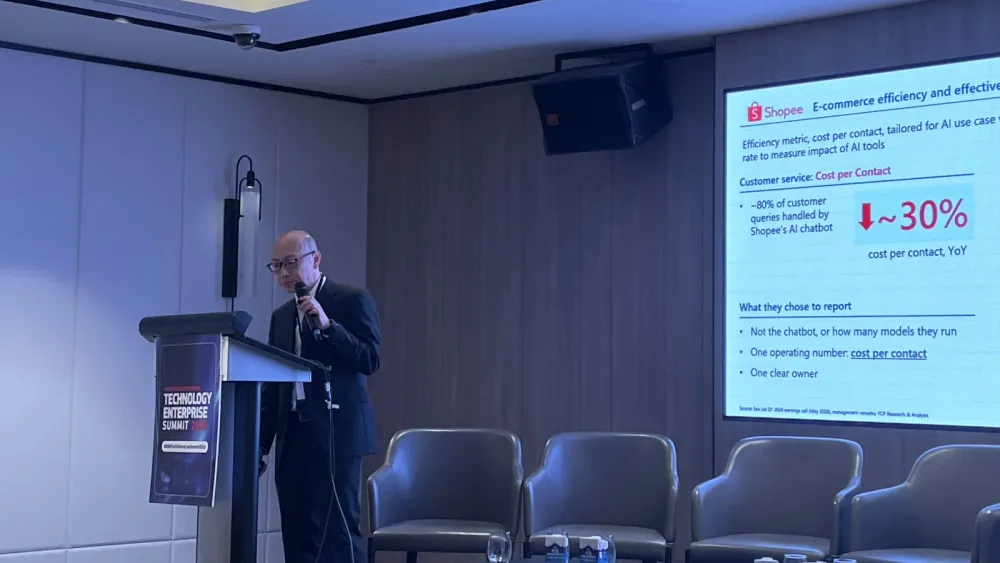
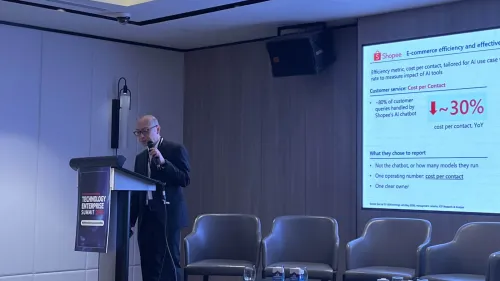
BCG research shows trailblazer companies extract two to three times more value from AI than their peers. BCG Managing Director and Partner Srihari Chakarajan said the gap is not explained by spend or technology. It comes down to strategic discipline and the willingness to focus.
He illustrated the cost of unfocused investment with a bank he had advised. What began as a tightly defined AI strategy covering three priorities quickly unravelled as individual departments lobbied for their own use cases.
“Eventually, there were 25 programmes that were started,” he said. “You end up doing everything, which means lack of clarity.”
The trailblazer model treats AI investment as a portfolio rather than a pipeline. No-regret moves address certain-value applications. Options preserve infrastructure flexibility for an uncertain future. Asymmetric bets cover high-risk, high-upside initiatives where the downside is affordable. The allocation between the three depends on risk appetite, with more conservative organisations directing 60% to 70% toward no-regret moves.
Critically, trailblazers also spend more in absolute terms, but do so with intent. “Despite not having absolute certainty over value realisation, a lot of the ones who are actually delivering value and uptake actually invest a lot more,” Chakarajan said. “But they are not putting in money without intention.”
That discipline extends to the foundational work that must precede any programme. Singapore Post Limited Chief Information Technology Officer Gavin Pathross said neither the number nor the ambition of AI initiatives matters if the underlying architecture is not ready to support them.
“AI is really difficult to do if you do not have two things built well,” he said. “One is your enterprise architecture. Number two is your data architecture.”
SingPost inherited a cloud environment running across multiple platforms without a coherent strategy. Pathross has since consolidated everything onto a single tech stack, with 16 AI projects underway built on a deliberately rebuilt foundation rather than accumulated technical debt.
“If your plumbing is wrong, forget about AI,” he said.
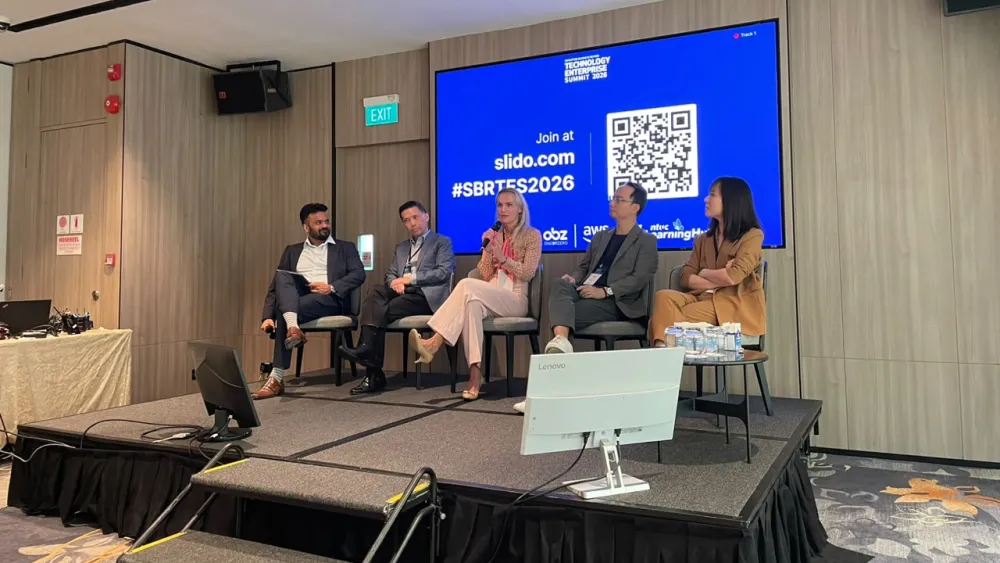
The same thread ran through a panel discussion bringing together executives from Grab, Standard Chartered, SBS Transit and Singapore General Hospital. Tanja Petrovic, global head of structured credit sales and origination at Standard Chartered, was blunt about what most organisations get wrong.
“Pilots should be probably killed a bit faster than they are,” she said. “We all have great ideas, but what is actually going to be in the production and what is going to be used?”
Hazel Chen, group business development director at Grab, said the problem runs deeper than the number of pilots. Without shared goals, measurable metrics, and accountable owners, even a focused AI programme fails to generate cross-functional value.
“AI does not solve any organisational silos,” she said. “It will continue to exist, especially as the organisation grows. It could make it worse too if used in the wrong way without the right context.”
She drew on a recent example from within Grab, where a data scientist fed an entire partnership contract into an internal AI platform rather than asking the business team a straightforward question. The tool generated a close to 10-page clause-by-clause analysis but lacked the negotiation history and business context that would have made the output useful. Chen and her legal counsel ended up spending more time responding to the report than the original question would have taken to answer.
“Context, context matters,” she said. “Who feeds the context? We are the ones feeding the context.”
A/Prof. Adam Chee, director of the AI Development Office at Singapore General Hospital, said most organisations struggle to prioritise because they treat surface symptoms as separate problems rather than tracing them to a common root. “You think that we are solving 10,000 problems, but [we are] solving 10,000 symptoms of three problems,” he said.
Shaun Liew, vice president and head of customer experience and commercial at SBS Transit, made the case through two examples. SBS Transit used AI to optimise train timetables to capture regenerative braking energy, squeezing out at least another 5 to 8% in energy savings with no new equipment. It also co-developed what it describes as the world’s first real-time sign language virtual assistant for deaf commuters, a social value initiative being exported to the Middle East.
Shekhar Sasikumar, principal at Kearney who moderated the panel, said the DBS story holds the clearest lesson for organisations trying to scale AI. “We should never think about automating a horse cart,” he said. “What we have to think about is to develop a car, and then how to flourish on it.”
Chakarajan closed with the clearest prescription. “Make AI your big strategic priority,” he said. “Go after these programmes as an investor would. Have a diversified portfolio... and make sure you have all the tracking mechanisms in place to be able to get value out.”























 Read Here
 Advertise
 Sign Up