How NUH cuts weekly rostering time from eight hours to one using an LLM
Staff who once spent eight hours a week creating rosters can now complete the task in one hour, according to NUH.
National University Hospital (NUH) has replaced manual staff rostering processes, previously managed by fully trained healthcare professionals like nurses and anaesthetists, with decentralised large language model (LLM) assistants that dynamically generate and update rosters. The change has cut the time spent on rostering by nearly 90%.
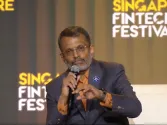
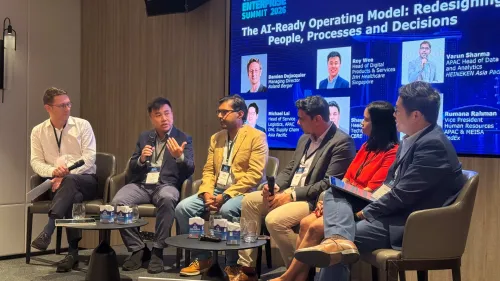
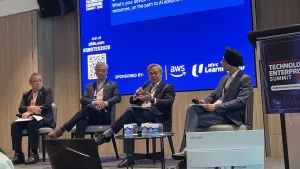
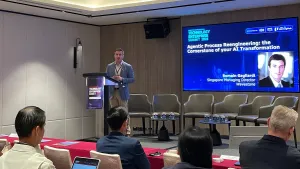
Speaking at the Singapore Business Review Technology Enterprise Summit, NUH Chief Medical Information Officer Dr. Ling Zheng Jye described the rostering initiative as one of the hospital’s strongest AI adoption stories.
Reflecting on staff feedback, Dr. Ling said: “People say I used to spend eight hours a week just creating the roster. Now I do it in one hour. They say I’m never going back to the old method. Never.”
The new system is effective because it incorporates factors that are rarely formalised in conventional rostering processes, including pregnancy status, junior doctors’ training requirements and public holiday preferences.
The LLM-based assistants preserve these considerations while allowing rosters to be regenerated dynamically as circumstances change. For example, the anaesthetist could only schedule two weeks at a time. Now, the system is run twice daily and can update the roster almost immediately when needed.
“If someone shows up with an MC, he can rerun the tool. It will generate the roster. If there’s an emergency surgery or an urgent transplant case that requires certain people to be pulled away, he can run the roster on the spot, and the whole roster gets updated,” Dr. Ling said.
Dr. Ling also highlighted the importance of providing staff with approved AI tools to support their work.
“If we don’t provide staff with the official tools, they will come up with their own shadow AI and use it,” he said. “So that’s when you know this use case is a real winner and is a keeper.”
NUH has since adopted a decentralised approach to rostering. The hospital shares the underlying framework across departments while allowing individual teams to develop rules that reflect their own operational requirements and working culture.
Rather than reinventing the solution, departments looking to adopt AI-assisted rostering are encouraged to first consult colleagues who have already implemented similar solutions. Dr. Ling said the hospital now directs interested teams to the approximately 30 colleagues who have used an LLM to tackle the same problem.






















 Read Here
 Advertise
 Sign Up