UOB warns financial returns alone may miss AI value
Initiatives also get scored on scalability, reusability, and risk.
United Overseas Bank (UOB) has cautioned that financial returns alone may not adequately capture the value of artificial intelligence (AI) initiatives, as businesses need to consider customer and employee benefits, scalability, reusability, and risk when assessing their impact.
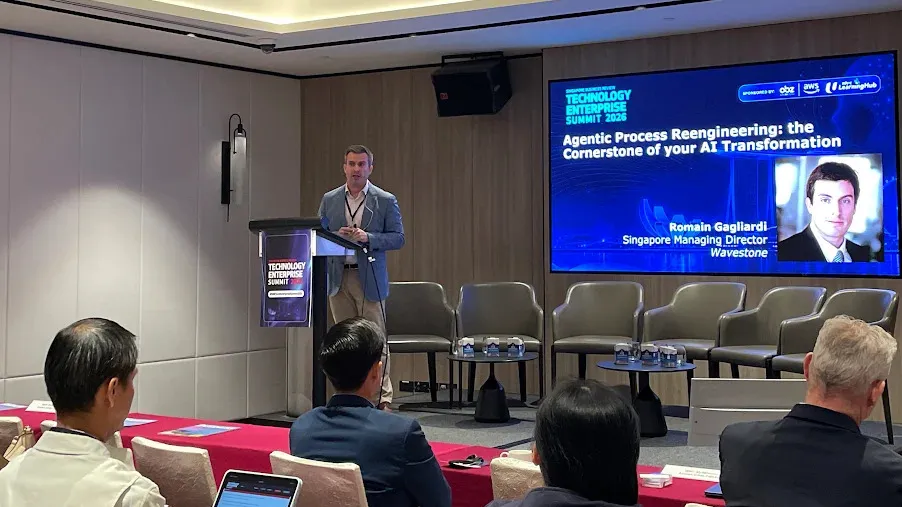
Speaking at the Singapore Business Review Technology Enterprise Summit on 12 November, Angelo Roxas, managing director for group technology and operations, personal financial services, and retail credit at UOB, said traditional performance indicators may not be sufficient to evaluate AI initiatives.
“As we start working with new technologies, our mindset as a bank also has to change as well,” Roxas added.
He said UOB is adopting a hybrid approach that centralises AI guardrails and reusable capabilities, whilst holding business units accountable for identifying problems and developing solutions.
The bank also places significant emphasis on governance, including determining accountability when AI systems make mistakes, he added.
Keith Leong, chief customer officer for enterprise at Singtel Singapore, said the company initially encouraged teams across the organisation to experiment with AI, which led to many pilots with good outcomes.
To move beyond individual pilots and scale AI across the business, Singtel redesigned workflows, restructured teams, and organised its data around AI to support broader adoption and scale successful solutions across the business.
Singtel also created a central AI and Data Analytics (AIDA) team, which provides common technology platforms, specialist expertise, and governance under a hub-and-bespoke operating model, whilst business units draw on their knowledge of customers, networks, and operations to develop and implement AI solutions in collaboration with AIDA.
Henry Chang, managing director for digital services and partnership at Keppel, said the group's AI strategy centres on people, a central platform, business applications, and governance.
“We do need to upskill our people. It's not just about providing tools to them. You also need to have proper change management, so in which case you need to provide the right environment,” Chang said.
The central platform allows Keppel to develop AI capabilities once and reuse them across the organisation, supported by security and monitoring systems to ensure AI agents operate within established boundaries, he said.
Chang cautioned that governance is often underfunded, potentially exposing businesses to legal liabilities, operational risks, and weaker performance.
Keppel currently funds AI initiatives centrally to avoid fragmented capabilities and track outcomes, but plans to move towards a hybrid model that gives business units greater autonomy as adoption expands, he said.
On delegating tasks to AI, Chang said risk should determine the level of human oversight.
“Whether it is low risk or high risk, we all need to make sure that we put in the right harnesses. We put in the right level of monitoring and security to make sure that our agents won't go rogue,” Chang added.
For smaller businesses with limited resources, Roxas advised identifying actual business needs before investing in AI, noting that some problems may not require AI solutions.
Similarly, Leong recommended assessing existing data, resources, and processes before selecting tools.
“Not every AI is good for every organisation. You will have to ensure that you are using the right tool for the right process or the right area that you want to automate,” Leong added.
He emphasised that human intelligence remains crucial, particularly in decision-making.


























 Read Here
 Advertise
 Sign Up