Is the worst over for embattled Singapore retail REITs?
Rents have been in a protracted three-year slump but analysts foresee a mild recovery in the coming months.
The looming supply of new retail space to be installed in the next four years in Eastern Singapore is expected to pose a larger threat to the performance of the city’s struggling real estate investment trusts (S-REITS) than the spectre of online shopping giants, according to Moody’s Investors Service.
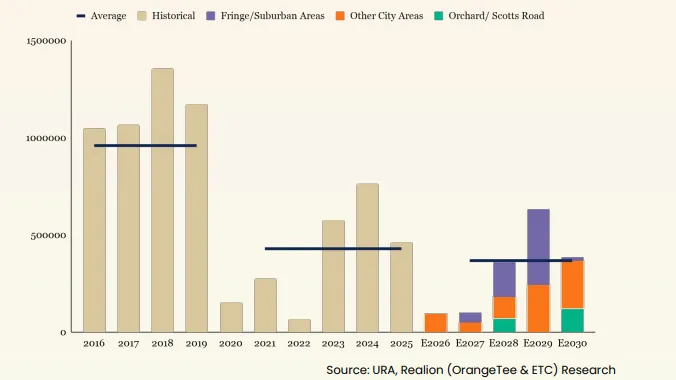
Around 2.5 million sqft of retail space is expected to be developed until 2019, estimates Edmund Tie & Company. Such level of supply is expected to keep a recovery in rents to a minimum, Moody's argued.
Also read: Stores turn to pop ups to survive amidst exits in the retail sector
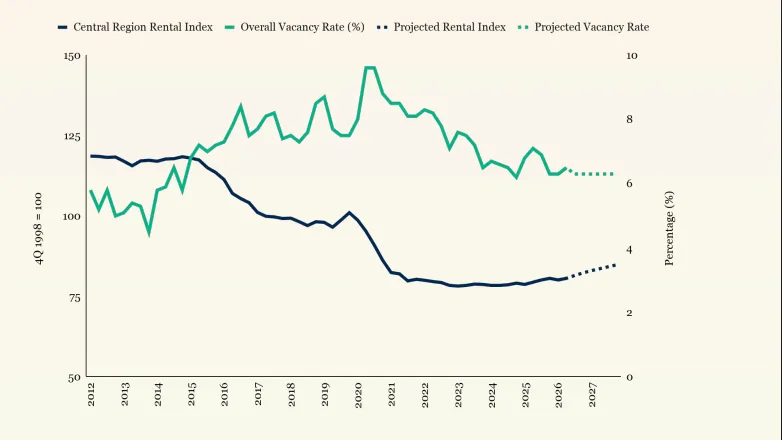
After a mild 0.1% recovery the earlier quarter, retail rents once again fell by 1.1% in Q2, according to data from the Urban Redevelopment Authority, extending a persistent downward trend since Q3 2015.
“Accordingly, the stress on retail rents is expected to continue because of the preference of landlords to maintain occupancy rates rather than increase rents,” the credit rating agency said in a report.
Players like Suntec REIT, CapitaLand Commercial Trust and Mapletree Commercial Trust which hold considerable assets in other property segments and geographical locations are more likely to weather through the weakness in Singapore’s retail market than their peers, Moody’s added.
Also read: How Singapore's retail sales affect SPH REIT
If investors are looking for bigger bang for their buck, the retail sector may not be the ultimate choice in light of weak market conditions. Singapore's REIT market offers a myriad of investment possibilities, being the sixth largest in the world and third in Asia with a market cap of US$53b as of February, according to Q Investment Partners.
“The retail sector is not a preferred pick for now vs other sectors like Office and industrials who offer better growth visibility, which we believe to be a main driver for outperformance,” Derek Tan, vice president at DBS Vickers Securities told Singapore Business Review.
The sentiment was echoed by Krishna Guha, equity analyst at Jefferies, who cautioned that REITs still need to be judged for their rental reversion, occupancy, gearing amongst other fundamentals.
"At subsector level, we like industrial (business parks) and hospitality. We like office selectively while being cautious on retail," he said.
However, REITs remain attractive for most retail investors especially since they offer attractive dividend yields as they distribute at least 90% of the profits, according to David Gerald, president and CEO of Securities Investors Association Singapore (SIAS).
"REITs too are improving their disclosure practices as can be seen in research announced today. Nevertheless, investors should have a diversified portfolio so as to mitigate risks, like growing e-commerce adoption especially for those invested in retail mall REITs," he added.
This was echoed by Jefferies' Guha. "Generally speaking, larger REITs are better able to manage sector headwinds as well as have lower borrowing cost. All REITs in Singapore have a gearing threshold of 45%. So, unless there is an external shock which significantly lowers valuation of properties, financial risk is limited."
Nevertheless, things are looking brighter for embattled retail players like CapitaLand Mall Trust and Frasers Centrepoint Trust as the worst appears to be over in Q2 with the gradual stabilisation of retail operating metrics.
“The numbers are right that most of the supply will be in the east but to the contrary, pre commitment rates have already been quite strong especially for upcoming or recently completed Malls (Century Square),” noted DBS' Tan.
Although S-REITs have only a number of levers to offset weakness in the retail sector, landlords could still deploy a number of strategies to eke out gains, Jefferies' Guha added.
"Retail landlords can change trade mix, tenant mix, lease tenor and structure, mall efficiency as well as lower operating expenses. If operating yields cannot be improved, SREITs can recycle capital by reinvesting, de-gearing or distributing divestment gains."
Also read: DIY or die: Singapore's brick and mortars turn to experiential shopping to survive
The bullish sentiment was echoed by Moody's who argued that Singapore still retains its status as a leading shopping centre in Asia with a wide variety of local and international product offerings that might not be available in the rest of the region.
"In terms of longer term trends, brick and mortar retail will be supported by initiatives of landlords to keep malls attractive and relevant to shoppers, the preference of Singaporeans for physical shopping, and the country's position as a regional shopping hub," Saranga Ranasinghe, Moody's assistant vice president and analyst said in a report.
























 Read Here
 Advertise
 Sign Up