Is Keppel going beyond the role of a traditional shipyard?
It taps into strategic players in doing vessel designs.
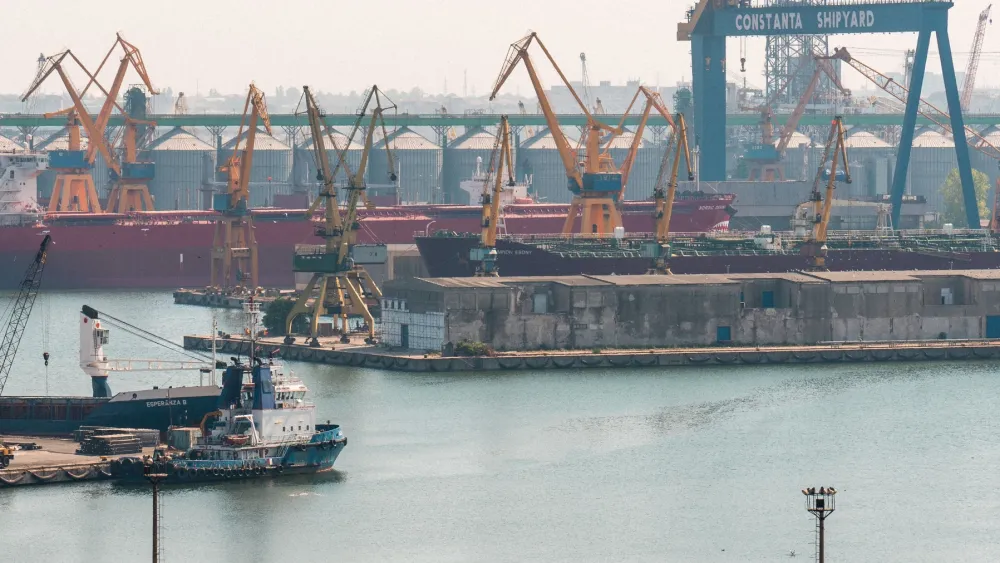
Keppel Corporation is slowly shaping itself to be a powerhouse player in the shipyard sector.
According to OCBC Investment Research analyst Low Pei Han, Keppel is able to go beyond the role of a traditional yard by bringing in key strategic players, financial investors and participate in the vessel design early on, amongst other factors.
Low mentioned that Keppel is also able to offer solutions for the seamless delivery of LNG from end to end, from upstream (FPSO, FLNG), to midstream (FSRU, small-scale LNG carriers), and finally downstream (LNG bunker vessel, land- based and floating power plants, dual-fuel vessels).
"As such, KEP sees itself as an industry enabler for a yet-to-mature sector, not just a pure product/service provider," Low said.
Just recently, Keppel held a naming ceremony for Hilli Episeyo, the world’s first converted floating liquefied natural gas (FLNG) vessel. The group had entered into a US$735m contract in 2014 with Golar LNG to convert an existing Moss LNG carrier into the FLNG.
"...this is the first in a series of FLNG vessels – there will be the Golar Hilli, Golar Gandria, Golar Gimi for now; the conversion contract values for Gandria and Gimi are U$684m and US$705m, respectively. Compared to newbuilds, converted FLNGs are significantly more cost-effective and faster to market, without compromising safety and processing capabilities," Low said.























 Read Here
 Advertise
 Sign Up