Moody's on cooling measures: Developers' loss are the local banks' gain
The ratings agency said Singaporean banks will benefit from a more stable property market as their exposures to property speculators, price shocks, and loan losses will decline.
In an excerpt from its Weekly Credit Outlook report, Christine Kuo, Moody’s Vice President and Senior Credit Officer, said the benefits may not immediately be obvious since it will be difficult to quantify the credit costs that would have been saved as a result of more stable property prices.
Kuo added that the decrease in loan demand could negatively impact the interest income of the banks.
On 13 January, the Singapore government announced a fourth batch of measures aimed at cooling the local residential property market.
The measures,16 which became effective 14 January, include increasing the stamp duty for the sellers
of residential properties, decreasing loan-to-value (LTV) limits to 60% from 70% for individual buyers who already have outstanding housing loans, and imposing an LTV limit of 50% on non- individual buyers.
“We expect speculative demand to be most impacted by the sharp hikes in the seller’s stamp duty, and which are now as high as 16% for properties sold within their first year of purchase,” Kuo said, noting that a healthy property market is critical for Singapore’s three major commercial banks.
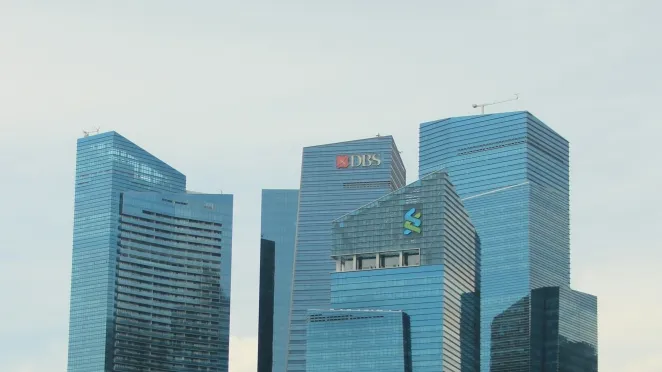
DBS Bank (Aa1 stable; B/Aa3 stable),17 Oversea-Chinese Banking Corp. (Aa1 stable; B/Aa3 stable), and United Overseas Bank (Aa1 stable; B/Aa3 stable) all have significant exposures to the property market through their housing loans and lending to construction and real estate companies.
As of 30 September, some 53%-55%18 of their total loans were property related, and the majority were to
Singaporean borrowers.
"While Bank of Singapore (Aa1 stable; C-/Baa1 stable) focuses on private banking and has little direct exposure to property, it too will benefit from a stable housing market. Its business flows would fall when the net worth of its clients declines because of significant drops in property prices," Kuo said.
The latest batch of measures has been taken in response to ongoing increases in property prices The previous three attempts to cool the housing market, introduced in September 2009, February 2010, and August 201019 have to some extent moderated the rate of increases for private residential properties (from 16% quarter on quarter in third-quarter 2009 to 3% quarter on quarter in third-quarter 2010).
The government, however, believes more needs to be done as prices continue to increase.


























 Read Here
 Advertise
 Sign Up