

CBD office vacancy falls to 5.6% as rents hit record
Grade A rental growth forecast lifted to 5% as vacancy hit its lowest since Q3 2022.
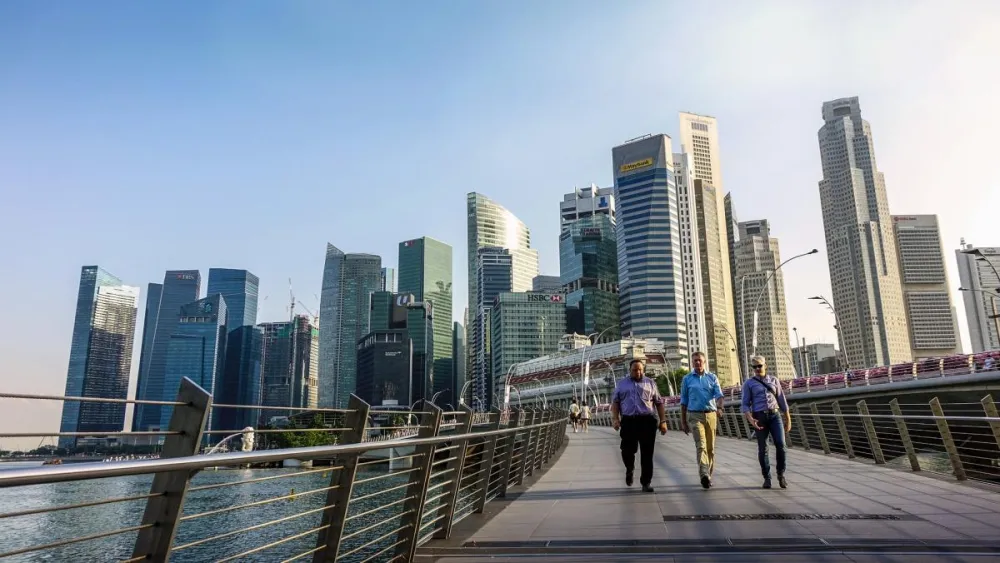
Grade A office vacancy rate in the Central Business District (CBD) fell 1.0 percentage point quarter on quarter (QoQ) to 5.6% in the second quarter (Q2), its lowest level since the third quarter of 2022, as tightening supply continued to support rental growth.
Average rents rose 2.8% QoQ to a record high of $10.42 per square foot (psf), marking the strongest quarterly rental growth since the fourth quarter of 2018.
Savills said demand-led rental inflation is increasingly overriding global economic concerns as tightening vacancy and limited new supply continue to underpin rental growth.
The consultancy also raised its 2026 CBD Grade A rental growth forecast from 3%-5% to 5%.
“The market's resilience has been underpinned by strong demand for premium office space and a limited supply of new office developments. As vacancy rates continue to tighten, landlords have maintained a firm stance on both asking and renewal rents, allowing rental growth to accelerate,” the firm said.
Savills said the market's overall tightening was largely driven by premium office assets, with vacancy in Grade AAA office buildings declining to 3.1% in Q2, the lowest level since Q4 2013.
The firm said the widening gap between premium and lower-quality buildings has reinforced a two-tier leasing market, with lower-quality office buildings facing greater difficulty in backfilling vacant space.
As Grade AAA space becomes increasingly constrained, occupiers are turning to Grade AA buildings as an alternative.
Vacancy in Grade AA offices fell 0.7 percentage point QoQ to 8.5%, reversing increases recorded over the previous three quarters.
“Many occupiers are reluctant to incur the higher occupancy costs associated with relocating to Grade AAA buildings, particularly as rents, fit-out costs, reinstatement costs, and relocation expenses remain elevated,” Savills said.
Grade AAA rents increased 1.4% QoQ to $13.61 psf, whilst Grade AA and Grade A rents rose 2.8% and 3.4%, respectively.
“Rental growth in Grade AA and Grade A buildings may not necessarily reflect tightening vacancy conditions, but rather the spillover effect from rising rents in Grade AAA developments,” it said.
Leasing activity in Q2 was supported by expansion demand from the technology, financial services, and hedge fund sectors, alongside new entrants in the serviced office sector and expansion amongst smaller corporate services providers.
At the same time, the pace at which occupiers surrendered office space appeared to have slowed as more companies adopted five-day return-to-office policies.
Savills projects CBD Grade A rents to grow 5% in 2026, followed by a further 5%-7% year-on-year increase in 2027.
“Barring a significant deterioration in the political-economic sphere, even a marginal increase in office demand could result in disproportionately strong rental growth given the current supply constraints,” said Alan Cheong, Executive Director of Research & Consultancy at Savills Singapore.












![[Singapore Business Review] Report on the Asian Business Channel](https://www.cmgassets.com/s3fs-public/styles/video_thumbnail/public/2026-10/full-show-thumbnail_1.png.webp?VersionId=bJbrT_JKOuMWBnf7YkmsWjOSWIXddSvY&itok=zWuxHRNG)













 Read Here
 Advertise
 Sign Up









