MAS tightens monetary policy over economic growth
But amidst the policy change, it is cautious of the outcome of ongoing global trade tensions.
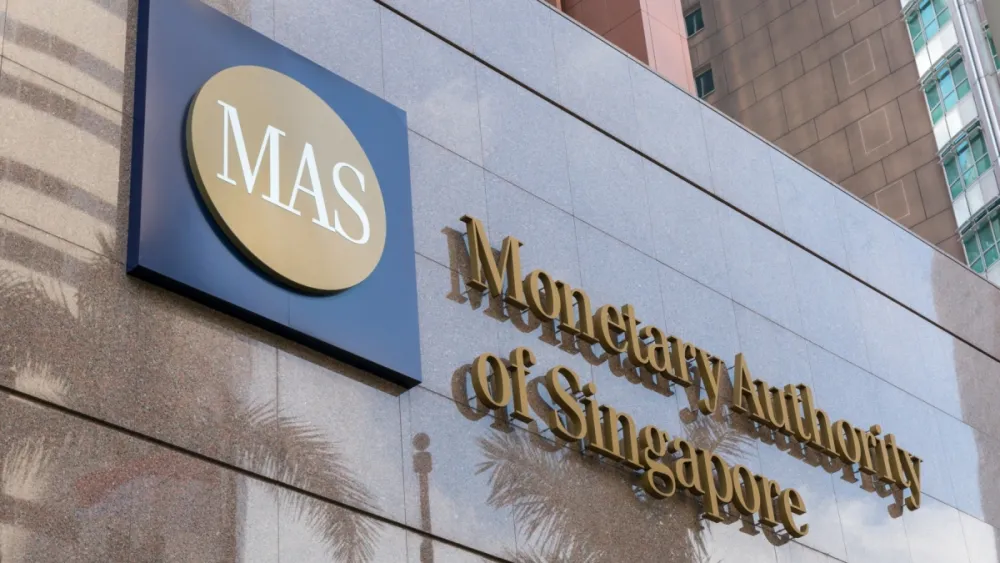
The Monetary Authority of Singapore (MAS) decided to exit from a neutral stance in monetary policy and slightly raise the slope of S$NEER policy band. According to an announcement, "This policy stance is consistent with a modest and gradual appreciation path of the S$NEER policy band that will ensure medium-term price stability."
"The Singapore economy is likely to remain on its steady expansion path in 2018," it said, "Upward pressures on MAS Core Inflation are expected to persist over the course of this year and beyond, underpinned by an improving labour market."
MAS noted that the adjustment takes into account the "uncertainty in macroeconomic outcomes presented by ongoing trade tensions."
In the October 2017 Monetary Policy Statement, MAS kept its monetary policy stance neutral. "This policy stance was assessed to be appropriate given the broadly stable outlook for GDP growth and MAS Core Inflation," it said.
Since then, MAS noted that the S$NEER has appreciated, apart from a brief period of decline in early 2018. "This development reflected, in part, broad-based US dollar weakness and depreciation in a number of regional currencies against the S$. The three-month S$ SIBOR rose from 1.1% as at end-October 2017 to 1.5% at the end of the year, before falling in January 2018. It subsequently resumed its upward trend to reach 1.4% as at end-March," it added.
MAS said this should have a "steady extension path" in 2018 amidst economic growth, but should the US-China trade dispute escalate, global trade could be affected and push up core inflation.
Also read: MAS likely to tighten monetary policy: analysts
Moreover, the sectoral composition of growth has been uneven. "Within manufacturing, the semiconductor segment has continued to expand at a strong pace, but the marine and offshore engineering industry remains subdued. In services, retail and food services saw some pullback in activity after the pickup in Q4 last year, while business services posted further growth. The financial services sector also recorded varying outturns across its segments, with both domestic and offshore lending outperforming," it said.
MAS noted that despite a setback in global trade, growth in the Singapore economy should continue at a broadly steady pace in the quarters ahead. "The expansion will still be driven by the trade-related industries, although their contribution should ease from last year. The financial and business services sectors should continue to benefit from the broader pickup in income growth, including in the region," it added.
It also showed bullishness towards the "weaker segments of the economy" such as construction and domestic-oriented services, with the latter supported by the upturn in private consumption
In the quarters ahead, MAS said imported inflation is likely to rise mildly. Even if global oil prices had experienced sporadic spikes in Q1 2018, they should ease as supply "remains responsive." Domestic sources of inflation are also expected to rise gradually, as domestic demand bolsters consumer prices and resident employment improves. However, the extent of consumer price increases will remain moderate, because of relatively subdued retail rents and constraints on firms’ pricing power due to market competition.
MAS stood by its previous forecast that the CPI-All Items inflation should increase in the quarters ahead, and is projected to be in the upper half of the 0–1% forecast range for 2018 as a whole. "Should economic conditions evolve as expected, MAS Core Inflation will rise gradually over the course of this year. For 2018, core inflation should come in within the upper half of the 1–2% forecast range," it added.
























 Read Here
 Advertise
 Sign Up