Singapore sets ammonia bunkering rules as it eyes multi-fuel shift
Australia’s Pilbara Ports Authority will help validate the framework through trials.
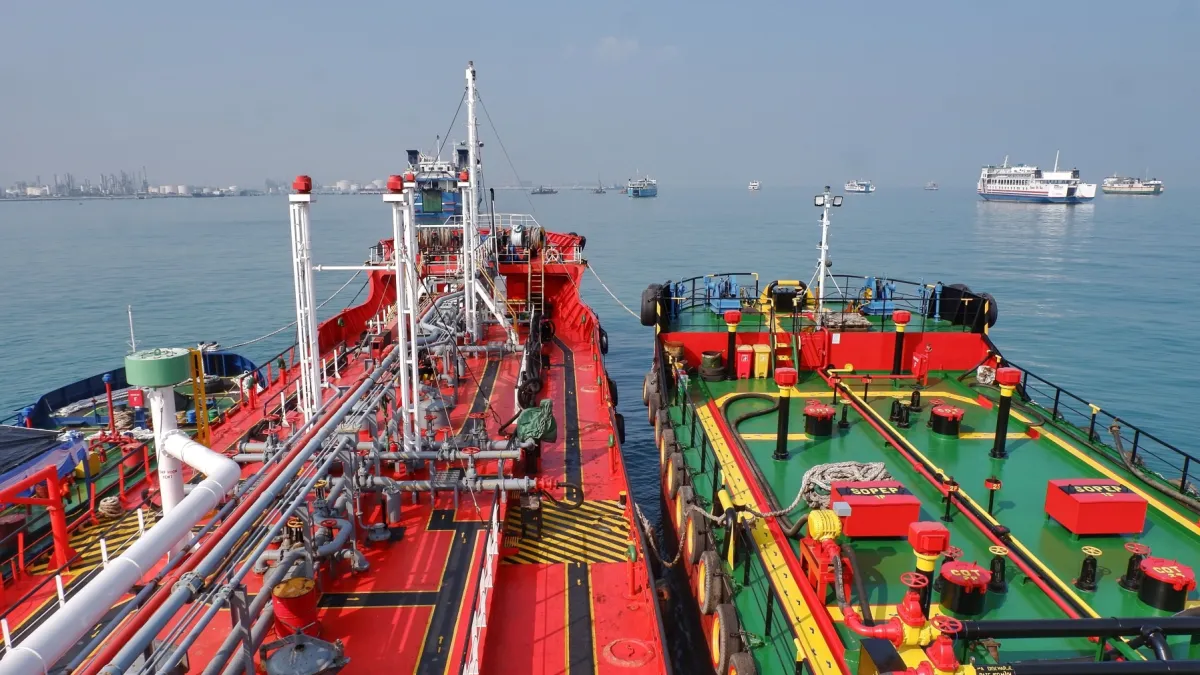
The Maritime and Port Authority of Singapore (MPA) and Enterprise Singapore have launched three new bunkering standards covering ammonia refuelling, bunker fuel sampling, and polymer testing in marine fuels.
The new Singapore Standard and two Technical References aim to improve bunkering safety and fuel quality as Singapore prepares for a multi-fuel future, the organisations said.
The Technical Reference for ammonia bunkering sets out requirements for safe operations, including fuel transfer, bunkering procedures, and personnel competency.
The MPA will work with Australia’s Pilbara Ports Authority under the Singapore-Australia Green and Digital Shipping Corridor to validate the framework through operational experience and bunkering trials.
The Singapore Standard for bunker sampling establishes common sampling procedures and safety requirements for ambient liquid marine fuels, including petroleum-based, synthetic and renewable sources, and methanol.
The third standard introduces a common testing method to detect polystyrene, polypropylene, and polymethyl methacrylate in residual-based marine fuels.
The method is intended to improve consistency in identifying these polymers and strengthen fuel quality assurance, the organisations said.
MPA chief executive Ang Wee Keong said the standards would help Singapore adapt its bunkering capabilities as shipping transitions to a broader range of marine fuels.
The standards were developed through the Singapore Standards Council and launched at the Singapore International Bunkering Conference and Exhibition 2026.





















 Read Here
 Advertise
 Sign Up