
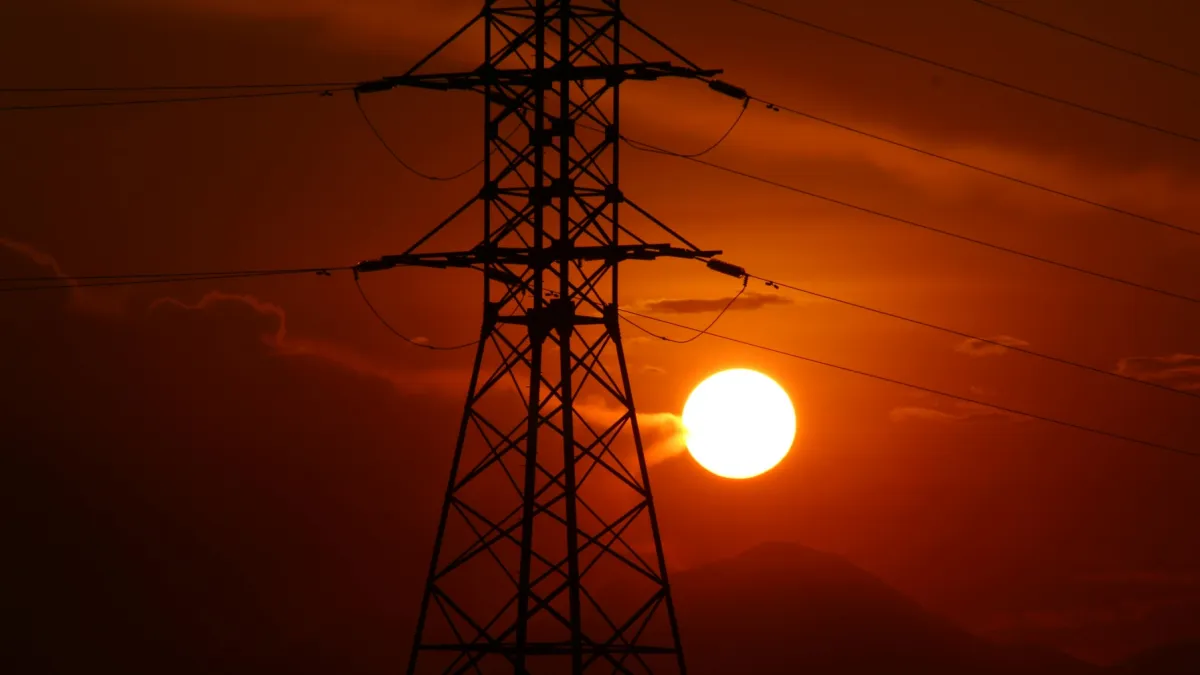
Grid links open fresh energy path for Singapore
Momentum builds around cross-border imports of solar, wind, and hydropower.
Energy opportunities in land-constrained Singapore are shifting away from adding generation capacity toward improving system flexibility, as the city-state works toward importing about 6 gigawatts of low-carbon electricity by 2035.
“With limited domestic resources but strong financial capacity, Singapore’s most attractive opportunities lie in enabling regional supply and system flexibility rather than expanding local generation,” Alnie Demoral, Asia energy analyst at independent think tank Ember, told Singapore Business Review.
Singapore has moved from cautiously exploring solar power to actively shaping Southeast Asia’s clean-energy ecosystem, she said.
As electricity demand rises and the country eases its reliance on gas, momentum has built around cross-border imports of solar, wind and hydropower, alongside large grid-interconnection projects.
That shift has triggered a wave of activity in neighbouring markets, especially Indonesia, where developers are advancing utility-scale solar-plus-storage projects and subsea cables designed to supply a meaningful share of Singapore’s future clean electricity, she said in an emailed reply to questions.
The Energy Market Authority has issued conditional approvals to 11 projects to import low-carbon power from Australia, Cambodia, Indonesia, Sarawak in Malaysia, and Vietnam.
To support these efforts, Singapore Energy Interconnections Pte. Ltd. was set up in April to develop and operate cross-border transmission infrastructure.
For lenders, the vision of a regional power network represents a long-dated but important opportunity.
“The ASEAN Power Grid is certainly a longer-term play from an investment financing point of view,” said Kelvin Wong, global head of energy, renewables and infrastructure at DBS Bank Ltd. “We are happy to be advising our clients on some of these projects.”
Wong cited the Energy Market Authority’s (EMA) conditional award to Sembcorp Utilities Pte. Ltd. and Sarawak Energy Berhad to import 1 GW of hydropower from Sarawak. “That could be catalytic in terms of the broader vision of forming an ASEAN power grid,” he said via Zoom.
Momentum is also building around offshore wind exports. Sembcorp is working with partners in Vietnam and Malaysia, including Tenaga Nasional Berhad, Petroliam Nasional Berhad and PetroVietnam Technical Services Corp., to explore cross-border power flows using Vietnam’s offshore wind resources.
The projects reflect growing confidence that a more integrated regional grid can move from concept to execution.
Beyond transmission, carbon capture and green ammonia are emerging as additional areas of focus.
Wong said banks are advising companies involved in carbon-capture initiatives, whilst green ammonia is being promoted by government agencies including the EMA and Maritime and Port Authority of Singapore, particularly for maritime and industrial use.
Despite the opportunity set, challenges remain. Demoral said cross-border projects are slowed by lengthy negotiations, uneven regulations and the risks associated with subsea infrastructure, all of which raise financing costs.
Delays can be costly. A one-year postponement of a 1-megawatt solar project would forgo about 1,191 megawatt-hours of generation, translating to roughly $179,000 in lost revenue at a mid-range wholesale power price, she said.
To reduce these risks, Demoral said standardised regional power-trade rules, blended finance structures and political-risk insurance could improve bankability.
On the technical side, expanding battery storage, digital grid management and grid-forming inverters would strengthen flexibility as imports grow.
Accelerated deployment of high-voltage direct current and undersea interconnectors addresses transmission bottlenecks, ensuring regional power can reach Singapore efficiently,” she added.












![[Singapore Business Review] Report on the Asian Business Channel](https://www.cmgassets.com/s3fs-public/styles/video_thumbnail/public/2026-10/full-show-thumbnail_1.png.webp?VersionId=bJbrT_JKOuMWBnf7YkmsWjOSWIXddSvY&itok=zWuxHRNG)













 Read Here
 Advertise
 Sign Up









