Fintech firms rethink cybersecurity as AI advances
Executives warn that AI advances could expose payment systems to cyberattacks and erode customer trust.
Financial technology (fintech) executives are raising concerns about cybersecurity as advances in artificial intelligence (AI) increase the risks of attacks on financial systems, with companies facing growing demands to protect their infrastructure and maintain customer trust.
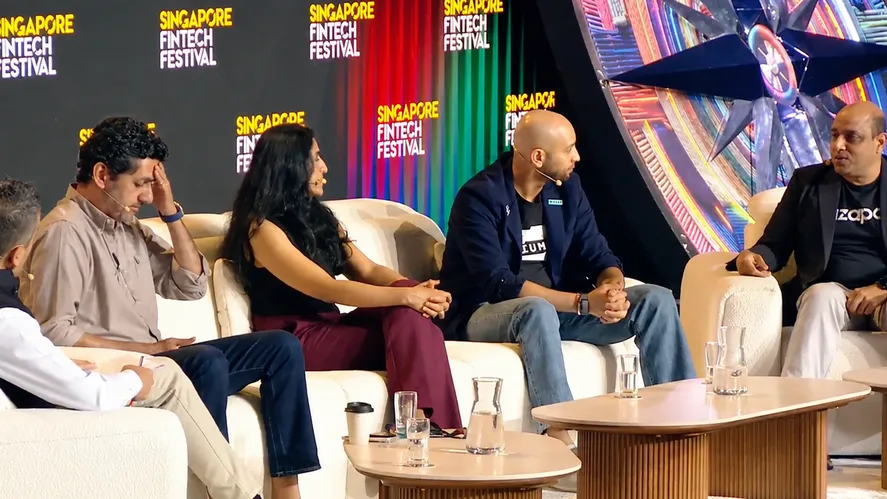
Speaking at the Singapore FinTech Festival on 20 November, Tazapay Co-founder and Chief Executive Officer Rahul Shinghal said cybersecurity had become a major concern for fintech companies, which already face challenges involving regulatory approvals, scaling operations and cross-border payments.
"Cybersecurity is just top of mind for all of us right now," he said.
He said the company has redirected almost 80% of its engineering capacity towards building cybersecurity defences over the past two quarters. "It is just the reality now."
NIUM Founder and Chief Executive Officer Prajit Nanu also highlighted the risks posed by more advanced AI models, saying the potential for cyberattacks had become a major concern after 11 years of building the payments company.
"Now, with the new AI models, our ability to get hacked is so crazy. It is scary right now," he said during the panel discussion.
Nanu said fintech companies were investing time in strengthening their systems as AI models became increasingly capable.
Addo AI Co-founder and Chief Executive Officer Ayesha Khanna said cybersecurity was also a major concern amongst the banks she advises. She pointed to the challenges of securing legacy infrastructure, saying banks could not patch their systems quickly enough.
"There's just so much legacy infrastructure, which is an advantage to the fintechs at the moment, but the speed at which they can patch their systems is limited, and they just can't move fast enough," said Khanna.
She warned that security failures could undermine customer confidence. "And I think that this one mistake can ruin the trust that customers have."
Khanna also cited a cyber incident involving Optimizely, a platform used for A/B testing. She said the incident affected 186 companies and that attackers had sought to access cryptocurrency wallets.
She said the potential loss of customer confidence was a longer-term concern, comparing the consequences to a bank run.
The panel also considered how fintech companies should balance investment in existing businesses with expansion into new areas.
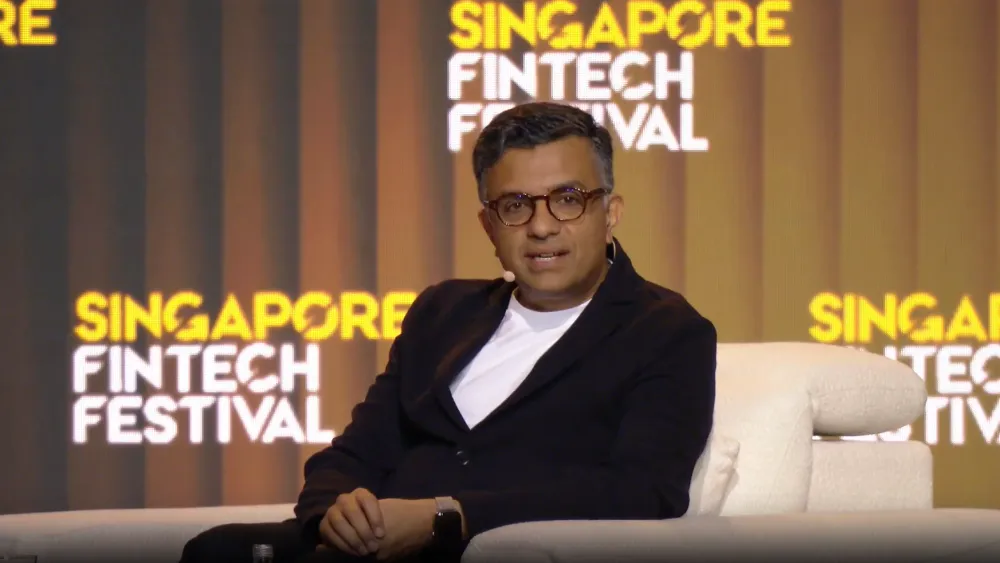
Pine Labs Chief Executive Officer Amrish Rau said that companies should focus on building a strong business in one market rather than spreading themselves too thinly. A profitable core business can provide the resources to fund other opportunities, he said.
Rau also said fintech companies had yet to realise the full potential of their existing markets, with the sector capable of compounding at 25% to 30% over 20 years.
Companies should build on their existing strengths and extend them into newer areas, rather than pursue expansion without a clear strategy.
He cautioned against both refusing to change direction and pivoting too frequently. Companies need to decide whether to invest in new infrastructure or broaden their capabilities into areas such as technology and AI.
Nanu said fintech companies needed to dominate the segments where they had a competitive advantage rather than spread themselves too thinly across markets.
He said NIUM had identified three segments where it believed it could compete effectively and establish itself as a leader, whilst acknowledging that it was less competitive in other markets, such as Africa.
The panel also turned to the security requirements of agentic payments, as AI agents take on a greater role in initiating and executing financial transactions.
When asked which factors would provide a competitive advantage in an agent-driven business environment, Khanna identified trust and execution.
Nanu, however, said deep integration would be important because AI agents would prioritise the fastest and cheapest way to complete transactions.
Shinghal agreed, saying fintech companies needed to understand the parties and underlying activities behind transactions to determine whether they were legitimate.
He said companies needed to go beyond conventional know-your-customer and know-your-business checks to understand individual transactions and the agents involved.
Shinghal said this required gathering information from public and private databases and using transaction-monitoring models to identify suspicious behaviour. He also highlighted the need for compliance, liability, and governance frameworks as agentic payments develop.
He said that the technology enabling communication between AI agents was only a small part of what was needed to make these transactions work securely.
























 Read Here
 Advertise
 Sign Up