


A policy meant for manufacturers, felt by everyone
By Ivan OngAs operators scramble to adjust fleet allocations and port strategies, unpredictability has become the norm.
Tariffs are traditionally wielded as economic tools, meant to protect domestic industries or correct trade imbalances.
Yet in today’s globally integrated economy, their effects seldom remain confined to the manufacturing sector. In the international relocation industry, where the movement of people and their belongings is intertwined with global logistics, tariffs have emerged as a disruptive force—felt by families, professionals, and service providers alike.
Recent developments in the US-China trade dispute illustrate this disruption clearly. In early April, the US government, under President Donald Trump, sharply increased tariffs on Chinese imports to 145%, and extended a 10% blanket tariff to imports from Singapore and other Southeast Asian nations.
Whilst these measures were designed to target manufacturing and trade flows, their ripple effects have reached far into sectors like the global relocation and logistics industry—indirectly but powerfully.
Crucially, household goods for relocating individuals are not themselves subject to new duties or reclassification. However, the way these goods move—via sea and air freight—has been deeply affected. The anticipation and implementation of new tariffs have caused major imbalances in global shipping networks.
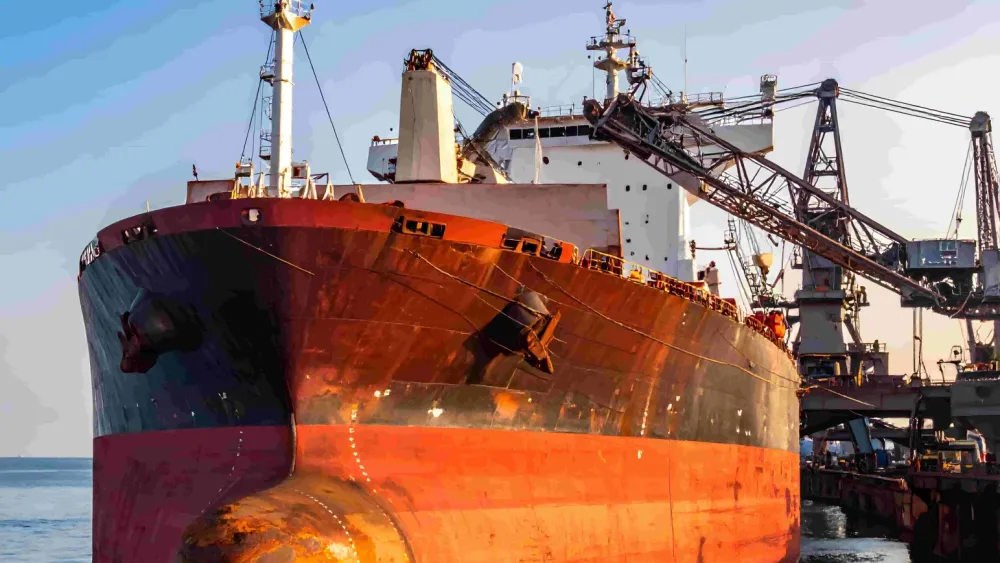
Front-loading of goods ahead of tariff hikes has overwhelmed ports, created bottlenecks, and triggered erratic vessel schedules. Some ships skip ports entirely due to congestion, whilst others are delayed due to re-routing. In the wake of these changes, shipping capacity is no longer reliably aligned with demand.
As operators scramble to adjust fleet allocations and port strategies, unpredictability has become the norm. For those managing relocations, this means greater difficulty securing container space, fluctuating transit times, and rising costs.
Planning shipments—once a relatively standard process—now requires constant recalibration. The cost is not just financial; it is operational and emotional too.
Meanwhile, new shipping alliances, like the Gemini Cooperation between Hapag-Lloyd and Maersk, are restructuring routes to cut costs. Yet the increased reliance on transshipment hubs is adding further complexity, particularly for critical routes, such as Asia to Europe.
For example, a shipment from Singapore to Southampton now faces average transit times of 45 days—up from the usual 30 to 35—due to detours around high-risk areas like the Red Sea and Cape of Good Hope.
In Singapore, these global tremors are being felt economically.
The Ministry of Trade and Industry recently downgraded its 2025 gross domestic product growth forecast, citing weak external demand from trade conflicts. Parliament has echoed this concern, warning of slowed momentum in manufacturing, trade, and logistics.
For companies in the business of global mobility, the stakes are high. Rising costs of freight, coupled with geopolitical uncertainty, are prompting some businesses to take actions such as delaying or downsizing overseas postings.
The Singapore government has responded with short-term support through Budget 2025 and a new task force led by Deputy Prime Minister Gan Kim Yong. Initiatives like SkillsFuture Jobseeker Support and business tax rebates are necessary relief—but they cannot resolve the core issue: the volatility of international trade policy.
At its heart, the relocation industry is about more than logistics—it is about people. It is about ensuring that when a family uproots their life, the journey is smooth, timely, and secure.
When trade dynamics become unpredictable, the burden shifts to those at the end of the line: the families trying to settle in, the human resource managers trying to coordinate timelines, and the service providers adapting on the fly.
We are responding with agility and resilience. But the larger message is clear: a policy crafted for manufacturers now touches every layer of cross-border life.
Until trade regimes stabilise and supply chains rebalance, the hidden costs—financial, emotional, and operational—will continue to be borne by individuals who had no seat at the negotiation table.












![[Singapore Business Review] Report on the Asian Business Channel](https://www.cmgassets.com/s3fs-public/styles/video_thumbnail/public/2026-10/full-show-thumbnail_1.png.webp?VersionId=bJbrT_JKOuMWBnf7YkmsWjOSWIXddSvY&itok=zWuxHRNG)













 Read Here
 Advertise
 Sign Up









