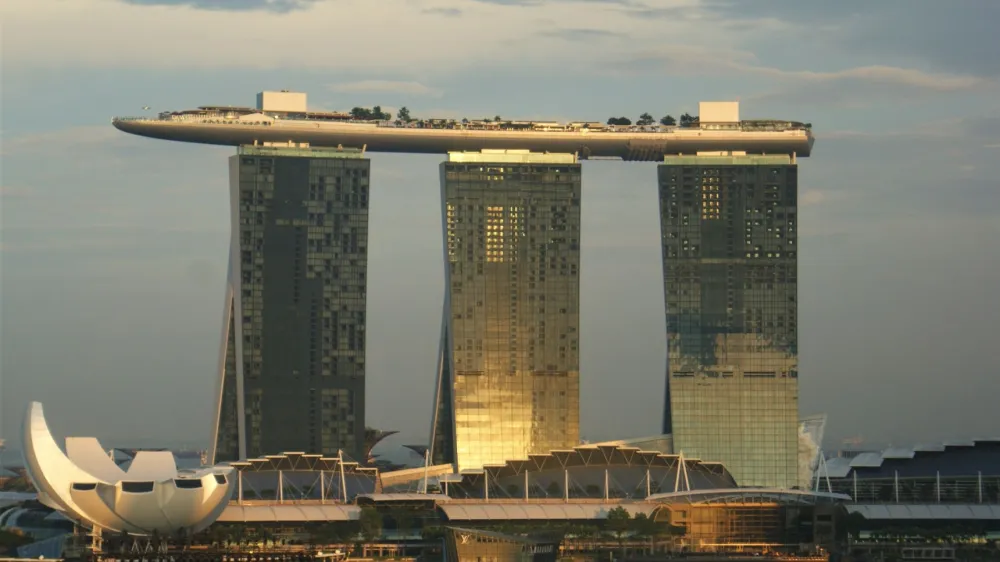
Keppel Infrastructure Trust's profits slid 32.7% to $32.02m in 2018
It blamed lower contributions from gas supplied City Gas and lower revenue at Basslink.
Keppel Infrastructure Trust (KIT) saw its net profits dwindle 32.7% YoY to $32.02m in 2018 from $47.61m, an announcement revealed. Its group revenue on the other hand inched up 0.8% YoY to $637.39m from $632.48m, whilst distribution per unit (DPU) stood at $0.0372 for FY 2018.
In Q4, the firm’s net profits ballooned $10.8m to $20.41m from $9.61m during the same period in 2017, whilst revenue rose 8.9% YoY from $158.12m to $172.18m.
Also read: Keppel Infrastructure Trust profit slides 47.4% to $8.15m in Q3
The decline in profits was attributed to lower contributions from gas supplier City Gas on the back of the time lag in the adjustment of gas tariffs to reflect actual fuel costs, the firm explained in its financial statement. Additionally, lower revenue at Basslink as a result of the March 2018 service outage and higher fair value loss of derivative financial instruments recognised weighed on KIT’s overall earnings.
“Basslink’s revenue for Q4 of $24.6m and FY 2018 of $67.1m were higher than Q4 FY 2017’s $20.6m, but lower than FY 2017’s $85.4m,” the firm noted. “This was due to the service outage from 25 March to 5 June 2018 as a result of an incident caused by a third party contractor, impacting the cumulative availability.”
KIT added that the higher Q4 revenue was due to the timing of the cumulative availability adjustment, whilst the incident resulted in lower overall fees during the year.
Also read: Keppel Infrastructure's Basslink rejects operational disputes by Hydro Tasmania
On the other hand, the strong performance in group revenue, especially for Q4 2018, was attributed to higher revenues at City Gas due to higher town gas tariffs as a result of higher fuel prices. Concessions comprising of Senoko WTE, Tuas WTE, SingSpring Desalination and Ulu Pandan NEWater plants also contributed a revenue of $23.4m in Q4 and $93.5m in FY2018 also contributed to revenue growth.
In November 2018, KIT announced its proposed DPU-yield accretive acquisition of Australian chemical firm Ixom Holdco for $775m. “Strategic addition of Ixom will strengthen KIT’s overall portfolio, and increase assets under management (AUM) to $5.1b, as well as provide KIT with sustainable cash flows and stable distributions to unitholders over the long term,” the firm stated.
It added that Keppel Infrastructure Fund Management will further evaluate asset enhancement opportunities in the firm’s portfolio and continue identifying suitable acquisitions to further grow the Trust.

























 Read Here
 Advertise
 Sign Up