Mobile wallets hit cross-border barriers despite interoperability push
In Africa, users often need a new wallet and KYC verification when crossing borders.
Mobile wallet users in Africa still face restrictions when making payments outside their home countries, highlighting gaps in cross-border payment connectivity despite efforts to improve interoperability.
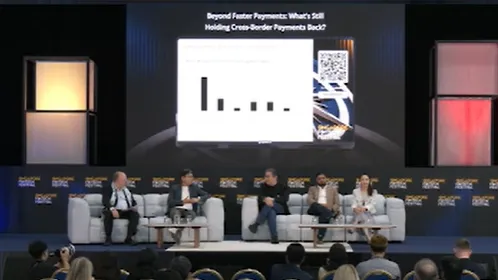
“If I am Kenyan and go across the border to Tanzania, I cannot use my wallet to make a payment,” said Alvin Okari, managing director for East Africa at Capital Pay International, at the Singapore FinTech Festival on 20 November.
Users often have to register for a new wallet and undergo another know-your-customer (KYC) process when entering a different country. In some cases, wallet access is also tied to the duration of their visa.
He called for regulators to address mobile wallet mobility and enable cross-border merchant acquiring so consumers can use their existing accounts when travelling.
Across East Africa, central banks have mandated interoperability between payment service providers, whilst local switches such as Tanzania's TIPS and Rwanda's R-switch allow providers to connect with multiple banks through a single application programming interface (API).
However, Okari said connecting domestic payment networks is not enough if users cannot access them across borders.
He pointed to the Pan-African Payment and Settlement System (PAPSS) as a framework that could facilitate digital payments between African countries.
Syed Mohammad Kamal, president of the American Chamber of Commerce in Bangladesh, said wider digital payment adoption also depends on incentives for merchants and consumers.
Merchants may prefer cash because digital transactions involve merchant discount rates (MDR) and make business activity more visible to tax authorities.
“Merchants are comfortable receiving cash nowadays because they are not within the tax net and are not paying anything extra for the MDR,” Kamal said.
He called for stronger incentives to encourage merchants to accept digital payments, alongside greater regulatory enforcement of interoperability.
Kamal also highlighted remittance costs as a barrier to formal payment channels. Bangladesh offers a 2.5% incentive for overseas citizens sending money through official channels, although informal remittance providers remain competitors.
Meanwhile, Stanislav Skvirsky, CEO of payme, cited Uzbekistan's remote identification and open banking regulations as measures that helped expand digital financial services.
The country introduced remote identification in 2016, allowing customers to access financial services without visiting bank branches.
Open banking rules also enabled customers to connect cards from different banks to fintech applications.
Uzbekistan additionally introduced 1% cashback on payments made through digital channels, including cards and mobile wallets.

























 Read Here
 Advertise
 Sign Up