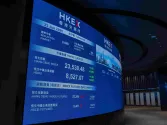
Industrial occupancy dips despite growth of space supply
Occupancy rate fell from nearly 90% in 2016 to 87% in 2017.
Singapore's stock of industrial space has exceeded 500m sqft, over five times that of office stock, leading to declining occupancies, UOB Kay Hian said.
According to a report, the declining occupancies, which fell from nearly 90% in 2016 and stabilised to 87% in 2017, partly due to stronger growth from manufacturing.
UOB Kay Hian analyst Vikrant Pander commented, "Historically, low occupancies have also coincided with Black Swan events, like the Asian Financial Crisis, 2000s recessions, 2008 Global Financial Crisis, and the declining oil prices."
Meanwhile, the upcoming supply is expected to peak in 2018 and decline over the next few years, which hopefully will could prop up occupancies going forward.
The longer-term demand for industrial space may be more worrying, the broker said. Investment in fixed assets boomed in 2012 but have declined in the last two years, indicating that multinational corporations (MNC) may not be looking to invest in Singapore as much as in the past.
The recent increase in demand has only been led by the electronics segment.
UOB Kay Hian cited the Purchasing Manufacturing Index (PMI) has recorded 15 consecutive months of expansion with a slight seasonal dip in December 2017, as total manufacturing output continued growing, powered by the electronics cluster, recording 33.2% yoy growth in November 17.
Pandey added, "The strong showing in electronics cluster has been due to a global boom in demand for electronic gadgets, which has boosted growth of the local semiconductor industries."
Although employment in the manufacturing sector has contracted for 12 consecutive quarters, he added that that can be explained away due to productivity-gains reducing reliance for manpower.





















 Read Here
 Advertise
 Sign Up