How the Philippines’ ‘underserved’ data centre market can evolve toward growth
Evolution Data Centres expect more non-telco-run data centre companies to enter the market.
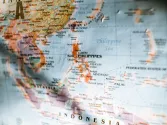
With a huge young population and a rich renewables potential, the Philippines sits at the cusp of becoming a major market for data centres. The country, however, remains underserved with most operators still emerging out of telecommunications firms, according to Evolution Data Centres CEO and Co-founder Darren Webb.
Webb, who has been in the industry for two decades, told Singapore Business Review that data centres have historically evolved out of telcos into a pure data centre environment.
“What we're seeing now is more entrants coming into the market. I would say, today, [the Philippines is] moving from an underserved market into that growth curve. And you'll see a number of foreign operators come in that are specialist data centre companies, not telcos, in fact we have already seen a number of recent announcements.”
At present, amongst the key operators of data centres in the country are telco giants PLDT and Globe. They have their own data centre environment and that's been the main option for cloud adoptions,” Webb said.
But Webb noted that the entry of Dito Telecommunity as the third telco player gives a good sign for growth.
The Philippines has one of the highest number of social media users that spend an average of nearly 11 hours a day on the internet, which could further drive the need for data centres. This is on top of around 30 million people who have no access yet to smartphones that remain untapped.
Webb also observed that more investments are coming in for subsea cable installations, telecom towers, dark fibre deployments and 5G infrastructure, putting the Philippines well on its way to becoming one of the next major markets in Southeast Asia.
Aside from the market size and funding, the country’s rich potential in renewables makes the Philippines a good site for data centres since data centres consume a high amount of energy. But whilst this is the case, Webb cautioned that the Philippines also poses challenges to data centres.
“The Philippines is a really interesting market—what God has given [it], God has also taken away to a certain degree,” he said.
“If you look at it from a geological point of view, the Philippines has benefits and has some challenges from that.”
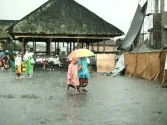
He cited the abundance of geothermal power stems from the high level of volcanic activity, not to mention, several flood zones across the country, and is also susceptible to typhoons. In this light, data centre operators need to be selective in terms of the location at which they will set up their sites.
Other emerging markets
For similar reasons, Webb said Indonesia, Thailand, and Vietnam are also seen as emerging markets. Like the Philippines, the said countries have a big “data-hungry” population that continues to grow and remains underserved from a data centre point of view.
“They're traditionally telecoms markets, not pure data centre markets,” he said.
“All of those that have good access in terms of subsea cables, and more investment going in, and deregulation, the things I talked about that happen in the Philippines, were seen in other markets, as well.”
As CEO of Evolution, Webb said the company wants to be amongst the early entrants into those markets.
Webb shared that around five years ago, cloud companies in the US were reluctant to enter markets in the region, such as Indonesia, due to the lack of familiarity and the perception that it would be difficult to do business as a foreign entity. But today, operators have entered the markets, particularly Indonesia, to capture demand as it started to peak.
“Big cloud operators from the east and the west are all there in a very big way, which goes to show that when demand starts to peak, all the cloud operators wish to come into that market because they want to serve their customers locally,” he said.
Hong Kong and Singapore have served as the hubs for data centres across the region in the past few years; but now, cloud operators have started moving into other markets—a decentralization trend that the industry will continue to see.
Greener data centres
Webb said Evolution is cognizant that identifying as “green” gives the company an “almost impossible” target considering the amount of materials used to build and energy the data centres consume. Hence, Evolution strives for “greener.”
“You know that the average statistics suggest that between seven and 10% of the global energy requirements go into data centres. But, we also need to remember that data centres are needed as they underpin the digital transformation, supporting our e-banking, e-commerce, gaming, video streaming that are so common in our daily lives,” he said.
To offset the impact of operating data centres on the environment, Evolution looks to utilise existing plots, often on industrial parks, rather than in greenfield areas that will require the cutting of trees.
“I think we have to be as an industry more considerate of the environment. When we source energy, we want to buy it locally because that then requires extra regeneration, extra investment in the renewable energy space, and it becomes self-fulfilling,” he said



























 Read Here
 Advertise
 Sign Up